Footage captures risky interaction with one of the ocean’s most venomous reptiles
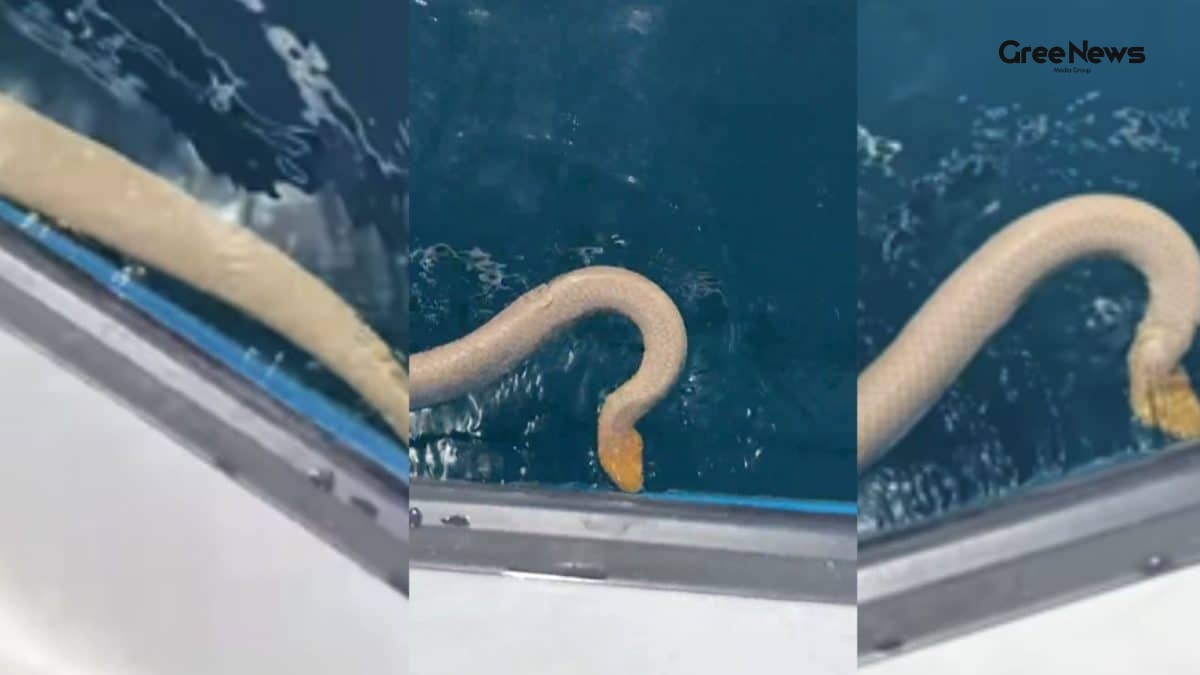
So, the other day I was scrolling through my feed, looking for the latest news India, when a short clip popped up that instantly caught my eye. It was an Instagram reel posted by Isaac Fenech (@isaacfenech92) showing a man on a small boat off the coast of Australia. Out of nowhere, an olive sea snakescientifically called Aipysurus laevisglides right up to the boat. Instead of backing away, the man reaches out and actually touches the snake, whispering, “so soft.”
What happened next is interesting: the snake hisses, the man quickly pulls his hand back, and the reptile disappears into the blue. The whole episode lasts less than a minute, but it exploded into viral news, becoming trending news India within hours.
Why the olive sea snake grabbed everyone’s attention
Olive sea snakes are among the most venomous marine reptiles on the planet. In most cases they keep to themselves, drifting lazily with the currents, but when they feel threatened they can strike with a bite that carries a potent neurotoxin. That’s why a casual touch, even if it feels “soft,” can be downright dangerous.
The internet, however, loves a good drama. The clip turned into a classic example of breaking news mixed with a dash of curiosity. People started sharing it with captions like “salty danger noodle” and “what were you thinking?”a mix of humour and genuine concern.
Even though the video didn’t give us exact coordinates, it’s clear the encounter happened in Australian waters, a place known for close human‑wildlife interactions. In fact, similar viral moments happen often, turning into what many call “viral news” that spreads faster than you can say “shark bite.”
Getting to know the olive sea snake
Here’s a quick rundown you might find handyespecially if you ever head out for a boat ride or a scuba dive:
- Scientific name: Aipysurus laevis
- Colour: Olive‑Green or brownish, blending perfectly with seaweed and rocks.
- Venom: Extremely potent; a bite can cause muscle paralysis and respiratory failure if untreated.
- Behaviour: Generally shy, but they will bite if they feel cornered or handled.
Experts in marine biology say that while sea snakes rarely attack humans, any contact should be avoided. The simple rule? If it looks calm, it doesn’t mean it’s safe to touchespecially when it’s a creature armed with venom.
What the experts say
After the clip went viral, several herpetologists and marine experts weighed in. Their consensus was crystal clear: stay away from the animal. One marine biologist explained that sea snakes, unlike many land snakes, are adapted to a life in salty water and can hold their breath for long periods, making them unpredictable.
He added that the slightest provocationlike a hand‑touchcan trigger a defensive hiss, a warning sign that the snake is ready to strike. In this case, the snake did hiss, and the man wisely pulled back. No bites, no medical emergencies, but the risk was real.
Medical professionals also reminded people that any sea‑snake bite requires immediate medical attention. Antivenom is available in many coastal hospitals, but the best treatment is preventionkeep a safe distance.
Public reaction: a mix of awe and alarm
When you combine a dangerous creature with a dare‑devil gesture, you get a lot of chatter. Comments ranged from “what were you thinking?” to “that snake looks softer than my sofa!” A handful of users even made memes, dubbing the snake a “salty danger noodle.”
Many pointed out that this kind of reckless behaviour could set a bad example, especially for younger viewers who might think it’s cool to handle venomous animals. Others, however, celebrated the video as a reminder of how close we can get to nature if we’re luckyor careless.
What’s clear is that the clip became part of that endless stream of breaking news that circulates across Indian social media platforms, fueling debates about wildlife safety and the line between curiosity and danger.
Safety tips for anyone venturing into marine waters
If you ever find yourself on a boat or snorkeling near marine reptiles, here are a few easy pointers that many Indian coastal tourists find useful:
- Observe from a distance: Use binoculars or a camera zoom instead of reaching out.
- Don’t provoke: Even a harmless‑looking animal can bite if it feels threatened.
- Know the local fauna: Before heading out, read up on potential dangerous species in the area.
- Carry a first‑aid kit: Include a reef‑safe antiseptic and know the nearest medical centre that can handle marine envenomation.
- Stay calm: If a snake or any unwanted creature appears, move slowly and avoid splashing.
Following these simple steps can turn a potential disaster into just another story you share on WhatsApp after a safe trip.
Why such videos keep going viral
There’s something oddly fascinating about humans watching other humans interact with wild, dangerous animals. It’s part thrill, part cautionary tale. That’s why this clip, despite its short length, quickly became part of the larger conversation about marine wildlife safety.
Social platforms love content that elicits strong emotionsshock, amusement, fearand the olive sea snake video delivered all three. It also fed the algorithm that pushes “trending news India” to a wider audience, giving the video a boost that made it appear on many feeds within minutes.
In many ways, the clip is a micro‑cosm of how modern media spreads: a single moment, captured on a phone, amplified by shares, comments, and the ever‑hungry appetite for the latest viral news.
Final thoughts
At the end of the day, no one got hurt in this particular incident, which is a relief. But the video still serves as a gentle reminder that not everything that looks soft or harmless is safe to touchespecially when you’re out in open water, far from any immediate help.
So, the next time you see a sea creature gliding nearby, admire it from afar. Let it be a memory, not a selfie.
And remember, whenever a daring wildlife moment catches your eye, think twice before you decide to copy it. The line between curiosity and risk is thin, and it’s better to stay on the safe side.
Israel Iran War NewsIran US Ceasefire