OpenAI Chief Sam Altman Under Fire Over Alleged Funding Strategies; A Detailed Account
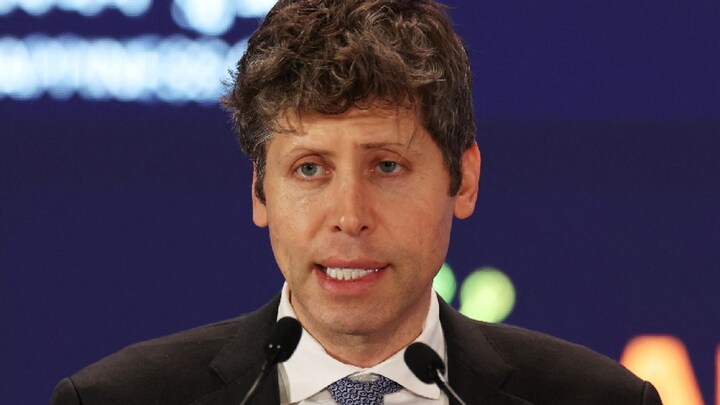
Reports suggest that Sam Altman's framing of AI often varied depending on the audience. In discussions with policymakers and government officials
New scrutiny on Sam Altman's approach to government funding
Sam Altman, the head of OpenAI, is facing fresh scrutiny after reports suggested that Sam Altman sought to secure billions of dollars in United States government funding by highlighting a potential artificial intelligence threat from China.
These reports have sparked a wave of commentary across political, academic, and industry circles, with analysts questioning whether the tactics employed by Sam Altman align with conventional standards of transparency and evidence‑based advocacy. The central allegation is that Sam Altman emphasized a geopolitical narrative that positioned artificial intelligence as a battlefield where national security concerns could be leveraged to unlock public resources.
Critics argue that the framing of an "AGI Manhattan Project" creates an image of an existential race that may pressure legislators into allocating funds without a thorough assessment of the underlying intelligence capabilities. Supporters counter that such urgency is warranted given the rapid pace of technological development and the strategic importance of maintaining a lead in advanced computing.
The pitch to United States officials
According to a report by The New Yorker, Sam Altman met United States intelligence officials in 2017 and warned that China had launched an “AGI Manhattan Project” — a large‑scale, state‑backed artificial general intelligence programme comparable to the United States nuclear weapons effort during World War II.
The description presented by Sam Altman painted a vivid picture of a coordinated, well‑funded effort that could potentially outpace United States initiatives. Sam Altman's narrative emphasized not only the scale of the purported Chinese programme but also the implied timeline, suggesting that a decisive advantage could be secured only through accelerated domestic investment.
When United States officials requested concrete evidence to corroborate the claims, the documentation provided by Sam Altman was reportedly insufficient. Subsequent investigations by United States agencies concluded that no verifiable proof of such a programme existed, prompting some officials to view the depiction as an overstated strategic alarm.
The absence of solid evidence has led to a broader discussion about the role of persuasive storytelling in policy advocacy. Some observers note that Sam Altman's approach mirrors techniques commonly employed in defense procurement, where perceived threats are amplified to secure funding streams.
Concerns over exaggerated claims and their implications
The episode has raised concerns that geopolitical competition may have been used as a lever to push for public funding. Officials familiar with the matter reportedly viewed the claims as part of a broader effort to position OpenAI as critical to United States strategic interests in artificial intelligence.
These concerns extend beyond the immediate funding question. Critics warn that a narrative reliant on unverified threats could erode trust between technology leaders and policymakers, making future collaborations more difficult. They also argue that a precedent where unsubstantiated claims facilitate large budget allocations may encourage other firms to adopt similar tactics.
Supporters of Sam Altman's approach argue that the very nature of emerging technologies makes definitive evidence difficult to obtain, and that a precautionary stance is justified when national security is at stake. They point out that intelligence assessments often rely on incomplete data and that the absence of public proof does not necessarily negate the existence of a program.
The tension between precaution and proof has become a defining feature of the current debate, with each side invoking legal, ethical, and strategic arguments to bolster their position.
Messaging tailored to distinct audiences
Reports suggest that Sam Altman's framing of AI often varied depending on the audience. In discussions with policymakers and government officials, the emphasis was on urgency, national security, and competition with China. In contrast, when addressing researchers and the broader technology community, the focus shifted toward safety concerns and the long‑term risks of artificial intelligence.
This ability to adapt messaging has been a defining feature of Sam Altman's leadership style and fundraising strategy. By calibrating the narrative to resonate with the priorities of each stakeholder group, Sam Altman has been able to secure support from a wide spectrum of actors, ranging from venture capitalists to regulatory bodies.
When speaking at academic conferences, Sam Altman frequently highlighted the ethical dilemmas associated with uncontrolled AI development, underscoring the need for robust safety protocols and transparent research practices. Conversely, in private meetings with senior government officials, Sam Altman's language centered on the strategic advantage that early access to advanced AI capabilities could confer on United States defense and economic sectors.
Analysts note that this dual‑track communication strategy reflects a broader trend in the technology sector, where leaders must balance the demands of investors, regulators, and the public. By presenting a nuanced, audience‑specific narrative, Sam Altman has demonstrated a sophisticated understanding of how to align disparate interests under a common strategic vision.
Internal debates within OpenAI regarding global AI development
The developments also shed light on internal differences within OpenAI over how the organization should approach global artificial intelligence development. Some voices within the organization advocated for international cooperation among AI laboratories to reduce the risk of an arms race. Others explored more competitive approaches, including leveraging geopolitical rivalries to strengthen OpenAI's position.
These internal dialogues have been documented through a series of informal meetings, internal memos, and strategic planning sessions. Proponents of cooperation argued that shared safety standards, joint research initiatives, and open‑source collaborations could mitigate the dangers associated with isolated, opaque development pathways.
Conversely, factions favoring a more assertive stance contended that the pace of innovation demanded a decisive edge, and that cooperation could dilute OpenAI's competitive advantage. They suggested that aligning OpenAI's narrative with national security imperatives could attract both public and private resources necessary for ambitious research agendas.
The clash of perspectives illustrates the broader challenge facing AI pioneers: balancing commercial ambition, ethical responsibility, and geopolitical realities in an environment where the stakes are increasingly high.
A broader fundraising playbook and its potential ramifications
Sam Altman has built a reputation as one of Silicon Valley’s most effective fundraisers, having previously secured backing from major investors and corporate partners such as Elon Musk and Microsoft. Sam Altman's approach has often involved presenting artificial intelligence as a transformative technology with both immense promise and significant risks — an argument that has helped unlock large pools of capital.
Beyond private venture capital, Sam Altman's pitch to public institutions has relied on highlighting the dual nature of artificial intelligence: the capacity to generate unprecedented economic growth alongside the possibility of destabilizing societal structures if left unchecked. This framing has proven persuasive in contexts where decision‑makers must weigh long‑term strategic outcomes against immediate fiscal constraints.
However, the latest revelations suggest that this strategy may also invite scrutiny, particularly when it intersects with national security narratives and public funding. Critics argue that emphasizing existential threats can create a sense of urgency that bypasses standard due‑process checks, potentially leading to the allocation of resources without a thorough cost‑benefit analysis.
Supporters of Sam Altman's methodology contend that the rapid evolution of artificial intelligence demands a proactive stance, arguing that waiting for conclusive evidence before acting could result in missed strategic opportunities. They point to historical precedents in technology adoption, where early investment often yields outsized returns.
The debate surrounding Sam Altman's fundraising techniques highlights an emerging tension between the need for swift, decisive action in the face of transformative technologies and the democratic imperative for transparency and accountability.
Future outlook: transparency, risk framing, and the quest for funding
As OpenAI continues to expand and seek substantial investments to support its artificial intelligence ambitions, questions around transparency and the framing of risks are likely to remain in focus. The episode adds to the ongoing debate over how far companies should go in emphasizing threats and urgency when making the case for funding in emerging technologies.
Stakeholders from the legislative arena, academic community, and private sector are closely monitoring how OpenAI articulates its strategic priorities. They are particularly attentive to whether future communications will include verifiable data to substantiate claims of external competition, as well as how OpenAI will address internal disaGreements about collaboration versus competition on the global stage.In addition, investors are reevaluating the criteria they use to assess the credibility of risk‑based narratives. Some are calling for more robust third‑party audits and independent verification of any geopolitical intelligence presented as a basis for investment decisions.
The broader ecosystem is also grappling with the question of whether artificial intelligence should be treated as a traditional commercial venture or as a strategic national asset that warrants special oversight. This dichotomy influences how funding mechanisms are structured, what expectations are placed on developers, and how accountability is enforced.
Ultimately, the trajectory of OpenAI’s fundraising efforts and the public perception of its risk framing will hinge on the organization’s ability to balance compelling storytelling with demonstrable evidence, while navigating a landscape where technological breakthroughs intersect with geopolitical concerns.