Reserve Bank of India Governor Sanjay Malhotra Highlights Hormuz Tensions as Potential Drag on Growth During Monetary Policy Committee Session
Key Remarks on Global Supply Chains and Energy Markets
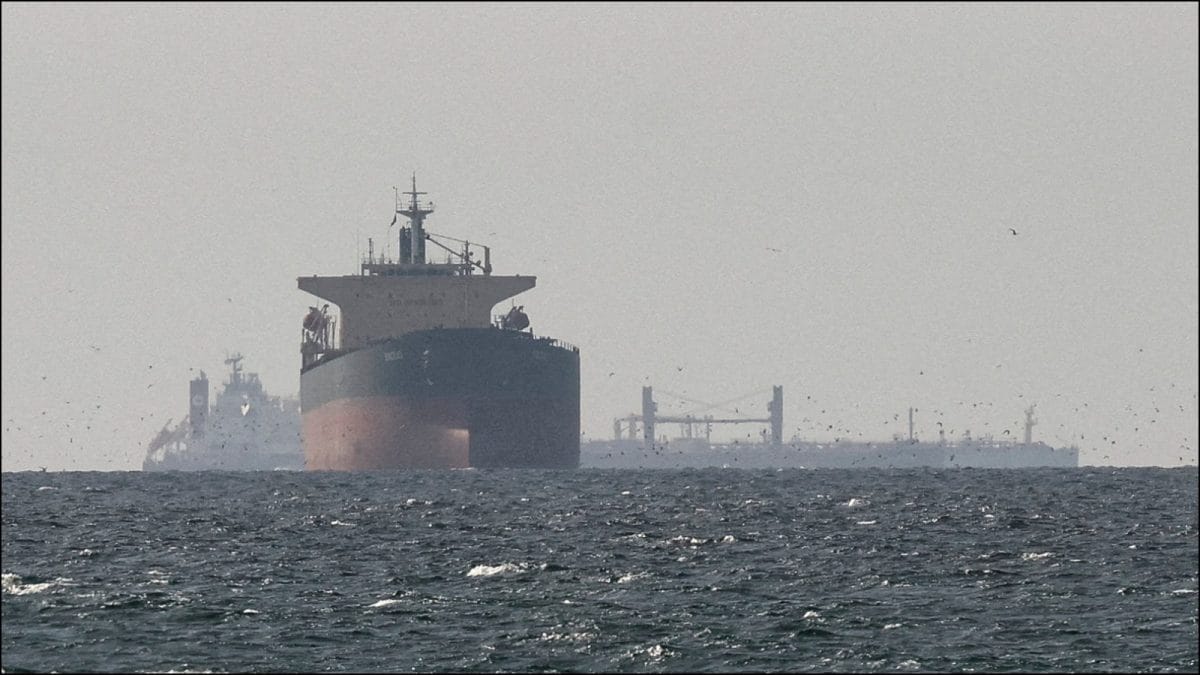
Reserve Bank of India Governor Sanjay Malhotra articulated concerns that any escalation of hostilities in the Strait of Hormuz could exert downward pressure on economic expansion. The remarks underscored the strategic importance of the narrow waterway, which serves as a conduit for a substantial share of the world’s crude oil shipments. By emphasizing the linkage between regional instability and broader macro‑economic variables, Reserve Bank of India Governor Sanjay Malhotra placed the issue at the forefront of the Monetary Policy Committee agenda.
In the same deliberation, Reserve Bank of India Governor Sanjay Malhotra highlighted that disruptions to the flow of petroleum and related commodities would reverberate through global supply chains. A constrained flow of oil would likely trigger upward pressure on crude oil benchmarks as well as on a range of derivative commodity prices. The resultant price dynamics could, in turn, feed into domestic inflationary pressures, especially for an economy such as India that relies heavily on imported energy inputs.
Potential Medium‑Term Demand Shock
Reserve Bank of India Governor Sanjay Malhotra warned that a prolonged period of instability in the Hormuz corridor could evolve into a medium‑term demand shock. Such a shock would manifest through a combination of higher input costs for manufacturers, reduced consumer purchasing power, and heightened fiscal pressures for the Government of India. By stressing the medium‑term horizon, Reserve Bank of India Governor Sanjay Malhotra signaled that the repercussions would not be confined to a brief spike in oil prices but could persist enough to influence overall demand trends.
From the perspective of monetary policy, the prospect of a demand shock complicates the balancing act between price stability and growth. Reserve Bank of India Governor Sanjay Malhotra indicated that policymakers remain vigilant to the possibility that an extended episode of elevated energy costs could erode real disposable incomes, thereby dampening consumption‑driven growth components.
Monetary Policy Decision: Maintaining the Status Quo
In the same session, the Monetary Policy Committee reached a unanimous conclusion to keep the repo rate unchanged at 5.25 per cent. The decision reflected a judgment that the present policy stance remains appropriate given the prevailing external environment and the anticipated trajectory of domestic inflation.
Reserve Bank of India Governor Sanjay Malhotra emphasized that the unchanged rate aligns with a neutral policy posture, allowing the central bank to respond flexibly should new data warrant a shift. The neutral stance also acknowledges the delicate balance required to safeguard growth while containing inflationary pressures that may arise from external shocks such as those emanating from the Hormuz region.
Context of Global Recovery Expectations
The Monetary Policy Committee’s outlook incorporated expectations of a gradual global recovery following the cessation of a recent conflict involving several major powers. While the exact timelines of that conflict were not reiterated, the broader sentiment among policymakers was that the resolution of hostilities would gradually ease pressure on international trade and commodity markets.
Reserve Bank of India Governor Sanjay Malhotra noted that the easing of geopolitical tensions abroad could help stabilize commodity prices, thereby supporting the inflation outlook for India. Nonetheless, the potential for renewed friction in the Hormuz corridor remains a wildcard that could re‑introduce volatility into global energy markets.
Impact of West Asian Turbulence on Import‑Dependent Economies
Reserve Bank of India Governor Sanjay Malhotra outlined how recent disturbances in West Asia have already translated into higher crude oil prices. For an economy that imports a sizable portion of its energy needs, such price spikes translate directly into higher fiscal outlays and upward pressure on consumer prices.
By linking external oil price dynamics to domestic fiscal and inflationary pressures, Reserve Bank of India Governor Sanjay Malhotra reinforced the importance of vigilant policy monitoring. The central bank’s mandate to maintain price stability becomes more challenging when external shocks can quickly permeate the domestic price structure.
Inflation Target Framework and Policy Horizon
The Monetary Policy Committee operates under an inflation target framework that seeks to keep retail inflation anchored at 4 per cent, with a permissible deviation of two percentage points on either side. This target is set for a five‑year horizon, providing a clear medium‑term anchor for monetary policy decisions.
Reserve Bank of India Governor Sanjay Malhotra affirmed that the central bank’s primary objective remains achieving this inflation target while supporting sustainable growth. The five‑year horizon offers sufficient flexibility for the Monetary Policy Committee to accommodate short‑term fluctuations without compromising the credibility of the inflation target.
Bi‑Monthly Policy Cadence for the Current Financial Year
During the deliberations, Reserve Bank of India Governor Sanjay Malhotra announced the adoption of a bi‑monthly policy review schedule for the remainder of the current financial year. This shift to a more frequent review cadence is intended to enhance the central bank’s ability to respond promptly to evolving economic conditions, particularly in a period marked by external uncertainties.
The bi‑monthly schedule complements the neutral stance adopted by the Monetary Policy Committee, ensuring that the policy framework remains adaptable while preserving the overarching objective of price stability.
Conclusion: Navigating Uncertainty with Prudence
Reserve Bank of India Governor Sanjay Malhotra’s remarks during the Monetary Policy Committee session underscored the delicate interplay between external geopolitical developments and domestic economic outcomes. By drawing attention to the strategic significance of the Strait of Hormuz, Reserve Bank of India Governor Sanjay Malhotra highlighted a potential source of supply‑side constraints that could reverberate through energy markets, commodity prices and, ultimately, growth trajectories.
In response, the Monetary Policy Committee chose to maintain a steady repo rate, upheld a neutral policy stance, and introduced a bi‑monthly review rhythm—all measures designed to preserve flexibility amidst uncertainty. The central bank’s continued commitment to the 4‑per‑cent inflation target, with a two‑percentage‑point tolerance band over a five‑year horizon, provides a clear anchor for expectations while allowing for calibrated adjustments as new information emerges.
Reserve Bank of India Governor Sanjay Malhotra’s focus on monitoring external shocks, coupled with a disciplined policy framework, signals a prudent approach aimed at safeguarding both price stability and sustainable growth in the face of evolving global dynamics.