When Parents Turn Into Office Visitors: A Bengaluru Woman’s Video Ignites Nationwide Nostalgia
A glimpse of a parent‑teacher style encounter at a corporate desk
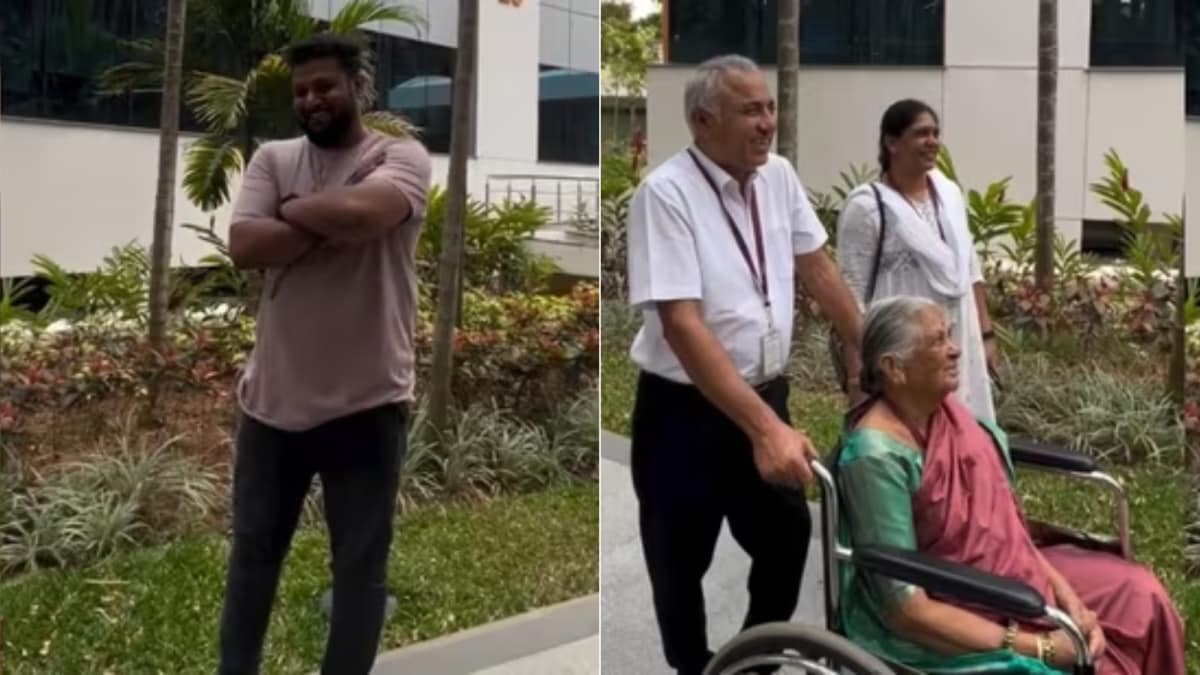
In a video that quickly spread through social platforms, a young professional from Bengaluru, identified as Tejaswini Anand, captured a moment that feels simultaneously familiar and surprising. The recording shows her parents stepping into her workplace, approaching her manager, and launching a conversation that mirrors the tone of a school parent‑teacher meeting. The clip is framed with a text overlay that reads, “Every parent enjoys office visits, while mine asks my manager about my behaviour. From PTA meetings to this, it never ends, I guess.” Below the video, Tejaswini wrote, “Just brown parents being themselves.”
The scene unfolds in a typical office setting: desks in neat rows, coworkers glancing over, and a manager seated behind a polished table. Tejaswini’s mother and father—both dressed in casual attire—approach the manager with a mixture of curiosity and concern. Their questions, though not verbatim in the shared clip, echo the familiar cadence of a parent enquiring about a child’s conduct, attendance, and performance. The manager’s polite yet slightly bemused responses add a touch of humor, creating a tableau that instantly resonates with anyone who has ever experienced a parent’s inquisitive nature.
While the video is brief, it captures a broader cultural narrative: the persistence of parental involvement that extends beyond the school gates and into the professional world. The clip’s authenticity, coupled with the candid nature of the interaction, has turned it into a viral touchstone for millions who recognize the timeless dynamic of parental care.
Social media erupts with shared memories and witty commentary
Within minutes of the video’s upload, users across platforms began flooding the comment sections with reflections, jokes, and personal anecdotes. A recurrent theme emerged: the comparison of the office encounter to a traditional parent‑teacher meeting. One user wrote, “It’s like parents teacher meeting at school,” highlighting the seamless transition of parental concern from the classroom to the corporate boardroom.
Another witty observer quipped, “PTA meetings upgraded to office meetings,” encapsulating the humor that many felt while recognizing the universality of the experience. The phrase “Just brown parents being themselves” sparked a chorus of affirmations, with countless commenters echoing the sentiment with their own cultural twists and variations.
Several contributors recounted similar episodes from their own lives, reinforcing the idea that Tejaswini’s video taps into a collective memory. One user shared, “My mom came to my university only to ask my professor to scold me for not eating food properly,” illustrating that the parental urge to intervene can appear in academic settings as well. Another highlighted the corporate angle, noting, “My dad asked the recruiter if I spoke well in the interview,” showing that even job‑hunting stages are not immune to parental curiosity.
Some responses leaned into the comedic side of the scenario. A comment read, “My father asked my manager whether I was worth the hire,” directing a playful jab at the subtle pressure that can accompany an unexpected parental presence in the workplace. Others expressed a softer, more affectionate tone, such as, “This is actually very sweet. Parents are always curious about how their children are doing,” and, “Parents will always treat you like a kid no matter how old you are.” These reflections underscore both the humor and heartfelt affection that the video evoked.
Beyond humor, a number of users expressed empathy for the delicate balance employees must strike when family members cross professional boundaries. One comment noted, “Same goes with my grandma, she still thinks I’m going to office to study. The questions she asks make me feel I’m still in school or college,” capturing the lingering perception that adulthood does not automatically erase a child's status in a parent’s eyes. Another shared, “My mom was asking my gym trainer how I was doing… at 32,” emphasizing that parental involvement often persists into every facet of an adult’s life, from office cubicles to fitness centers.
Why the video struck a chord: cultural context and intergenerational dynamics
At its core, the video reflects a cultural hallmark that many observers associate with Indian families: a deep‑seated sense of responsibility toward the younger generation’s welfare, even after they have technically entered adulthood. This instinctive caregiving often manifests as frequent check‑ins, advice‑laden conversations, and, as seen in Tejaswini’s clip, an unfiltered desire to know how the child is performing in new environments.
The Indian familial model traditionally places the family unit at the center of an individual’s identity. Parents often view their children’s successes and challenges as extensions of their own life journey. Consequently, moments of transition—such as moving from school to college, or from college to the workplace—do not automatically signal a hands‑off approach. Instead, they become new arenas for parental engagement, with parents adapting their questions to the setting while preserving the same underlying curiosity.
In the video, Tejaswini’s parents simply ask about her behavior at work, paralleling the typical inquiry a teacher might make about a student’s classroom conduct. The manager’s bemused politeness reflects a common reality that many professionals face: navigating the thin line between acknowledging a parent’s concern and maintaining workplace propriety.
The reaction of the online audience, teeming with similar stories, reaffirms that such parental incursions are neither rare nor isolated. The discussion threads that sprouted after the video’s release form a tapestry of lived experiences, ranging from university lectures to job interviews, and even to gym sessions. Each anecdote, while unique in setting, carries the same motif: parents are unwilling to relinquish the role of guardian, adviser, and occasional evaluator, even as their children assume adult responsibilities.
Moreover, the humor embedded in many of the comments highlights a collective coping mechanism. By treating the scenario as a light‑hearted anecdote, participants acknowledge the occasional awkwardness while also celebrating the affection behind the action. This duality—finding jokes in potentially uncomfortable moments—allows both the subject of the video and its broader audience to process the experience without resorting to resentment.
Professional implications: balancing respect for family and workplace boundaries
While the video is largely celebrated for its relatable charm, it also opens a dialogue about the practical implications of family members entering professional environments. For many employees, the presence of a parent in the office can elicit a mixture of pride, embarrassment, and concern for how colleagues and supervisors perceive the situation.
In the recorded interaction, the manager maintains a courteous demeanor, responding to the parents’ queries without overtly challenging their involvement. Such a response models an ideal balance: acknowledging the parents’ interest while preserving the professional setting’s decorum. However, this equilibrium can be fragile. Employees may worry about being judged for allowing a parent to “monitor” their performance, especially in cultures where independence and self‑sufficiency are prized in the corporate world.
The comments from social media users reflect this tension. One user’s observation—“My father asked my manager whether I was worth the hire”—captures an underlying anxiety about how parental scrutiny might be interpreted by employers. Another comment noting a grandmother’s belief that the office is “still a place to study” points to generational gaps in understanding modern work environments.
Organizations often address these scenarios through policies that delineate visitor protocols and define appropriate workplace conduct. Although the video does not specify whether Tejaswini’s office had such guidelines, the informal nature of the encounter suggests a flexible environment where occasional family visits are tolerated, especially if they are brief and respectful.
From a human‑resource perspective, the clip serves as a reminder that employees may benefit from clear communication with supervisors about family dynamics that could intersect with work life. Open dialogue can help set expectations and prevent misunderstandings, ensuring that parental concern does not inadvertently jeopardize professional credibility or workplace harmony.
Conclusion: A snapshot of enduring parental love in the modern age
Tejaswini Anand’s simple Instagram post has transcended its original platform, becoming a cultural touchstone that reflects the enduring nature of parental involvement in the lives of adult children. The video’s widespread resonance underscores a shared experience across generations: parents, regardless of how old their children become, often retain the instinct to check in, ask questions, and, occasionally, step into the very spaces where their children now operate as independent adults.
Through humor, nostalgia, and a touch of affection, the clip invites viewers to reflect on their own family narratives, to recall moments when a parent’s curiosity appeared at unexpected times, and to appreciate the love that fuels such curiosity. While the scenario may generate a few raised eyebrows in corporate corridors, it ultimately celebrates a universal truth—family remains a central, unchanging pillar in the ever‑evolving landscape of personal and professional life.
As the conversation continues to unfold across comment sections and private messages, one thing remains clear: the bond between parents and children endures, morphing to fit new contexts but never truly fading away.