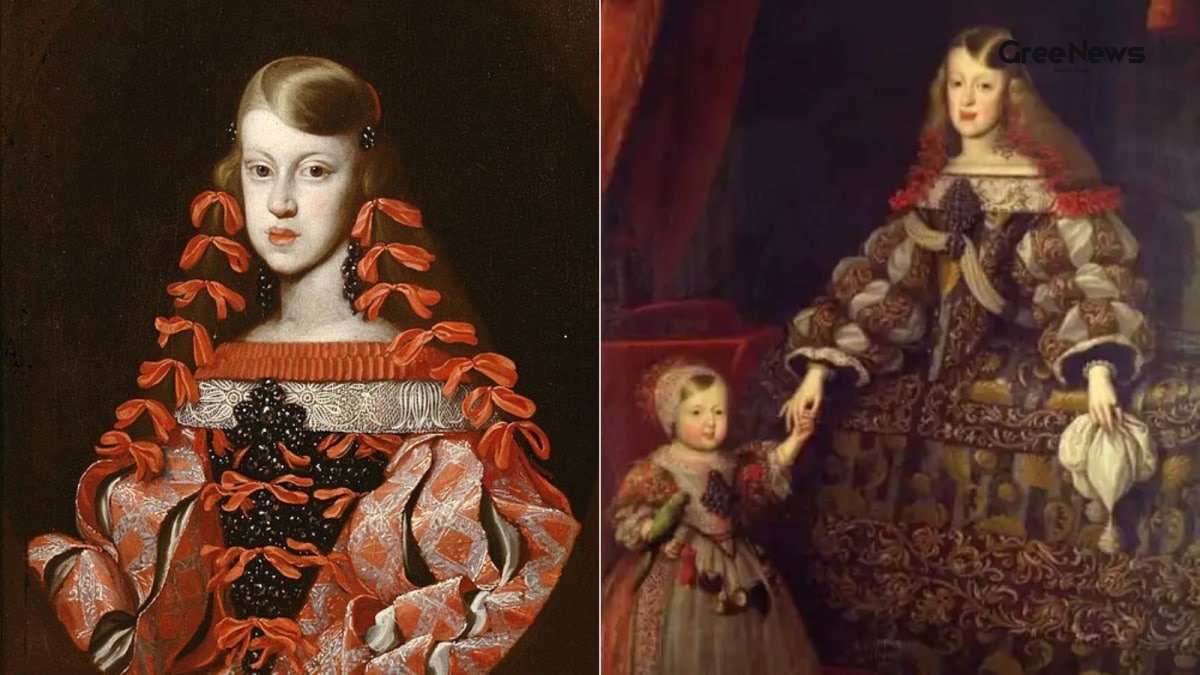
From a Grand Palace to a Life of Unchosen Destiny
When I first came across the story of Margaret Theresa while scrolling through the latest news India feeds, I was struck by how her life, though set in a completely different era, sounded like a drama you could see on a Netflix series today. Imagine being a teenager, still dreaming about school exams and weekend outings, and suddenly finding yourself thrust into a marriage arranged by the crown. That was Margaret’s reality. Born into the powerful Spanish Habsburg dynasty, her childhood was anything but ordinary, and her adult years turned out to be a relentless series of royal duties that left her exhausted and, ultimately, forgotten by the very family that gloried in her lineage.
Now, you might think a princess automatically lived a life of comfort and ease, but Margaret’s tale is a stark reminder that royalty often came with a heavy price. The Habsburg court was a political battlefield, and Margaret was caught right in the middle of it. If you ask any history enthusiast, they’ll tell you that back then, royal marriages were less about love and more about cementing alliances, and Margaret’s marriage to her own uncle was the ultimate example of that practice.
Early Years: Growing Up in the Shadow of Power
Margaret Theresa entered this world as a coveted jewel in the Habsburg crown. Her father, King Philip IV, ruled over a sprawling empire that stretched from the Iberian Peninsula to the New World. Growing up, Margaret was surrounded by opulent tapestries, golden chalices, and the constant hum of court intrigue. Yet, despite the lavish surroundings, her life was largely dictated by the needs of the dynasty.
Even as a child, she was taught the proper ways of a princess how to bow, how to chant prayers, and how to smile for the countless portraits that would eventually immortalise her. In most cases, a royal child’s education focused more on etiquette than on subjects like mathematics or science, which are things we now consider essential. And if you’re wondering how she felt about this regimented upbringing, I liked to imagine her sneaking a glance at the kitchen, longing for a plate of simple paratha instead of fancy banquet spreads a tiny, relatable Indian touch to envision her day‑to‑day cravings.
She was also constantly reminded that her value lay not just in her own grace, but in the alliances her marriage would bring. That’s why, at the age of fifteen an age when most of us were busy thinking about college entrance exams or first jobs Margaret found herself preparing for a marriage that would change the course of her life forever.
Marriage to Her Uncle: The Unusual Arrangement That Shocked Courts
Here’s the part that caught people’s attention when I first read about it Margaret married her own uncle, Archduke Leopold I of Austria. Yes, you heard that right. An uncle‑niece union was not unheard of in royal circles, but it still raised eyebrows even back then. For Margaret, it meant leaving the familiar courtyards of Madrid and moving to the imperial city of Vienna, a place that felt as foreign to her as a different state’s dialect might feel to a typical Indian teenager.
When she stepped into the grand halls of the Habsburg palace in Austria, she was not just a bride; she was a political pawn. The marriage was designed to strengthen the already fragile ties between the Spanish and Austrian branches of the Habsburg family. In many ways, it mirrored the way Indian political families sometimes arrange marriages to secure business and influence a practice that even today finds its way into breaking news India headlines.
What’s more, the marriage didn’t bring immediate happiness. Margaret, still a teenager, found herself in a household where court duties never ceased. From attending endless religious services to hosting lavish feasts, there was hardly a moment to breathe. I could picture her sitting in a quiet corner of the palace, yearning for a simple cup of chai, just like many of us crave a pause from our bustling routine.
Seven Pregnancies: A Relentless Cycle of Birth and Loss
After the marriage, the pressure to produce an heir kicked in, and Margaret’s life turned into a relentless cycle of pregnancies. Within just six years, she was pregnant seven times a staggering number considering her fragile health. In an era without modern medical care, each pregnancy was a dangerous gamble.
Imagine being a young woman today, dealing with a demanding job, family expectations, and the social pressure to settle down early, then being told you must keep having children without any support. That was Margaret’s reality, except the stakes were life‑or‑death. Out of those seven pregnancies, only one child survived beyond infancy a daughter named Maria Antonia.
Each loss was a blow that left Margaret physically and emotionally drained. The court chroniclers wrote in a detached tone about her “frequent miscarriages,” but behind those cold words were stories of a young girl who probably cried alone in the night, missing the carefree days of her childhood. This part of her story has become trending news India among history buffs, as more people are now discussing how royal women were forced into such exhausting cycles for the sake of succession.
She tried to stay resilient after all, she knew her role was crucial for the dynastic continuity. Yet, the constant grief took its toll, and as each pregnancy progressed, Margaret’s health worsened. By the time she was twenty‑one, her body was simply too worn out to keep up with the demands placed upon it.
The Final Years: Illness, Death, and the Aftermath
In the last stretch of her life, Margaret was plagued by a mysterious illness. The records from the Habsburg archives mention “a lingering fever” that refused to subside. Historians today speculate it could have been a form of tuberculosis or perhaps complications from the many pregnancies. Either way, the young princess, who once strutted through palace corridors with confidence, became a frail figure confined to her chambers.
Her death, at just twenty‑one, shocked the court. Even the powerful Emperor Leopold I, her own husband and uncle, was reportedly devastated. He commissioned a grand tomb in the Imperial Crypt, a tribute that still stands as a reminder of a life cut short. It’s a bit like when a beloved Bollywood star passes away too early; the entire nation feels the loss, and the memory lives on through stories and memorials.
Margaret’s demise also sparked discussions among contemporary courtiers about the toll that political marriages and relentless childbearing took on royal women. Some whispered that the court needed to reconsider how it treated its princesses, but such murmurs were quickly silenced by the weight of tradition.
Her daughter, Maria Antonia, survived into adulthood and eventually became a symbol of hope for the Habsburg line, but she always carried the shadow of her mother’s tragic life.
Legacy: Why Margaret Theresa Still Matters Today
Fast forward a few centuries, and you’ll find Margaret’s story cropping up in modern discussions, especially on platforms that love viral news and nostalgic content. Her life is often cited as a cautionary tale about the dangers of using individuals as pawns in larger political games. Even in India, where historical dramas and royal sagas are popular on TV, her narrative resonates with viewers who see parallels between past and present power dynamics.
When I think about it, the whole saga feels like a piece of breaking news that never really ends each new analysis, each documentary, each blog post adds another layer to the story, keeping it alive in the collective memory. The fact that Margaret’s tale continues to be part of trending news India shows that people still care about the human cost behind grand historical events.
Moreover, Margaret’s experience sheds light on the broader role of women in royal families across the world. Whether it’s the Habsburgs, the Mughals, or the contemporary Indian political families, the pattern of using marriage to secure power remains a recurring theme. The more we discuss these histories in a casual, conversational manner like I’m doing right now the more we can understand the importance of giving agency to those who were once silenced.
In short, Margaret Theresa’s short, tumultuous life reminds us that behind every crown lies a human story a story that can be as heartbreaking as any modern drama, and as relevant as the latest viral updates on social media.