The Mechanics Behind Radar‑Invisible Fighter Jets and the Rise of Indigenous Stealth Programs
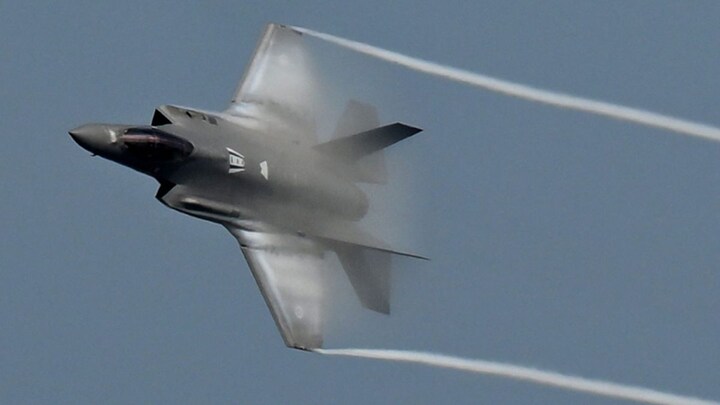
Stealth technology enables combat aircraft and missiles to evade radar detection. This article explains how the technology functions, why it matters in contemporary armed conflict, and how India is building its own capabilities.
Fundamental Principles of Radar Evasion
Radar systems locate objects by transmitting radio waves and listening for echoes that bounce back from physical surfaces. When a solid object reflects a portion of the transmitted energy, the radar receiver registers a return signal and calculates the object's range, speed, and bearing. Stealth technology focuses on suppressing that reflected signal, thereby reducing the observable radar cross‑section (RCS) of the platform. A lower RCS makes the target appear smaller on the radar screen, often below the detection threshold of conventional air‑defence radars.
The reduction of RCS relies on three interrelated strategies: geometric shaping, specialized surface materials, and, in some cases, active electronic counter‑measures. Each strategy tackles a different facet of electromagnetic reflection, and together they create a comprehensive low‑observable profile.
Geometric Shaping: Guiding Electromagnetic Waves Away from the Source
The most visible element of stealth design is the aircraft’s shape. By employing flat panels, sharp angles, and smooth curves, engineers steer incoming radar waves away from the transmitter rather than allowing them to bounce directly back. This principle, often described as “planar geometry,” eliminates large, perpendicular surfaces that would otherwise act as strong reflectors.
Key design features include a blended wing‑body configuration, inward‑sloping leading edges, and engine inlets shielded by serpentine ducts. The internal weapons bays also play a crucial role; by housing missiles and bombs inside the fuselage, external stores that would create prominent radar hotspots are eliminated. The net effect is a silhouette that, when illuminated by a radar pulse, scatters energy in directions that evade the originating radar antenna.
Radar‑Absorbing Materials: Turning Reflected Energy into Heat
Even the most carefully shaped airframe cannot completely eliminate every radar return, because some portion of the incident wave inevitably interacts with the aircraft’s skin. To further diminish those residual reflections, stealth platforms are coated with radar‑absorbing materials (RAM). RAM consists of specialized composites that contain conductive particles or magnetic ferrites embedded within a dielectric binder.
When radar energy strikes a RAM‑treated surface, the material converts a fraction of the electromagnetic energy into heat through dielectric loss and magnetic hysteresis. This conversion reduces the amplitude of the reflected wave, making the aircraft appear dimmer on radar displays. In addition to coating, some internal structural elements incorporate RAM‑infused laminates, ensuring that even the aircraft’s skeleton contributes to low observability.
Active Cancellation and Electronic Counter‑Measures
Beyond passive shaping and material science, advanced platforms incorporate active electronic systems designed to interfere with radar signals. One method, known as active cancellation, involves receiving the incoming radar pulse, generating a replica signal that is 180 deGrees out of phase, and transmitting the canceling waveform from onboard antennas. When the two waves meet, they destructively interfere, effectively nullifying the radar echo.
While active cancellation remains experimentally limited due to the precise timing required, many stealth aircraft also deploy traditional electronic counter‑measures such as radar jammers, decoys, and side‑lobe suppression techniques. These systems add layers of protection, ensuring that even if a radar lock is achieved, the platform can still evade engagement through signal disruption.
Why Stealth Matters in Modern Warfare
The strategic value of low‑observable aircraft lies in the ability to operate within heavily defended airspace without alerting the adversary. By staying below the detection threshold, a stealth fighter can conduct precision strikes, gather intelligence, and establish air superiority before enemy air‑defence networks have time to respond.
In addition, stealth technology forces opponents to invest heavily in counter‑stealth radars, hostile‑frequency transmitters, and multi‑static radar networks—systems that are costlier and more complex than traditional radar suites. The presence of a stealth capability therefore not only provides an immediate tactical advantage but also reshapes the strategic calculus of potential adversaries.
Evolution of Stealth From Concept to Operational Reality
The first practical demonstration of stealth principles appeared in experimental prototypes that experimented with angular surfaces and rudimentary RAM coatings. Over successive generations, designers refined the balance between aerodynamic performance and low observability, culminating in operational platforms that blend high maneuverability with a small RCS.
Modern stealth fighters incorporate integrated avionics suites that manage flight control, sensor fusion, and electronic warfare in a unified architecture. These systems allow the pilot to maintain situational awareness while the aircraft’s electronics continuously monitor the electromagnetic environment, automatically adjusting emission levels to stay hidden.
India’s Pursuit of Indigenous Stealth Capability
Recognizing the strategic importance of low‑observable platforms, India has embarked on a program to develop its own stealth fighter. The effort focuses on mastering the three pillars of stealth: shaping, materials, and electronic warfare. Indigenous research institutions are conducting wind‑tunnel tests to validate aerodynamic performance of faceted airframes, while material science laboratories are experimenting with locally sourced composites for RAM applications.
In parallel, India’s defence research organisations are advancing active electronic counter‑measure technologies, aiming to integrate them into a next‑generation combat aircraft. The goal is to field a fighter that can operate autonomously within contested airspace, delivering precision strike capabilities without reliance on external support.
Collaboration with established aerospace partners provides access to expertise in stealth manufacturing processes, but the emphasis remains on cultivating domestic design and production capabilities. By achieving self‑reliance in stealth technology, India intends to reduce dependence on foreign suppliers and enhance its strategic autonomy.
Challenges in Developing and Maintaining Stealth Platforms
Creating a stealth aircraft entails solving a complex set of engineering problems. The trade‑off between low observability and aerodynamic efficiency demands meticulous design iteration. Moreover, radar‑absorbing coatings must withstand extreme temperature variations, high‑speed airflow, and the mechanical stresses of combat operations while retaining their electromagnetic properties.
Maintenance of stealth surfaces adds another layer of difficulty. Routine cleaning, repair, and repainting must be performed in controlled environments to preserve the integrity of RAM. Any breach in the coating can create a radar hotspot that compromises the aircraft’s low‑observable status.
Finally, the rapid evolution of radar technology, including low‑frequency and multi‑static systems, requires continuous upgrades to stealth designs. Engineers must stay ahead of detection techniques by refining shaping, developing new material formulations, and enhancing electronic counter‑measure suites.
Future Directions for Stealth Technology
Research is progressing toward adaptive skin concepts that can alter their electromagnetic signature in response to changing threat environments. Such smart materials could dynamically adjust absorption properties, offering a variable RCS that confounds enemy sensors.
Another avenue explores the integration of directed‑energy weapons that can disrupt incoming radar pulses before they return to their source. While still in experimental stages, these technologies hint at a future where stealth is achieved not only through passive avoidance but also through proactive electronic interference.
For nations like India, investing in these emerging fields aligns with the broader objective of achieving a self‑sustaining advanced aerospace industry capable of producing next‑generation low‑observable combat aircraft.