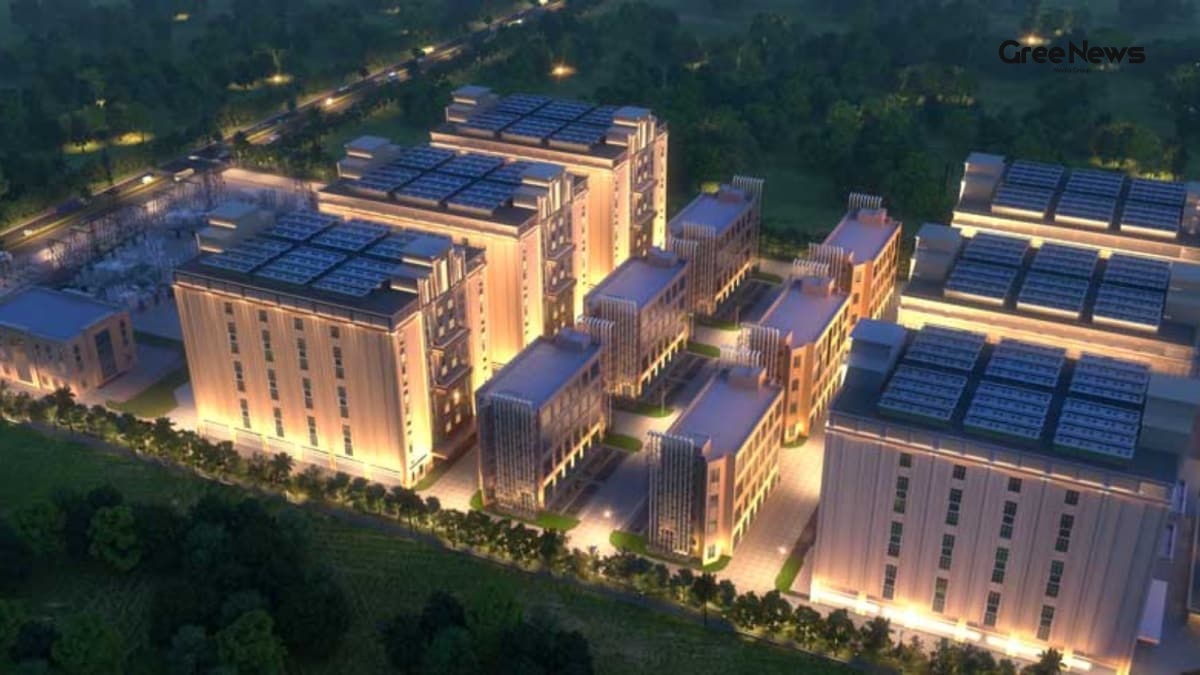
In the United States, nearly half of the data centre projects planned for 2026 are currently facing delays or cancellations
When I first saw the headline about US data‑centre projects stalling, I thought it was just another piece of breaking news that would fade away. But as a tech‑enthusiast who follows the latest news India every day, I started digging deeper and realised this was something far bigger than a simple supply‑chain hiccup. The global AI race has suddenly run into a very physical wall a shortage of transformers, switchgear and reliable electricity. In plain words, even though Silicon Valley can write code faster than you can say "cloud", it is now struggling to keep the lights on for the massive AI farms that need a constant, high‑power feed.
What happened next is interesting the shortage isn’t just a momentary glitch. It’s reshaping where the next generation of AI models will be trained and served. And guess what? That shift is pointing straight at India, turning us into a potential command centre for the next wave of AI. This caught people’s attention across the industry, and the story quickly became viral news among the AI community.
Why are US data centre projects stalling?
Talking to a friend who works in an electrical supply firm in Texas, I learned that the biggest culprit is a critical shortage of high‑power electrical infrastructure. The lead time for a transformer that can handle the wattage required by an AI data‑centre has ballooned from the usual two years to almost five years now. That’s a massive delay when you consider that a typical AI project wants to be up and running within 18 months. The shortage is hitting multiple fronts not just transformers, but also switchgear, which is the equipment that directs electricity safely through the plant.
And there’s more to the story. A large chunk of these components still comes from overseas, especially China. With trade tensions and new import restrictions, US companies find it hard to "shore up" domestic production quickly enough. In most cases, this means that even if a tech giant throws millions of dollars at a project, the money can’t buy time the parts simply aren’t there. This "power gap" is the reason why ambitious undertakings like OpenAI’s "Stargate" are now facing logistical hurdles that cash alone can’t fix.
Many people were surprised by the fact that this power crunch is not just about AI. It’s also tied to the broader "electrification" wave across America think electric cars, heat pumps, and renewable‑energy‑driven homes. All these new loads are competing for the same limited supply of high‑capacity transformers. So, the AI sector is essentially caught in a tug‑of‑war with everyday electrification trends.
How do these delays impact AI investment returns?
From an investor’s point of view, the math starts to look scary fast. The data‑centre sector is currently riding a $3 trillion investment supercycle, but the biggest value driver has always been "speed to market". When a data‑centre is delayed by two years, the GPUs that were intended to run the newest models can become almost obsolete before the servers even start churning out results. That "hardware depreciation" without any revenue stream drags down the expected return on investment dramatically.
Construction costs are also climbing steeply we are talking about $11.3 million per megawatt in the United States by 2026. Because of such high costs, many firms are starting to think twice about building massive "gigawatt‑scale" campuses that would need to plug directly into an already strained grid. Instead, they are looking at "distributed capacity" smaller, more flexible sites in regions where the grid can handle extra load or where regulatory approvals come faster.
In most cases, that shift in strategy also means scouting for locations outside the US that can offer cheaper power and faster build times. And that is where the next part of the story gets exciting for India.
What does the US power crunch mean for India?
When I heard about the US setbacks, I immediately thought of the buzzing data‑centre parks sprouting up around Hyderabad, Chennai and Mumbai. The Indian government’s recent budget announced a long‑term income tax holiday for foreign cloud providers that set up data‑centre capacity here, lasting until 2047. That’s a massive incentive, making India a "safe harbour" for AI workloads that need a reliable, cost‑effective power supply.
To put the numbers in perspective, building a data‑centre in the United States now costs roughly $11.3 million per megawatt, while in India the figure sits comfortably between $6 million and $7 million per megawatt. That cost advantage, combined with a relatively faster grid expansion, has already attracted an estimated 3.5 GW of capacity plans across hubs like Mumbai, Hyderabad and Chennai the biggest ever expansion in the country’s history.
Many industry watchers see this as a historic "sovereign opportunity" for India. As Western projects stall, global hyperscalers are rerouting their investments towards Indian soil. It’s not just about serving the domestic market; it’s about becoming the global back‑end for AI inference the part of the system that actually processes user requests in real time. While India does have its own execution risks especially around cooling technology and ensuring grid stability the ability to commission new capacity faster than the US is turning us into the new "command centre" for the AI revolution.
One anecdote that really brings this home: a colleague of mine who works with a cloud provider in Bengaluru mentioned that they recently received a call from a US‑based AI startup asking whether they could host a trial run of their latest model in India, simply because the US grid couldn’t guarantee the power they needed. That’s the kind of real‑world shift that makes this story more than just numbers it’s a lived experience for many of us in the tech ecosystem.
What can we expect next?
Looking ahead, the power crunch in the United States is unlikely to disappear overnight. As electric‑vehicle adoption grows and more homes switch to heat pumps, the demand for high‑capacity transformers will keep rising. Unless the US manages a massive overhaul of its electrical supply chain something that could take a decade the bottleneck will stay.
For India, the trend suggests a continued influx of foreign AI projects, especially from firms that need "distributed capacity" and lower construction costs. The government’s tax incentives, combined with the country’s relatively young and tech‑savvy workforce, are setting the stage for a boom that could see India handling a significant chunk of global AI inference workloads within the next few years.
Many people were surprised by how quickly the narrative shifted from a US‑centric AI story to an India‑focused one. If you follow trending news India, you’ll notice a surge in articles about Indian data‑centre parks, renewable‑energy‑backed AI hubs, and collaborations between Indian power utilities and global tech giants. That’s a clear sign that the global AI community is watching India’s moves closely.
In the end, whether you’re an investor, a tech professional or just someone who loves to keep up with breaking news, the takeaway is simple: the "hardware of power" is now as critical as the software that powers AI. And right now, India is poised to play a starring role in that story.