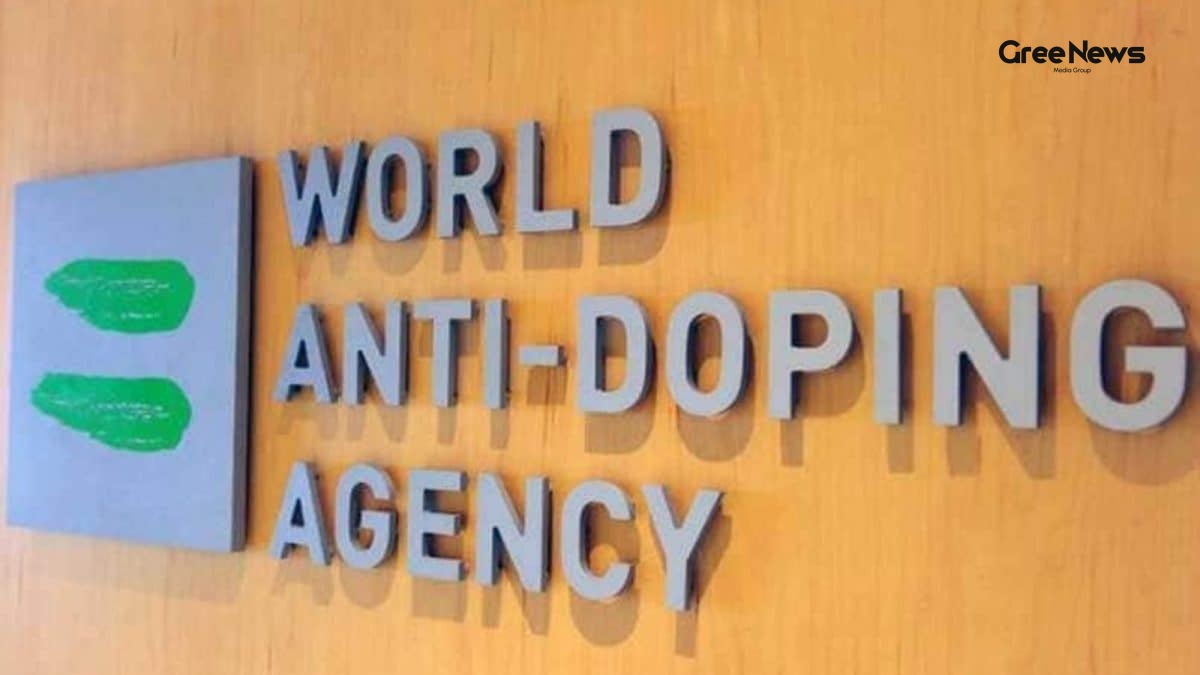
WADA chief Witold Banka says India has a serious doping problem but is making sincere efforts, backs Operation Upstream and urges tougher action on drug suppliers, not athletes
Honestly, when I first heard that Witold Banka, the president of the World Anti‑Doping Agency, was coming to India, I thought it would be just another boring press conference. But the moment I got a chance to sit in the same room with him along with Sports Minister Mansukh Mandaviya, NADA chief Anant Kumar, sports secretary Hari Ranjan Rao and senior CBI officials the whole vibe changed. It felt like I was part of a behind‑the‑scenes story that could end up in the latest news India feeds.
Banka started off by saying, "Nobody is blind to India's serious doping problem," but he didn’t just stop at pointing fingers. He actually appreciated the "sincere efforts" we’re putting in, especially the participation in the INTERPOL‑backed Operation Upstream. It was refreshing to hear a global watchdog acknowledge that we’re trying, not just blaming us.
At the end of this whirlwind tour, I walked out with a sense of optimism that I hadn’t expected. Banka said he was leaving with “optimism about India’s future,” which, trust me, sounded like a promise that the upcoming Commonwealth Games 2030 and our Olympic dreams for 2036 might still be on the table as long as we get our WADA compliance right.
Doping In India?
Now, let’s talk numbers because every legal doc and breaking news update keeps shouting the same thing. India has topped WADA’s list of dope offenders for three straight years, recording the highest positivity rate among major nations. That’s a hard pill to swallow, especially when we are gunning for the Commonwealth Games in 2030 and eyeing the Olympics in 2036.
What’s interesting is that while the positivity rate is high, the government is also pushing a big testing agenda. From roughly 4,000 samples in 2019, NADA has ramped up to about 8,000 samples in 2025. Still, countries like China are testing double that number. So the question remains are we doing enough, or just moving numbers around?
During the discussion, Banka made a striking point: "The biggest producer of performance‑enhancing drugs (PEDs) and steroids is in India. There is a serious problem and nobody is blind to it, but at the same time, India has aspirations of hosting the World Championships of different sports and also the Olympics, which is obviously not possible without WADA compliance." That line really hit home because it tied the doping issue directly to our biggest sporting ambitions.
He added that the effort to address the problem is sincere and that he’s taking a lot of optimism with him. For a moment, I could picture the whole of India cheering if we finally clear the compliance hurdle.
Poll For You
How likely is India to achieve WADA compliance before hosting major international sporting events?
- AVery likely
0
- BSomewhat likely
0
- CUnlikely
0
- DHighly unlikely
0
Seeing the poll pop up made me think of the countless social media threads where people debate whether India can clean up its act in time. Many were surprised to learn just how high the positivity rate is, and a few even shared stories of athletes who were caught unaware.
Operation Upstream The Big Crackdown
When Banka spoke about Operation Upstream, I could feel the excitement in the room. He said the operation has already led to 250 raids, the seizure of 90 tonnes of PEDs that's about 1.8 billion doses of banned substances and the closure of 88 illegal laboratories across 20 countries. Those numbers sound almost unbelievable, yet they are real, backed by INTERPOL’s intelligence.
He warned that details could not be disclosed because the operation is still on‑going, but he promised that more information would be shared later. As someone who follows viral news, I could see the headlines already forming: “Operation Upstream busts global PED network India leads the charge”.
Banka also highlighted the need for tighter coordination with the CBI. He mentioned, "Obviously we have had discussions with the CBI on this with regards to intelligence gathering and details of it cannot be shared right now because it’s an ongoing operation." This tells me that the fight isn’t just about testing athletes; it’s about taking down the entire supply chain.
He urged NADA to back the crackdown with targeted testing and strong educational programmes. In my view, this two‑pronged approach cracking the market and educating athletes is exactly what the country needs to move from being a donor of PEDs to a champion of clean sport.
Increased Testing Yet Not Enough
Let’s get practical. NADA’s testing numbers have indeed gone up from about 4,000 samples in 2019 to roughly 8,000 in 2025. But when you compare that with China’s 15,000‑plus annual tests, you realise we’re still lagging behind.
Banka was crystal clear: a lower positivity rate does not automatically mean we’re doing a better job. He said, "If the numbers go down drastically, I would be very suspicious. More cases is sad news for you guys but from my perspective, it implies better surveillance. This is not about numbers, this is about the process."
In other words, we should not celebrate a drop in positive tests without ensuring that the testing process is robust. He also reminded everyone that the goal isn’t to punish athletes, but to assist them and dismantle the supply chain that endangers their careers.
I remember a conversation with a junior athlete who confessed that he didn’t even know a lot of the substances he was given were banned. That’s why Bank’s focus on “victims” rather than “culprits” feels so right.
Criminalisation Of Doping
Now onto a topic that sparked a lot of debate during the meeting should doping be criminalised? Banka, who hails from Poland, has long argued for tough laws against dopers. He said that any legislation should target the suppliers, coaches, and managers the people who actually push the drugs, not the athletes who may be naïve or pressured.
He told the room, "I encourage governments to criminalise doping. When you give doping to minors or to athletes who don’t know about it, then you should be held accountable." At that moment, WADA’s Director of Intelligence and Investigations, Gunter Younger, jumped in to stress that athletes remain victims a line that resonated strongly with the young sports community listening.
Bank’s practical stance was evident when he said, "Look, let’s be practical, doping can never be eliminated. You will always have individuals who want to cheat and adopt unfair means. There will be violators. What we can do is make PEDs inaccessible to athletes and Operation Upstream is a step in that direction."
What stuck with me was his assertion that the drug trade in PEDs is actually more profitable than traditional narcotics like cocaine. He explained that international criminals view PEDs as a low‑risk, high‑reward business. That’s why a coordinated, global crackdown is essential.
He summed it up nicely: "We don’t want athletes to go to jail, only the suppliers. Those people should face strong consequences." It’s a sensible view that aligns with what many of us who follow trending news India were hoping to hear.
What This Means For India’s Sporting Future
Walking out of the meeting, I couldn’t help but think about the ripple effect of all these statements. If the government tightens laws against the supply chain, if NADA ramps up targeted testing, and if Operation Upstream continues to dismantle illegal labs, then India could finally clean up its image.
For athletes, it means fewer temptations and clearer guidelines less fear of being caught unaware. For fans, it could revive confidence that our heroes on the track or field are competing fairly. And for the nation, it’s a step closer to hosting the big‑ticket events we all dream about.
But the challenge remains huge. As Bank said, "Athletes do not dope alone." It’s a network, a system, and it will take sustained effort from every corner from sports ministries to local gyms, from school coaches to international agencies.
In most cases, the path to compliance will be messy, with setbacks and occasional scandals that catch people’s attention. Yet, as a sports enthusiast, I’m hopeful. The very fact that the WADA chief is publicly acknowledging India’s sincere steps gives me optimism that the ‘viral news’ narrative can shift from scandal to success.
So, if you’re scrolling through the latest news India and see headlines about doping busts, remember there’s a bigger story one where India is trying hard to prove that we can host the world’s biggest sporting spectacles without compromising on clean sport.
Stay tuned, because the fight against doping is ongoing, and every piece of information we share helps build a cleaner, brighter future for Indian sports.
(With inputs from Agencies)