Wanindu Hasaranga’s Strategic Navigation of BCCI Regulations and Lucknow Super Giants’ Dilemma
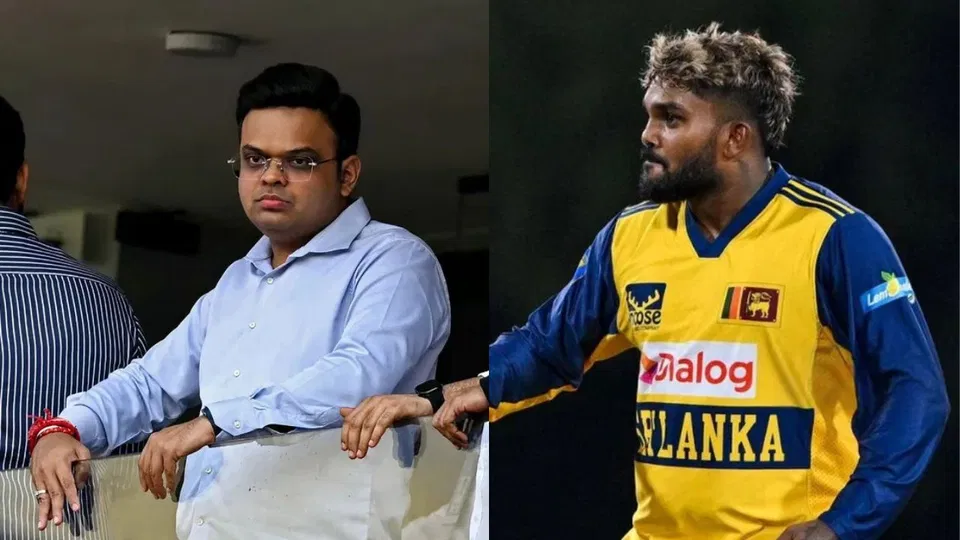
The ongoing edition of the Indian Premier League is advancing with each fixture, drawing heightened enthusiasm from fans worldwide. Amid the excitement, the status of several overseas talents remains a focal point, none more prominent than the Sri Lankan all‑rounder Wanindu Hasaranga.
Background on the Auction and Initial Expectations
During the most recent player auction, Lucknow Super Giants secured the services of Wanindu Hasaranga for a sum of ₹2 crore, matching the base price set for the Sri Lankan specialist. The acquisition was intended to bolster Lucknow Super Giants’ spin department, leveraging Wanindu Hasaranga’s reputation for wicket‑taking prowess and his extensive experience in high‑pressure tournaments.
Lucknow Super Giants entered the season with a clear strategic plan that placed Wanindu Hasaranga at the heart of its bowling attack. The franchise’s management and coaching staff publicly expressed confidence that Wanindu Hasaranga would deliver crucial breakthroughs, especially on turning pitches where spin often dominates the outcome.
Injury Concerns Emerging from the International Calendar
Complications arose when Wanindu Hasaranga sustained a tear in the left hamstring while representing his national side at the ICC Men's T20 World Cup. The injury sidelined Wanindu Hasaranga for an extended period, roughly two months, and prompted a comprehensive rehabilitation program overseen by his home board’s medical team.
Although the rehabilitation agenda was described as mandatory, subsequent communication regarding Wanindu Hasaranga’s progress and potential readiness for the league remained sparse. The absence of detailed updates contributed to growing uncertainty surrounding his imminent participation.
Mandatory Fitness Test and No‑Objection Certificate Requirements
All overseas competitors are obligated to clear a fitness assessment prior to entering the league, a prerequisite that also involves securing a No‑Objection Certificate (NOC) from their respective cricket governing bodies. Recent information suggests that Wanindu Hasaranga has not yet completed the scheduled fitness evaluation, a step that is essential for final clearance.
Initial reports indicated that Wanindu Hasaranga was engaged in a compulsory rehabilitation regimen, yet no further clarification has been provided regarding the timeline for the fitness test or the issuance of the NOC. As a result, Lucknow Super Giants have not observed Wanindu Hasaranga reporting to the team camp, nor have they received a definitive schedule for his arrival.
Overview of the BCCI’s Two‑Year Withdrawal Ban Policy
In the season preceding the current edition, the Board of Control for Cricket in India introduced a stringent regulation designed to curb last‑minute withdrawals by players who have been selected in the auction. Under this policy, any participant who registers for the auction, is subsequently chosen by a franchise, and then withdraws before the commencement of the tournament, will incur a ban spanning two consecutive seasons.
The rule explicitly exempts players who withdraw due to a verified serious injury or medical condition, provided that the home cricket board officially confirms the circumstance. This exception aims to balance the integrity of the competition with genuine health concerns.
The inaugural application of this policy involved England’s Harry Brook, who was drafted by the Delhi Capitals but later withdrew. As a consequence, Harry Brook received a two‑season suspension, rendering him ineligible for both the current and the following edition of the league.
Another England entrant, Ben Duckett, faced a comparable situation when he withdrew to prioritize international commitments, placing him under potential scrutiny for the same disciplinary measures.
Potential Exploitation of the Regulation by Wanindu Hasaranga
While the official narrative cites the lack of a No‑Objection Certificate as the primary obstacle to Wanindu Hasaranga’s participation, alternative analyses propose a more calculated approach. According to data from T20 Tracker, Wanindu Hasaranga may be dissatisfied with the monetary valuation assigned at the auction. However, the restrictive nature of the BCCI’s withdrawal ban prevents a straightforward withdrawal without incurring punitive consequences.
The strategy, as outlined by observers, involves postponing the mandatory fitness test, thereby maintaining a technical status of unavailability without formally withdrawing. This maneuver could compel Lucknow Super Giants to seek a replacement for the duration of the tournament, while preserving Wanindu Hasaranga’s eligibility for future editions under the current regulatory framework.
Historical IPL Contributions of Wanindu Hasaranga
Prior to the current impasse, Wanindu Hasaranga has accumulated a notable record within the league. His tenure includes stints with Royal Challengers Bengaluru and Rajasthan Royals, during which he displayed a blend of spin variation and batting depth.
In the most recent completed season, Wanindu Hasaranga featured in eleven matches for Rajasthan Royals, claiming an equal number of wickets while maintaining an economy rate marginally above nine runs per over. Across his overall league experience, Wanindu Hasaranga has taken forty‑six wickets in thirty‑seven appearances, posting an economy rate in the mid‑eight runs per over range.
These statistics underscore Wanindu Hasaranga’s capacity to influence match outcomes, particularly through breakthrough spells that can shift momentum during crucial phases of the hundred‑ball contest.
Implications for Lucknow Super Giants and Upcoming Fixtures
The pending status of Wanindu Hasaranga introduces a layer of strategic uncertainty for Lucknow Super Giants. The franchise’s game plan, which hinged on leveraging a premier spin option, must now accommodate the possibility of fielding an alternative bowler or re‑configuring the spin rotation.
Lucknow Super Giants are slated to meet Kolkata Knight Riders in an upcoming encounter later this season. The outcome of that match could be significantly affected by the availability—or lack thereof—of Wanindu Hasaranga, as the spin department will need to adapt to varying pitch conditions and opposition batting line‑ups.