How I First Heard About the Resignation
Honestly, I was sipping my chai on a lazy afternoon when the news channel flashed a breaking story about a judge walking out of the Allahabad High Court. It caught my eye because it is not every day that a sitting judge decides to quit while an impeachment motion is already brewing. The name on the screen was Justice Yashwant Varma, and the headline shouted something about cash being found at his Delhi home. I remembered reading about a big fire there the previous year, and suddenly the whole picture started to form in my mind.
What made the story even more bizarre was that the resignation was addressed to President Droupadi Murmu. I mean, how often do we see a judge sending a formal letter to the President? The letter was short, emotionally charged, and it spoke of “deep anguish” without spilling the exact reasons. That, for me, felt like the opening scene of a courtroom drama – a mix of shock, curiosity and a dash of sympathy.
The Cash Row That Started It All
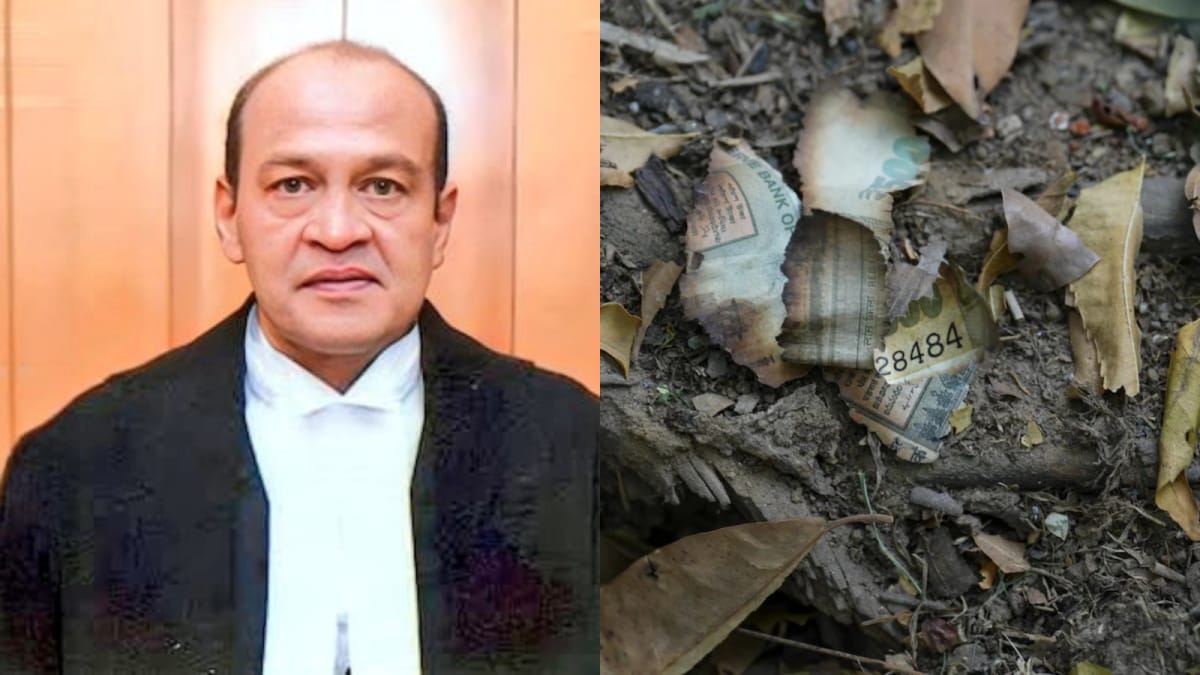
The whole saga began when a massive stack of cash was discovered at Justice Yashwant Varma’s Delhi-based residence after a fire broke out there. The media covered the incident extensively, and everywhere you turned, there were headlines about “cash controversy” and “possible misconduct”. The matter was so serious that Chief Justice Sanjiv Khanna, who was then the head of the judiciary, decided to take it up personally.
Chief Justice Sanjiv Khanna formed a three‑member panel to probe the allegations. The panel’s job was simple on paper – to find out whether the cash truly belonged to Justice Yashwant Varma or whether there was any foul play involved. Justice Yashwant Varma, however, denied that any cash had been recovered from his house. He also insisted that none of his family members had moved anything from the damaged storeroom. The denial was firm, but the investigation kept moving forward.
Within a short span, the Supreme Court stepped in and transferred Justice Yashwant Varma to the Allahabad High Court. In that same order, the Supreme Court specifically told the Chief Justice of the Allahabad High Court not to assign any judicial duties to Justice Yashwant Varma until the matter was cleared. That was a clear signal that the higher bench was taking the allegations seriously.
Later on, the three‑member panel concluded that Justice Yashwant Varma was indeed guilty of misconduct. The panel’s recommendation was for his removal. But Justice Yashwant Varma refused to step down at that point. Consequently, Chief Justice Sanjiv Khanna wrote to President Droupadi Murmu and Prime Minister Narendra Modi, seeking an impeachment of Justice Yashwant Varma.
The Impeachment Process – A Rare Affair
Impeaching a judge in India is something that has never actually happened before, so the whole process felt like watching a historic event unfold. The government started gathering signatures for a motion to remove Justice Yashwant Varma, and most of the major political parties said they would back the motion. This was a big deal because it showed a rare political consensus on the need to act against a member of the judiciary.
Following that, Lok Sabha Speaker Om Birla set up a three‑member parliamentary panel under the Judges (Inquiry) Act, 1968. The panel consisted of Justice Aravind Kumar of the Supreme Court, Justice Maninder Mohan, the Chief Justice of the Madras High Court, and senior advocate B V Acharaya. Their job was to conduct a thorough inquiry into the cash controversy and the alleged misconduct of Justice Yashwant Varma.
Justice Yashwant Varma tried to challenge the validity of this panel before the Supreme Court. He argued that the panel itself was not the proper forum for such an investigation. The Supreme Court, however, dismissed his plea and told the parliamentary panel to go ahead with the inquiry. This decision reinforced the idea that once a motion for impeachment is in place, the judiciary does not have a say in halting it.
It’s worth noting that, despite the intense media coverage, no judge in India has ever been successfully removed through impeachment. The whole episode was closely watched by lawyers, scholars, and ordinary citizens alike, as it could have set a precedent for future cases.
Judicial Immunity and the 1991 Verdict
One of the most interesting aspects of this story is the special protection that judges enjoy under Indian law. Back in 1991, the Supreme Court handed down a verdict that gave a virtual immunity to judges of constitutional courts. The ruling basically said that no criminal case could be registered against a High Court judge, a Chief Justice of a High Court, or a Supreme Court judge unless the Chief Justice of India was consulted.
The verdict also explained that the government must give “due regard” to the opinion of the Chief Justice. If the Chief Justice feels that a case is not fit for proceeding under the Act, the case should not be registered. In the rare situation where the Chief Justice himself is the subject of the allegations, the government must consult any other judge or judges of the Supreme Court.
In the context of Justice Yashwant Varma, this meant that an FIR could only be filed against him after the government consulted Chief Justice Sanjiv Khanna. Because the Chief Justice had already been involved in the investigation and the subsequent panel, the immunity effectively blocked any criminal registration while Justice Yashwant Varma remained a sitting judge.
Why the Resignation Changes Everything
When Justice Yashwant Varma’s resignation letter reached President Droupadi Murmu, it instantly altered the legal landscape. By stepping down, Justice Yashwant Varma lost the constitutional shield that prevented direct criminal investigations. The impeachment process, which was still underway under the Judges (Inquiry) Act, 1968, essentially came to a halt. No longer being a sitting judge, Justice Yashwant Varma can now be subjected to a regular criminal probe regarding the cash found at his house.
From a practical viewpoint, this means that law enforcement agencies can now register an FIR against Justice Yashwant Varma without having to run the extra mile of consulting Chief Justice Sanjiv Khanna. The prospect of a criminal case against a former high‑court judge is now very real, and it will be interesting to see how the authorities proceed.
For me, the whole turn of events felt like a chess game where one player finally decided to resign, changing the rules for the remaining pieces. The resignation closed a chapter that could have set a historic precedent for the impeachment of a sitting judge, but it opened another chapter where Justice Yashwant Varma might face ordinary criminal proceedings.
Personal Reflections and What It Means for the Judiciary
Living in a country where the judiciary is often viewed as the last bastion of fairness, hearing about a judge caught in a cash controversy was unsettling. I have friends who are lawyers, and they keep telling me that the mere presence of such a scandal erodes public confidence. The fact that Justice Yashwant Varma decided to resign rather than fight the impeachment till the very end shows a level of pragmatism, but it also leaves many questions unanswered.
One thing that struck me was how rarely we see the judiciary’s internal mechanisms being tested in public. Most of the time, we hear about judges delivering landmark judgments, but not about judges being investigated. The whole episode forced many of us to think about the balance between judicial independence and accountability. The 1991 verdict that gave judges near‑absolute immunity is meant to protect them from frivolous suits, but when the allegations are as serious as cash hoarding, there has to be a way to hold them accountable.
Another observation from my side is the role of the media in shaping public perception. The headlines were sensational, the pictures of cash stacks were everywhere, and the narrative often swung between “judge is innocent” and “judge is guilty”. As a regular citizen, I found it hard to sift through the bias and get to the real facts. That’s why I tried to follow the official statements: the panel reports, the Supreme Court orders, and the resignation letter addressed to President Droupadi Murmu.
From a broader perspective, the episode may serve as a cautionary tale for future judges. Knowing that a resignation can strip away immunity could act as a deterrent against misconduct. On the other hand, it might also make some judges think twice before taking a stand against political pressure. The delicate equilibrium between the branches of government is at stake, and every such case adds a new layer to the conversation.
Looking Ahead – What Could Be Next?
Going forward, the immediate question is whether law enforcement will actually file an FIR against Justice Yashwant Varma and what the outcome of any potential trial might be. The legal community is watching closely, and many senior advocates are already discussing the possible implications. If Justice Yashwant Varma is eventually found guilty of any criminal offence, it could set a new legal precedent for how former judges are treated in the criminal justice system.
Another angle to watch is the parliamentary panel’s final report. Even though the impeachment process has stalled, the panel might still submit its findings, which could influence future legislative reforms. Some politicians have already hinted that the Judges (Inquiry) Act might need an amendment to address scenarios where a judge resigns before the inquiry concludes.
For ordinary people like me, the biggest takeaway is the reminder that no one, not even a judge, is entirely above the law. The episode sparked many debates in tea‑shops and online forums about whether the current system of judicial immunity is too strong or just right. I find myself leaning towards a middle path – enough protection to keep judges independent, but enough accountability to prevent abuse.
In any case, the story of Justice Yashwant Varma’s resignation will remain a landmark in India’s legal history. Whether it leads to stricter scrutiny of judges, reforms in the impeachment process, or simply becomes a cautionary anecdote, only time will tell. What I know for sure is that the whole saga gave me a deeper appreciation of how intricate and fragile the balance of power really is in our democracy.