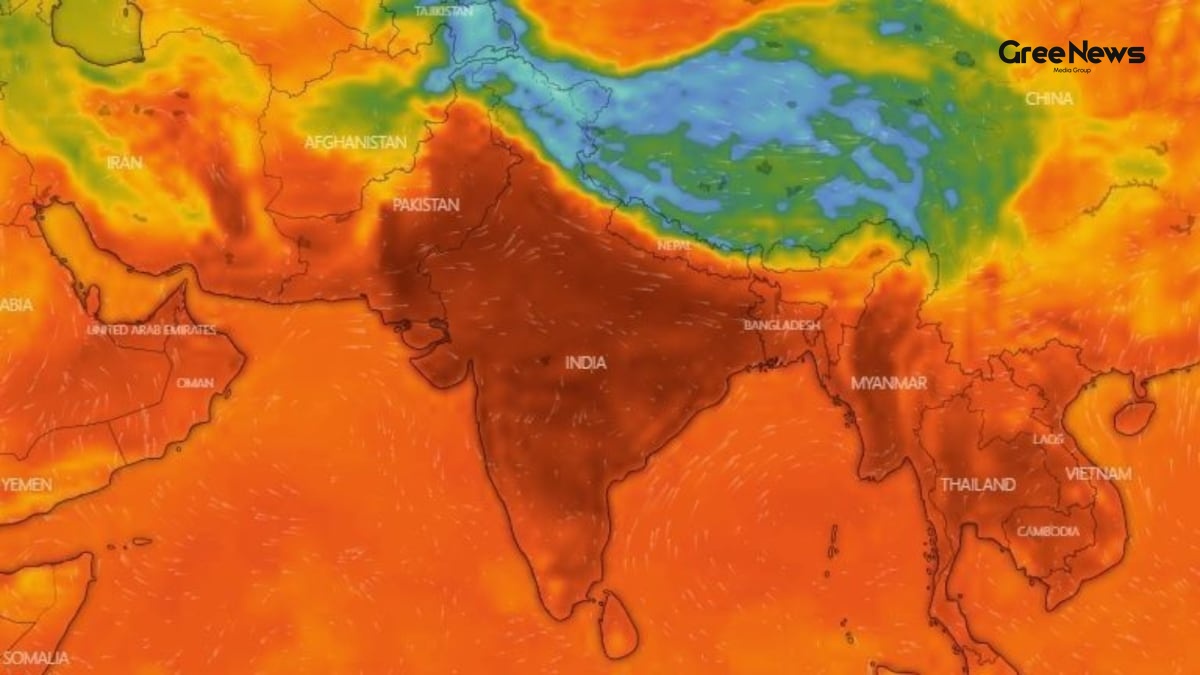
How I Came Across the Viral Heat Map
Honestly, I was just scrolling through my phone on a lazy evening, checking the latest news India updates, when a bright orange splash caught my eye. It was a heat map shared by Indian Tech & Infra, and the caption read “The whole of India right now”. The map was screaming hot most of the Indian subcontinent was drenched in deep orange and fierce red, while large swathes of Africa looked comparatively cooler, painted in gentler yellows and Greens. I thought, “What on earth? Is India actually hotter than Africa today?” That curiosity pushed me to dive deeper, and before I knew it, the post had gone viral, turning into breaking news for a lot of us who love a good debate.
What happened next is interesting my friends, family, and even strangers on Twitter and Instagram started replying with their own heat‑related anecdotes. Some said they could feel the pressure cooker effect in their own kitchens, others posted pictures of wilted plants. The conversation quickly turned from a simple image share to a full‑blown discussion about climate, geography and even the role of the Himalayas.
What the Map Actually Shows
The map uses a colour scale where the brightest reds and oranges represent the highest temperature zones. According to the visual, most of India, from the sun‑baked plains of Uttar Pradesh to the coastal heat of Chennai, is bathed in those intense shades. Meanwhile, parts of Africa even desert regions appear in softer tones. This discrepancy immediately sparked a wave of trending news India posts, with users questioning the data source, the method of representation, and the broader implications for climate awareness.
Most of us who live in Indian cities know what a hot June feels like the heat can be relentless, especially when the monsoon has not yet arrived. The map seemed to capture that feeling, but it also amplified it, making the entire nation appear as one massive heat island. That visual impact is probably why the story spread so quickly, becoming viral news that dominated timelines across the country.
Expert Insight: Himanshu Tyagi, IFS Explains the “Pressure Cooker Effect”
It wasn’t long before Himanshu Tyagi, IFS reposted the same image, adding a detailed comment that explained why India often feels like a giant pressure cooker during the peak summer months. According to Himanshu Tyagi, IFS, geography plays a massive role. The Himalayas act like a solid wall, largely blocking cool winds that would normally travel down from the Arctic and Siberia. On the other side, dry winds blowing from the west especially those originating from the Thar Desert act like natural dryers, stripping moisture from the soil and intensifying the heat.
In most cases, Himanshu Tyagi, IFS wrote that the solution lies in conserving existing Green cover, aggressive afforestation, and mindful development. He pointed out that preserving forests can help trap humidity and act as a natural cooling system. This explanation resonated with many, turning the discussion into a blend of scientific insight and practical suggestions.
One of the comments that caught people’s attention was exactly from Himanshu Tyagi, IFS when he said, “The Himalayas act as a giant wall, largely blocking the cool winds from the Arctic and Siberia. Meanwhile, dry winds from the west, especially from the Thar Desert, act as natural dryers, stripping all moisture from the soil.” That line summed up the entire phenomenon in a way that even a layperson could grasp.
Public Reaction: Voices from the Streets and Screens
After Himanshu Tyagi, IFS posted those observations, the comment section exploded. One user slammed government agencies for clearing forests in the name of development, writing, “Sir, your own dept is giving forest clearances left right and centre. Areas requested for development being marked as not being forest land for the purpose of easy approval. Allowing destruction at this rate will be catastrophic for the subcontinent.” The frustration was palpable many felt that the very policies meant to boost growth were back‑firing by worsening the heat.
Another voice shared a more nuanced take, saying, “No, it can’t be a solution in my opinion. We must protect integrity of each ecosystem. Every landscape has its own ecological value.” This comment highlighted a growing awareness that planting trees alone may not be enough; preserving existing ecosystems is just as critical.
Someone else reminded everyone of the Himalayas’ dual role, noting, “The same Himalayas is responsible for monsoon rain feeding all India. Everything has pros and cons. The other side of the Himalayas in Tibetan lands don’t get rainfall and are uncultivable land with negligible population living there.” That perspective added depth, showing that the mountains are both a blessing and a barrier.
On a lighter note, a user from Balangir (a city that often records scorching temperatures) posted, “My city Balangir is the Asia 2nd most hottest city 😭😭😭 very difficult to stay even in. Indoor 😭.” Such personal anecdotes made the debate feel real for many of us dealing with sweltering afternoons.
Suggested Solutions From Tree‑Planting Schemes to Lifestyle Changes
Amid the heated arguments, several constructive suggestions popped up. One user proposed a nationwide “Har Ghar Ped” scheme, urging the government to launch a program where each household plants fruit‑bearing trees. The comment read, “Govt should bring on new scheme Har Ghar Ped Yojna ya Har Khet Ped Yojna where we should plant most of fruit‑based trees and also citizens should consume at least 30% fruit in their meals; it will help farmers, health of citizens, and it will naturally drop down temperature.” The idea tied together environmental benefits with public health, resonating with many Indians who love mangoes, guavas, and papayas.
Another suggestion focused on reducing overall consumption, with a comment saying, “Only a bit right, first priority #depopulation, 2nd #bevegan, 3rd #degrowth (minimum consumption). No other way out. And the solution pointed out by you is in fact a subset of the one I mentioned.” While this view seemed extreme to some, it sparked discussions about lifestyle changes that could lower the nation’s carbon footprint.
Even everyday practices like using reflective rooftops, promoting water‑saving irrigation, and encouraging public transport were mentioned, showing that solutions can range from policy level interventions to simple household adjustments.
My Personal Take Living the Heat and Hope for Change
As someone who lives in a mid‑size town in central India, I’ve felt the “pressure cooker” feeling more than ever. Last summer, I could barely step out of my house after 3 pm because the streets were like an oven. The heat made my evening walks impossible, and the power cuts made it even tougher. Seeing that map reminded me of those sweltering evenings, and it also made me wonder how many of us are just tolerating the heat without questioning its root causes.
What really struck me was the collective concern from ordinary people from farmers worried about crop loss, to students who can’t study comfortably, to office workers stuck in air‑conditioned cubicles with the cost of electricity soaring. The conversation didn’t stay limited to scientific explanations; it became a platform for us to voice everyday frustrations and aspirations.
In most cases, the consensus I sensed was that we need a mix of big‑picture policies and small‑scale actions. Protecting forest cover, regulating construction near fragile ecosystems, and promoting afforestation are essential. But at the same time, each of us can plant a tree, consume more locally grown fruit, and support Green initiatives in our neighborhoods. That blend of top‑down and bottom‑up approaches feels like the most realistic path forward.
One practical step I’ve taken after reading the discussion is joining a local “Tree‑Planting Saturday” group that meets every month. We focus on planting native species that don’t need excessive water a tiny effort, but it feels good to be part of a solution.
Conclusion The Heat Map as a Mirror and a Call to Action
The viral heat map didn’t just show numbers; it reflected the lived reality of millions of Indians feeling the heat every day. It sparked a wave of breaking news posts, trending news India threads, and countless personal stories that highlighted the complex interplay of geography, deforestation, and development.
While the Himalayas block cool winds and the Thar Desert pushes dry air into the plains, our response can be shaped by both preserving what we have and planting what we need. The discussion around afforestation, responsible development, and lifestyle shifts shows that the Indian public is ready to engage with climate challenges.
So, the next time you see a colourful map on your feed, remember it’s more than a visual it’s a conversation starter, a plea for better forest policies, and a reminder that each of us can play a role, whether by planting a tree, supporting Green schemes, or simply staying informed through the latest news India sources.