When you think of Babar Azam, the first thing that usually pops up in your mind is his smooth batting technique and that famous calm composure he shows on the field. So, you can imagine the surprise on everyone’s face when, in a recent PSL clash, the skipper turned visibly furious and started arguing with the umpires over a ball change. It was a moment that quickly turned into breaking news, sparking endless debates on social media and among cricket lovers across the country.
Just to set the scene it was a packed stadium, the stands buzzing with the usual chants of Peshawar Zalmi fans and the rival Qalandars supporters. The atmosphere was electric, the kind of vibe you only get during a high‑stakes thriller in the PSL. In most cases, matches like these are a blend of skill, strategy, and a dash of drama, but this particular game gave us a whole lot more drama than anyone expected.
Peshawar Zalmi In Control Before Qalandar Chase
Putting the numbers on the board, Lahore Qalandars had posted a massive 199, a score that looked pretty steep for any team chasing at that point. Michael Bracewell’s 83 off 45 balls was the cornerstone of that total, while Babar Azam himself contributed a quick 59, also off 45 deliveries, making him the second‑highest run‑getter of the innings. Those numbers were enough to put a lot of pressure on the Zalmi batting line‑up.
When the Zalmi innings began, the openers Fakhar Zaman and Mohammad Naeem seemed comfortable, cruising without much trouble. The first two overs went by fairly peacefully, as the ball rolled nicely and the fielders settled into their positions. It looked like Zalmi were about to chase down the target without too much hassle.
But then, something shifted. The match entered a phase where each ball mattered a lot, and you could see the frustration building up on the field. The feeling was almost palpable you could hear the murmurs of the crowd as both teams sensed that the game could swing either way.
What happened next is interesting: just as the pressure mounted, the umpires decided to change the ball not once, but twice within a short span of overs. That decision, which might seem routine at a glance, turned the entire scenario upside down for the Zalmi side, especially for Babar who was already feeling the weight of the chase.
The Babar Azam vs Umpires Clash In PSL 2026
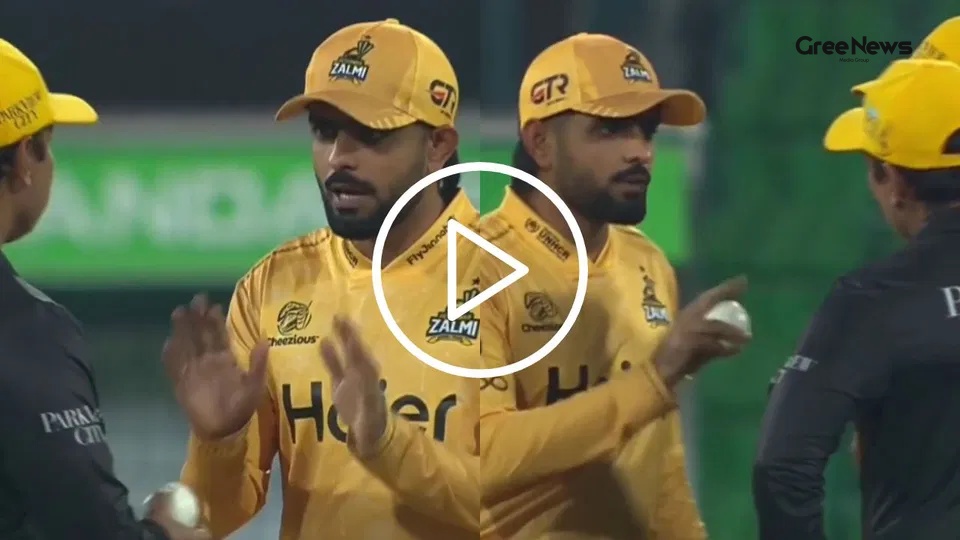
The actual confrontation started on the fourth ball of the third over. Khurram Shehzad was bowling when the on‑field umpire called for a ball change. While most players would simply accept the decision and move on, Babar grabbed the ball in his hands, walked straight up to the umpires, and started questioning the move. He was visibly angry his facial expression, the way his shoulders tensed, the whole body language shouted, “What’s the point of this?”
He argued that the ball was being changed back‑to‑back something that could hurt Zalmi’s strategy of using a slightly worn ball to get early wickets. In his view, the wear and tear was caused by the batsmen’s shots, not the bowler’s delivery. He kept pointing at the ball, gesturing with it, and repeatedly asked the umpires to stick with the old one.
That heated exchange lasted for about two to three minutes, a duration that seemed long for a cricket match but short enough for everyone in the stadium to notice. You could hear the murmurs turn into a low roar as fans started shouting, “Let the captain speak!” and “Leave it to the umpires!” it truly became a moment of viral news, with dozens of clips being shared across social platforms within minutes.
Even though the situation was intense, Babar’s argument was not entirely baseless. In T20 cricket, umpires do have the authority to change balls when they believe the ball is unfit be it due to moisture, deformation, or any damage that could affect its behavior. The controversy, however, lay in whether the replacement ball matched the condition of the one it replaced. That little detail caught people’s attention and added another layer to the debate.
Can Umpires Change Balls Multiple Times During Live Match?
According to the T20 playing conditions, an umpire can call for a ball change if the ball becomes wet, loses its shape, or shows any other kind of damage that could alter its swing or bounce. In most cases, the new ball should have a similar level of wear and tear as the ball being replaced not a brand‑new, shiny one that could give the bowling side an unexpected advantage.
That’s why, in this particular incident, many analysts felt the umpires were within their rights to change the ball twice, especially if they believed the ball’s condition had deteriorated rapidly. But the key question that lingered and many were surprised by was whether the replacement ball really mirrored the wear of the previous one. If it didn’t, then the fairness of the decision could indeed be challenged.
From an Indian fan’s perspective, we often see these kinds of decisions sparking heated discussions on cricket forums. It’s part of the excitement, the reason why the PSL remains one of the most trending news India sources for cricket every ball change, every review, every decision can become a topic of debate.
What’s also worth noting is that the captain’s role in such moments is complicated. While Babar’s outburst may have seemed excessive, his intention to protect his team’s tactical plan was clear. In most cases, captains discuss such concerns with the umpires in a calm manner, but the pressure of a chase nearing 200 runs can make anyone snap.
Will Babar Azam Get Punished For Fighting With Umpires?
Any time a player shows dissent towards an umpire’s decision, the ICC Code of Conduct steps in. The code categorises such behaviour as a Level 1 or Level 2 offence, depending on the severity. A Level 1 offence usually results in a formal reprimand and a fine that can go up to 50% of the match fee. A Level 2 offence which includes direct arguing, use of offensive language, or physical confrontation can attract a fine ranging from 50% to 100% of the match fees, along with a possible suspension of up to 12 games.
Given that Babar’s actions involved physically taking the ball, confronting the umpires, and a fairly prolonged debate, many cricket analysts think it leans more towards a Level 2 offence. If the PSL board decides to treat it as such, he could face a hefty fine and even a short ban, which would be a big story for breaking news across the subcontinent.
On the other hand, the PSL management might also consider the context a high‑pressure chase, a sudden ball change, and a captain who is usually known for his composure. Some former players have argued that a warning could be enough, especially if Babar apologises and shows good behaviour in the following matches.
Whatever the final decision, this episode is already making waves as part of the latest news India feeds, and it’s likely to stay in the headlines for a while, especially with the added social media buzz turning it into viral news. Fans are already debating whether the punishment will be fair, and the entire cricket community is watching closely.
All in all, the incident has reminded us how quickly a match can shift from a tactical battle to a media storm. It’s a perfect example of why the PSL continues to dominate trending news India not just for the runs and wickets, but also for the human stories that unfold on the field. Whether Babar Azam faces a fine or a short suspension, the episode will undoubtedly be remembered as one of the most talked‑about moments of the season, adding another chapter to the ongoing saga of India updates on the league.