Can the Election Commission of India Keep Violence at Bay After the Malda Incident?
Repeated episodes of election‑related clashes in West Bengal have turned polls into conflict zones. The recent Malda episode questions whether the Election Commission of India can ensure a peaceful vote on the upcoming two‑phase election.
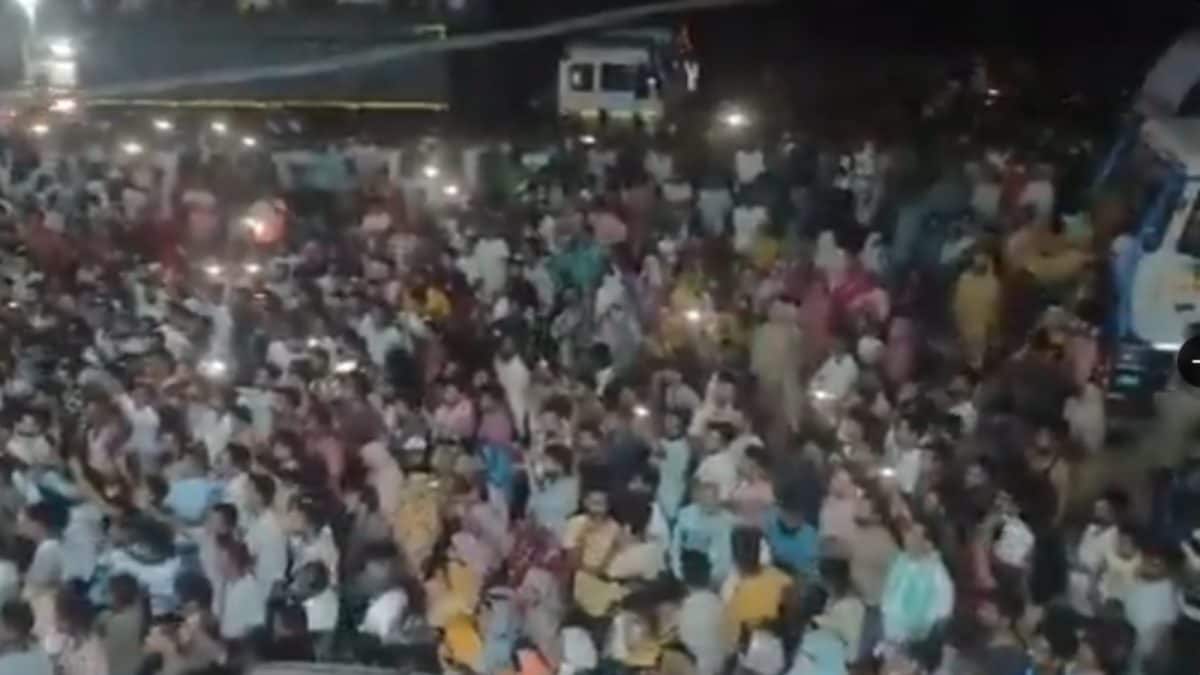
West Bengal’s Growing Tradition of Election‑Time Turmoil
Over successive electoral cycles, West Bengal has settled into a pattern where the ballot‑box becomes a flashpoint rather than a democratic instrument. From municipal contests in the capital, Kolkata, to panchayat elections in far‑flung villages, the atmosphere has repeatedly been marred by intimidation, street clashes and post‑poll retribution. The scale of the violence fluctuates, yet the underlying tendency remains constant: elections in West Bengal often unfold amid an undercurrent of fear.
This entrenched pattern raises a fundamental question for the Election Commission of India. If the nation’s highest electoral authority cannot guarantee the safety of judicial officers who were detained for nine hours in Malda, how can it promise security for ordinary polling staff, voters in remote hamlets, and opposition activists operating in politically volatile zones?
The Malda Episode: A Test of Institutional Resolve
On a day in early April, a convoy of judicial officers traveling through Malda encountered a coordinated assault. Riders on motorcycles surrounded the vehicles, hurling stones, blocking the route, and laying wooden planks to prevent progress. The officers were effectively held hostage for a period of nine hours.
The episode was not a spontaneous outburst. The precision of the blockade, the use of pre‑arranged obstacles, and the willingness of the assailants to sustain the attack for hours all point to a deGree of planning and a belief that immediate repercussions would be limited.
When the Supreme Court intervened, it did so not merely to condemn the violence, but to expose a worrying breach in the chain of command that should have prevented such an incident. The failure of real‑time response mechanisms highlights a gap between the protective framework outlined on paper and its actual execution on the ground.
Security Blueprint Versus Operational Reality
In theory, the Election Commission of India has marshaled an unprecedented security architecture for the upcoming polls. More than 2,000 companies of central forces have been assigned to protect polling stations, and an extensive administrative reshuffle has placed newly appointed chief secretary and Director General of Police at the helm of the state's law‑enforcement machinery. These steps suggest a fortified state ready to prevent disorder.
Nevertheless, the Malda incident demonstrates that the safeguards on paper have not translated into an impermeable defensive line on the streets. The inability of central forces to intervene promptly, despite their sizeable presence, underscores an operational vacuum that adversaries appear ready to exploit.
Historical Echoes: The After‑Election Violence of 2021
The memory of the aftermath of the 2021 elections still casts a long shadow over West Bengal’s political landscape. In the days that followed the announcement of results, political workers from multiple parties fell victim to lynching. For a stretch of three days, the state’s machinery appeared effectively paralysed. First‑information reports listed “unknown persons” as perpetrators, and accountability dissolved into anonymity.
Only after the Supreme Court and a central investigative agency stepped in did any formal documentation of the crimes begin. Even then, the Central Bureau of Investigation’s probe produced few tangible outcomes, despite more than fifty political workers being brutally killed or publicly lynched in broad daylight.
Now, as West Bengal prepares for a two‑phase election—the first such exercise in almost twenty years—the Malda incident provides a stark preview of the challenges that lie ahead.
Implications for Polling Personnel and Voters
If judicial officers, who operate under the direct supervision of the Supreme Court, can be detained for an extended period, the security outlook for ordinary polling officers becomes even more uncertain. The same vulnerabilities could affect election staff stationed at remote booths, where the reach of central forces is often limited.
Voters in out‑lying areas may also confront barriers to casting their ballots. The spectre of intimidation, road blockades and arbitrary violence could dissuade citizens from reaching polling stations, thereby undermining the legitimacy of the electoral outcome.
Opposition activists, who traditionally operate in politically sensitive pockets, face a similar risk. Their ability to mobilise supporters, monitor polling stations and report irregularities may be compromised if the climate of impunity persists.
The Question of Impunity
The core issue transcends the immediate act of violence; it lies in the perception—and reality—of impunity. When perpetrators believe that consequences will be delayed, muted, or altogether absent, the incentive to employ intimidation tactics rises sharply.
In West Bengal, the pattern of post‑poll retributive acts, coupled with the lack of swift, decisive legal action, reinforces a cycle where violent actors feel emboldened. This dynamic jeopardises the very essence of a free and fair election.
Assessing the Election Commission of India’s Credibility
The upcoming polling days will serve as a litmus test for the Election Commission of India’s credibility. Success will not be measured solely by the number of central force companies deployed, but by the effectiveness of their presence in safeguarding the ballot‑box on the ground.
Observations will focus on whether polling agents from all parties can conduct their duties without fear of attack, whether voters can reach their designated stations unimpeded, and whether any incidents of violence are swiftly contained and prosecuted.
The ruling party’s ability to ensure safe passage for its supporters, as well as its commitment to allowing opposition workers to operate freely, will also be scrutinised. The perception that one side receives preferential protection could deepen mistrust and fuel further unrest.
Potential Pathways to a Safer Election
To bridge the gap between the security blueprint and operational reality, several steps could be pursued without altering the factual landscape:
- Enhanced coordination between central forces and state police, ensuring that any intimidation attempts are met with immediate, decisive action.
- Real‑time monitoring of polling stations using surveillance technology, coupled with rapid response teams positioned strategically along known flashpoints.
- Transparent communication from the Election Commission of India regarding any incidents, accompanied by swift legal processes to hold perpetrators accountable.
- Strengthened protection for judicial officers, polling agents and opposition activists, possibly through escorted movement or dedicated security details.
While these measures do not introduce new facts, they elaborate on existing recommendations that have been voiced by observers and stakeholders over recent electoral cycles.
Conclusion: The Stakes Are High
The Malda incident underscores a stark reality: the presence of a large security apparatus alone does not guarantee a violence‑free election. The Election Commission of India’s capacity to translate its extensive deployment into effective, on‑the‑ground protection will determine whether West Bengal’s electorate can exercise their franchise without fear.
As the state moves toward the two‑phase voting schedule, the eyes of the nation—and the scrutiny of the Supreme Court—remain fixed on how swiftly and decisively the Election Commission of India can address the entrenched culture of election‑time violence that has long plagued West Bengal.