Co‑founder of Jalisco New Generation Cartel Admits Guilt in U.S. Drug Trafficking Case
Érick Valencia Salazar, a founding leader of the Jalisco New Generation Cartel, has changed his plea to guilty on a major cocaine‑distribution charge, prompting a mandatory ten‑year prison term and highlighting the transnational reach of Mexico’s most powerful cartel.
Legal Admission and Its Immediate Impact
The United States Department of Justice announced that Érick Valencia Salazar, identified in law‑enforcement filings as “El 85,” has formally altered an earlier not‑guilty entry to a guilty plea concerning a single count of conspiracy to distribute five kilograms or more of cocaine into the United States. The Department of Justice highlighted that the guilty plea directly addresses a core element of the United States’ fight against large‑scale narcotics smuggling, and it signifies a concrete step toward dismantling the operational capabilities of the Jalisco New Generation Cartel.
Under federal sentencing guidelines, the conviction carries a mandatory minimum term of ten years imprisonment. The sentencing hearing is slated for a future date, at which a judge will impose the statutory minimum alongside any additional penalties deemed appropriate based on the severity of the offense.
Background of the Capture and Extradition Process
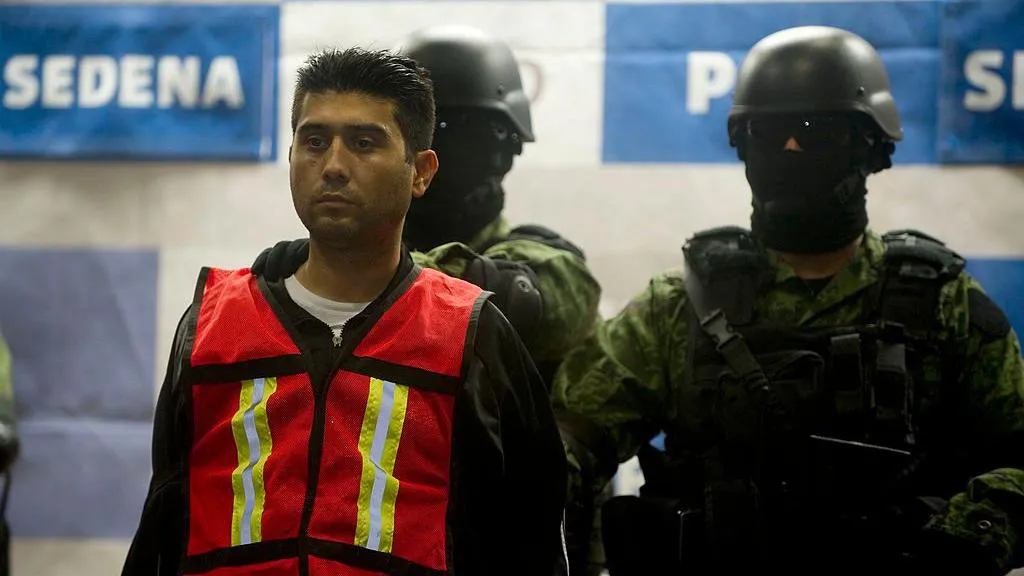
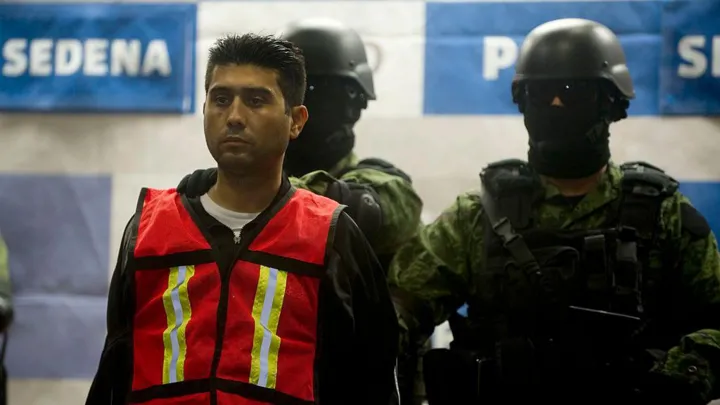
Érick Valencia Salazar was apprehended by the Mexican army during an operation in the state of Jalisco. Following the capture, Érick Valencia Salazar was placed among a cohort of twenty‑nine individuals described by authorities as alleged drug lords. This cohort was subsequently transferred to the United States through a formal extradition process, allowing U.S. federal courts to assume jurisdiction over the charges related to international cocaine trafficking.
The extradition of Érick Valencia Salazar underscores the collaborative law‑enforcement relationship between Mexico and the United States, a partnership that has intensified in recent years as both nations confront the growing influence of transnational criminal networks. The cooperation involved coordinated intelligence sharing, joint operational planning, and a shared commitment to bringing high‑ranking cartel figures to justice.
Role of Érick Valencia Salazar Within the Jalisco New Generation Cartel
The Drug Enforcement Administration characterized Érick Valencia Salazar as a pivotal architect in the evolution of the Jalisco New Generation Cartel into a “ruthless organization that uses violence as a business model.” According to the agency, Érick Valencia Salazar helped forge a structure in which violent enforcement is employed to secure market dominance throughout Mexico while simultaneously extending a flood of illicit narcotics into the United States.
Analysts note that the operational blueprint crafted by Érick Valencia Salazar emphasized a combination of militarized tactics, intimidation of rival groups, and strategic diversification of trafficking routes. The resulting framework allowed the Jalisco New Generation Cartel to expand its reach rapidly, creating a highly adaptive network capable of exploiting both urban and rural corridors for cocaine movement.
Impact on Violence and Public Security in Mexico
The Jalisco New Generation Cartel has been identified as one of the most potent criminal organizations to emerge from Mexico. In the aftermath of rumors surrounding the death of the cartel’s supreme leader, Nemesio Oseguera Cervantes, who is widely known as “El Mencho,” the Jalisco New Generation Cartel triggered a wave of violent incidents that rippled across approximately twenty Mexican states. These incidents involved coordinated assaults, targeted killings, and public displays of force intended to signal resilience and continuity of command despite leadership rumors.
Public safety officials have linked the surge in violence directly to the power vacuum perceived after the alleged death of Nemesio Oseguera Cervantes. The pattern of attacks suggests that the Jalisco New Generation Cartel leveraged the uncertainty to reinforce territorial control, intimidate rival groups, and demonstrate the capacity to operate independently of any single leader.
Designation as a Foreign Terrorist Organization
During a prior administration, the Jalisco New Generation Cartel was formally labeled as a Foreign Terrorist Organization by the United States. This designation carries profound legal implications, including heightened penalties for individuals who provide material support and expanded tools for law‑enforcement agencies to disrupt financial, logistical, and operational networks associated with the Jalisco New Generation Cartel.
The terrorist designation underscores the U.S. government's assessment that the Jalisco New Generation Cartel’s activities extend beyond conventional drug trafficking, encompassing actions that threaten national security, destabilize regional governance, and contribute to a broader climate of fear and insecurity.
Political Context and International Pressure
Former United States leadership framed the battle against the Jalisco New Generation Cartel as a central component of a broader strategy to protect American citizens, safeguard national security, and preserve the stability of the Western Hemisphere. High‑level statements emphasized that unchecked cartel activity jeopardizes the safety of the American public and erodes the fabric of democratic institutions across the region.
Within this framework, former United States leadership applied diplomatic pressure on Mexican officials, specifically directing the Mexican head of state, Claudia Sheinbaum, to intensify counter‑narcotics operations. The outreach sought to align Mexico’s security policies with United States expectations, encouraging a coordinated crackdown on cartels such as the Jalisco New Generation Cartel.
Reactions From Mexican Leadership
Claudia Sheinbaum publicly celebrated the capture and subsequent reported death of Nemesio Oseguera Cervantes, asserting that the event demonstrated the effectiveness of Mexico’s armed forces in pursuing the nation’s most dangerous drug lords. The statement highlighted a narrative of decisive law‑enforcement action and reinforced the administration’s commitment to eradicating organized‑crime networks.
Officials in Mexico reinforced that the operational success against Nemesio Oseguera Cervantes represented a milestone in a longer campaign aimed at dismantling the Jalisco New Generation Cartel. The messaging emphasized that the pursuit of cartel leadership would continue unabated, with an emphasis on preserving public order and protecting citizens from cartel‑related violence.
Implications for Ongoing Investigations
The guilty plea entered by Érick Valencia Salazar is expected to generate extensive cooperation from federal prosecutors, potentially yielding intelligence that could illuminate the inner workings of the Jalisco New Generation Cartel. Law‑enforcement agencies anticipate that the information derived from Érick Valencia Salazar’s case may lead to additional indictments, asset forfeitures, and the disruption of drug‑distribution pipelines feeding the United States market.
Moreover, the plea sets a legal precedent that reinforces the United States’ willingness to prosecute senior cartel figures to the fullest extent of the law. The outcome may serve as a deterrent to other high‑ranking members of organized‑crime groups who consider evading federal prosecution.
Future Outlook and Ongoing Challenges
While the conviction of Érick Valencia Salazar represents a tangible victory for law‑enforcement agencies, analysts caution that the Jalisco New Generation Cartel possesses a decentralized command structure capable of adapting to leadership losses. The organization’s capacity to recruit, finance, and execute large‑scale drug shipments suggests that a single conviction, even at the level of a co‑founder, will not eradicate the cartel’s influence overnight.
Continued collaboration between Mexican and United States authorities remains essential to sustain pressure on the Jalisco New Generation Cartel. Strategic focus on dismantling financial networks, intercepting trafficking routes, and targeting remaining leadership figures will be crucial for achieving long‑term reductions in cartel‑driven violence and narcotics flow.