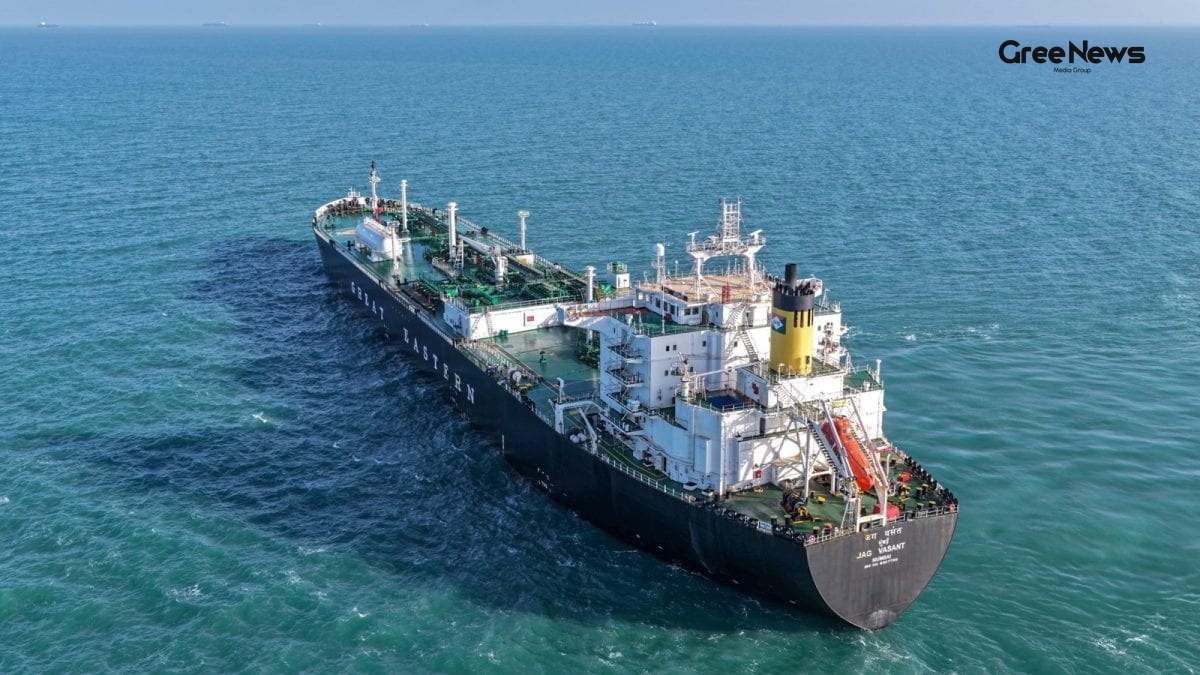
Indian flagged ships report gunfire near Strait of Hormuz, crew unharmed, India summons Iran envoy, Iran imposes strict transit rules as US naval blockade keeps tensions high.
So, you might have seen the headline in the latest news India feeds: two Indian‑flagged merchant ships heard shots while trying to move through the narrow Hormuz corridor. The whole thing felt like a scene from a thriller, but in reality, it was a real‑life close call for the crews on board. The good news is that nobody got hurt, yet the incident sparked a flurry of diplomatic activity that still has people talking.
When the ships were making their way through the waterway, the captain of one of the tankers reported that two small gunboatsapparently linked to Iran’s Islamic Revolutionary Guard Corpscame close, opened fire, and then sped away. The captain said the shots landed somewhere nearby, not on his vessel, and that the crew was fine. This information came from maritime sources who were monitoring the traffic in the strait, which has become a flashpoint in the ongoing regional conflict.
What actually happened inside the strait?
To give you a clearer picture, imagine you’re driving through a busy lane in Mumbai and suddenly a couple of autorickshaws start honking loudly right next to you. That’s the kind of sudden, unnerving feeling the crew described. The tanker’s captain told the authorities that the two gunboats seemed intent on sending a message rather than targeting the ship directly. “We felt the shots, but nothing hit us,” he said, and the crew went on with the journey after a brief stop to assess the situation.
What makes this episode even more intriguing is that an audio clip later surfacedshared by Russia Todaythat captured a frantic conversation from a ship called the Sanmar Herald, which also flies the Indian flag. In that recording, you can hear a voice shouting, “My name second on your list! You gave me clearance to go! You are firing now! Let me turn back!” It sounded like the crew was trying to get clearance to retreat while the gunfire continued nearby.
The audio didn’t pinpoint who fired the shots, but it certainly added a human element to what was otherwise a dry maritime report. Many readers of breaking news outlets called it a “viral news” moment because the clip spread quickly through social media, drawing both sympathy for the sailors and curiosity about the motives behind the gunfire.
Why the strait matters a quick background
The Strait of Hormuz is one of the world’s most crucial chokepoints for oil and gas shipments. Roughly 20‑30% of global petroleum passes through this narrow waterway, which lies between the Persian Gulf and the Gulf of Oman. For India, a country that imports a hefty share of its energy needs, any disruption in Hormuz can ripple through to fuel prices at home, affecting everything from rickshaws to heavy industry.
Because of its strategic importance, the strait has long been a theater for geopolitical tension. In recent months, the tension has escalated as Iran and the United States have been at odds over a series of incidents, ranging from sanctions to naval maneuvers. The United States maintains a naval presence in the region, often described as a “blockade” aimed at curbing Iran’s ability to project power, while Iran has been insisting that the strait remains open for commercial traffic, albeit under strict conditions.
These dynamics have turned the Hormuz corridor into a place where commercial vessels, even those from neutral countries like India, can inadvertently become part of a larger security drama. That’s why the recent gunfire incident got such a massive response from New Delhi and why it’s featured heavily in trending news India circles.
The audio that sparked a conversation
Now, let’s dive deeper into that audio rant. The clip, which has been circulating on multiple platforms, shows a crew member on the Sanmar Herald shouting in a panicked tone. “You cleared us, let me turn back,” he says, while background noises hint at the sounds of distant gunfire and a ship’s engine revving. The voice is filled with urgency, reflecting how confused and frightened the crew felt in that moment.
What’s interesting is that the audio also reveals a bit of the procedural side of maritime navigation in such tense waters. The speaker mentions “clearance” a nod to the fact that ships need permission from coastal authorities before they can sail through certain zones, especially when there’s a risk of conflict. This ties into the broader narrative of Iran imposing “strict transit rules” for ships, a move that came right after India summoned the Iranian ambassador.
Even though the audio didn’t capture any direct hits, it humanised the incident. Listeners could feel the tension and the helplessness of the crew, turning a simple report of “shots fired” into a story that many could empathise with.
India’s diplomatic response why it matters
Following the reports, India’s foreign ministry acted quickly, summoning Iran’s ambassador to New Delhi. The move was a clear signal that New Delhi does not take such incidents lightly, especially when they involve Indian‑flagged vessels. In diplomatic terms, summoning an ambassador is a way to express strong displeasure and request clarification.
India’s officials emphasized that while the crew was safe, the safety of Indian maritime assets must be guaranteed. They also asked Iran to ensure that all ships, irrespective of their flag, can transit Hormuz without fear of being shelled or harassed. This request aligns with India’s broader policy of protecting its commercial interests in the Indian Ocean Region.
The incident has since become a hot topic in the India updates feeds, prompting analysts to question whether Iran’s new “strict transit rules” are a genuine attempt at safety or a subtle way to exert control over foreign shipping. Either way, the diplomatic row adds another layer of complexity to an already delicate situation.
Iran’s stance open but regulated
Iran, on its part, announced that the Strait remains “open” for commercial shipping, referencing a cease‑fire aGreement that supposedly guarantees free passage. However, the same statements were accompanied by a list of stringent conditions: ships must obtain prior permission, follow designated routes, and adhere to a set of reporting protocols before entering the waterway.
These requirements, while framed as safety measures, have raised eyebrows among shipping companies worldwide. Many fear that the new rules could be used to selectively target vessels that Tehran deems unfavorable, or to create a bureaucratic bottleneck that slows down trade. That’s why the incident involving the Indian ships has become part of a larger narrative about Iran’s approach to maritime governance.
In conversations with maritime experts quoted in the viral news segment, the consensus was that Iran’s policies reflect a “tightrope walk” they need to show the world that they respect international shipping norms while also leveraging the strait’s strategic value for political bargaining.
The US naval presence what’s the real picture?
The United States has maintained a visible naval presence in the Persian Gulf and the adjoining waters for years, often describing its operations as “ensuring freedom of navigation.” In recent weeks, the US Navy has been conducting patrols that many observers label as a “blockade.” This terminology is contentious, but the effect is the same a heightened state of alert that can intimidate any vessel passing through Hormuz.
For Indian ships, this backdrop creates a sense of being caught between two power blocs. While India has traditionally had good ties with the US, it also values its strategic partnership with Iran, especially for energy imports. The overlapping claims and the presence of both US warships and Iranian gunboats mean that any misstep could quickly become a larger incident.
Analysts in the breaking news circuit argue that the US blockade, combined with Iran’s tightened rules, creates a “gray zone” where normal commercial shipping becomes risky. The gunfire incident, therefore, isn’t just an isolated eventit’s a symptom of a broader geopolitical pressure cooker.
Implications for Indian shipping and the wider economy
Even though the crew was unharmed, the incident has sent ripples through the Indian shipping community. Ship owners are now more cautious, revisiting their route plans and insurance policies. Some have even started exploring alternative passages, like the longer route around the Cape of Good Hope, despite the added fuel costs.
From a macro perspective, any disruption in the Hormuz corridor can affect oil prices in India, which in turn influences everything from diesel for two‑wheelers to gasoline for cars. A spike in fuel prices can also impact the cost of goods transported by road, affecting everyday consumers. That’s why the news of gunfire near Hormuz quickly became trending news India, as people wondered whether their next fuel bill would be higher.
Moreover, the incident underscores the importance of robust maritime security measures for India. The Indian Navy has been ramping up its presence in the region, conducting joint exercises with allied navies, and enhancing its surveillance capabilities to ensure that Indian‑flagged vessels can sail with confidence.
Public reaction social media buzz and human stories
On platforms like Twitter and Instagram, the audio clip from the Sanmar Herald went viral within hours. Users shared the clip with captions like “Did you hear that? Our seafarers deserve better safety!” and “What happened next is interesting the crew calmly reported the incident, showing true professionalism.” The mixture of concern and admiration for the crew’s composure sparked discussions about the life of Indian seafarers abroad.
Many comments highlighted how the incident reminded people of the everyday risks taken by those who keep India’s trade flowing. Some even compared it to the challenges faced by truck drivers on Indian highways “Both are on the front lines, dealing with unpredictable hazards,” one user wrote, adding a relatable Indian touch.
This wave of public engagement helped keep the story alive in the latest news India cycle, ensuring that the issue received more than just a fleeting mention in official statements.
Looking ahead what could change?
So, what’s the likely future for the Hormuz corridor? Experts say the situation is fluid. If diplomatic talks between India and Iran bear fruit, we might see a more streamlined set of rules that balance security with commercial freedom. On the other hand, any escalation in US‑Iran tensions could see more frequent naval patrols and perhaps even more incidents like the gunfire episode.
For Indian ship owners, the focus will likely remain on risk mitigation: diversifying routes, strengthening communication with regional authorities, and ensuring that crew members are trained for crisis handling. The audio snippet, while unsettling, also serves as a reminder that preparation and calm composure can make a real difference when a crisis erupts.
In the meantime, the story will continue to feature in India updates and will likely be referenced whenever another flashpoint emerges in the Gulf. The world will be watching, and so will the families of the seafarers who navigate these dangerous waters on a day‑to‑day basis.