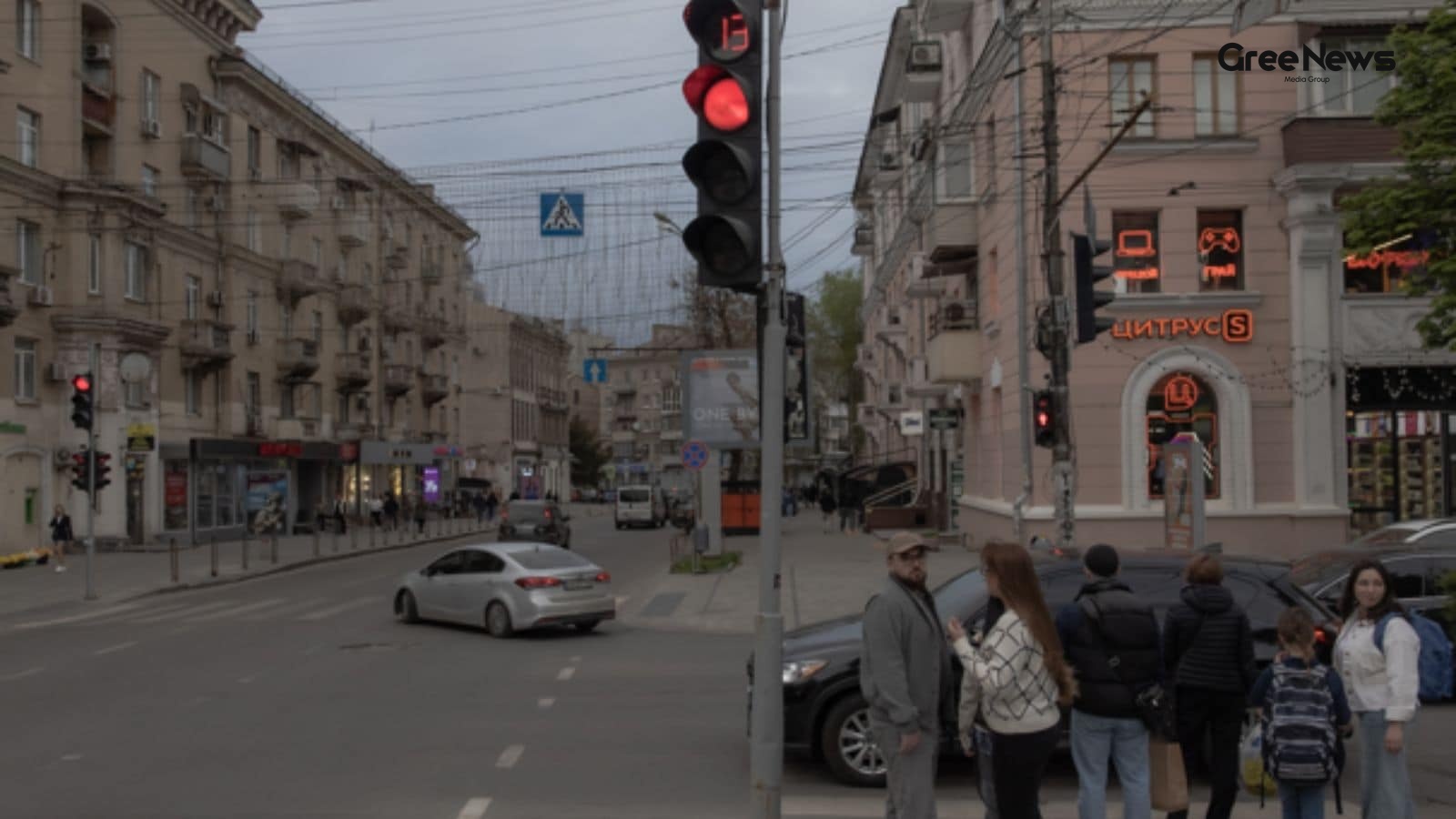
Can you imagine walking on a street with no traffic lights? Explore cities across the world where traffic moves smoothly with no worries about hitting any traffic lights.
Honestly, the first time I heard about a whole city running without the usual red‑yellow‑Green cycle, I laughed. I thought it was a joke or maybe a viral news piece meant to trick people. But then I read a little more, and the idea stuck in my head. It felt like something straight out of a movie a sort of futuristic or retro‑urban vibe where drivers just… know what to do.
What caught people's attention was that these aren't just tiny villages with a single lane. Some of them are fairly busy, with trucks, auto‑rickshaws, bicycles and pedestrians all sharing the same road space. In most cases, the magic lies in how the streets are laid out, how people behave and a pinch of local rules that everyone respects.
Why traffic lights might not be the only answer
Growing up in India, we are used to seeing traffic signals at almost every major junction. They feel like the only way to keep chaos at bay, especially during rush hour. But the latest news India often mentions how some Indian towns are experimenting with "shared space" concepts where the signal is removed and drivers rely on eye contact and road markings.
Take the example of a small market town I visited during a road‑trip. The main street had no traffic lights at all. Instead, the road was slightly narrower, with raised platforms for pedestrians and clear painted zones for vehicles. At the first major crossing, I paused, looked around, and saw a mix of cars, two‑wheelers and a few cyclists. Nobody slammed on brakes; everyone slowed down a little, made eye contact, and moved forward when it felt safe. It was oddly calm like a dance rather than a battle of horns.
Many people were surprised by this simple choreography. It turns out, when you remove the signal, you force drivers to pay more attention. That heightened awareness often reduces accidents, at least in the short term. And there's a bonus you cut down waiting time, which means less fuel burnt and lower emissions. I read that in some European cities, removing a single traffic light reduced local carbon output by a noticeable amount. That's a kind of breaking news that doesn't make the front page but is definitely worth noting for anyone who cares about the environment.
Real‑world examples that prove it works
Now, I’m not a city planner, but I did a bit of digging and found a handful of places that have tried this out. Below are some spots each with its own flavour where traffic flows without the usual signal system.
1. A historic lane in Europe
There’s a cobblestone street in a European old‑town that tourists love. No traffic lights, just narrow lanes and plenty of road‑markings. Vehicles move at a crawl, pedestrians dominate the centre, and the occasional horse‑drawn carriage adds to the charm. The locals say that because the street is so narrow, drivers naturally give way to each other; the space itself forces cooperation.
2. A bustling market area in an Indian city
In one Indian metro, a popular market area was once plagued with gridlock. The municipal council decided to remove a pair of traffic lights and replace them with a painted shared space. The change sparked a lot of debate some argued it would cause chaos, others thought it could work. Within a few weeks, the area became much smoother. Vendors could move their carts without waiting for a Green light, and shoppers felt safer because everyone slowed down and watched each other. It quickly turned into a viral news story on local social media, with many people sharing videos of the new flow.
3. A coastal town in Asia
On the coast, a small fishing town operates its main road without any signal at all. The road runs parallel to the beach, and during the early mornings you see fishermen with their boats, tourists on bicycles and a few delivery vans. The secret here is clear signage that tells drivers to give priority to larger vehicles at certain points, plus a cultural habit of saying "sorry" and waving as you pass. It sounds simple, but it works because everyone respects the unwritten rulebook.
What happened next is interesting: after the success of these small experiments, larger nearby cities started looking at the data. They asked experts whether removing a few lights could improve traffic flow on larger arteries. The answer was not a straight yes or no it depended on road width, traffic volume, and local driving culture. But the takeaway is clear traffic lights are not a one‑size‑fits‑all solution.
How does it affect everyday commuters?
From my own experience, driving through a signal‑free zone feels both nerve‑wracking and freeing. At first, you’re hyper‑aware you keep glancing left and right, you’re ready to brake instantly. After a few minutes, you settle into a rhythm. It’s like walking through a crowded market; you learn to anticipate moves, you use subtle gestures, and you trust that others will do the same.
For commuters in India, especially those dealing with daily traffic jams, the idea of cutting down waiting time is very appealing. Imagine saving the five or ten minutes you usually spend at a red light, every single day. That adds up to hours of saved time each month, not to mention the reduction in stress and fuel consumption. That’s the kind of story that often becomes trending news India a small change that could have a big impact on millions of commuters.
However, there are challenges. Not every driver is patient, and not every road is designed for this kind of fluid movement. In many Indian cities, roads are still too narrow, and the mix of fast and slow vehicles can lead to confusion. Also, there’s the issue of enforcement without clear rules, some drivers might try to dominate, leading to accidents. So, while the concept looks great on paper, the practical rollout needs careful planning, public awareness campaigns and maybe a trial period before going full‑scale.
What city planners can learn from signal‑free streets
If you’re a city planner reading this, here are a few observations that stood out to me during my travels:
- Design matters more than signals: Narrow lanes, raised crossings for pedestrians, and clear road markings guide driver behaviour.
- Community involvement is key: When locals understand the benefits and aGree on informal rules, compliance rises dramatically.
- Gradual implementation works: Start with a single busy intersection, monitor traffic flow, and adjust before expanding.
- Technology can complement: Real‑time traffic apps and dynamic signage can give drivers information without needing a permanent light.
One piece of breaking news I came across was a city in South India that piloted a smart‑sensor system at a former traffic light site. Instead of the light, sensors detect vehicle presence and send alerts to drivers’ phones, suggesting when to move. It’s a hybrid approach that keeps the benefit of signal‑free flow while providing safety nets.
Will India ever go completely signal‑free?
That’s a question many of us in India ask ourselves when we see these experiments abroad. The short answer: maybe, but only in certain contexts. In dense urban cores where every inch of road is precious, a full removal of signals could cause more chaos than calm. However, in smaller towns, market areas, or newly planned neighbourhoods, the concept could catch on quickly.
There's also a cultural angle. Indian drivers are accustomed to honking and aggressive lane changes. Changing that mindset would need strong public education and maybe some trial periods where the community can see the benefits first‑hand. If the stories of reduced waiting times and safer streets become viral news, more people might support it.
For now, the best we can do is keep an eye on the latest news India and the many small pilots happening across the country. As more data comes in, the conversation will keep evolving. Who knows maybe in a few years you’ll be telling your friends about a neighbourhood in Delhi that runs without a single traffic light, and they’ll be as surprised as I was when I first heard the idea.
top videos
Swipe Left For Next Video