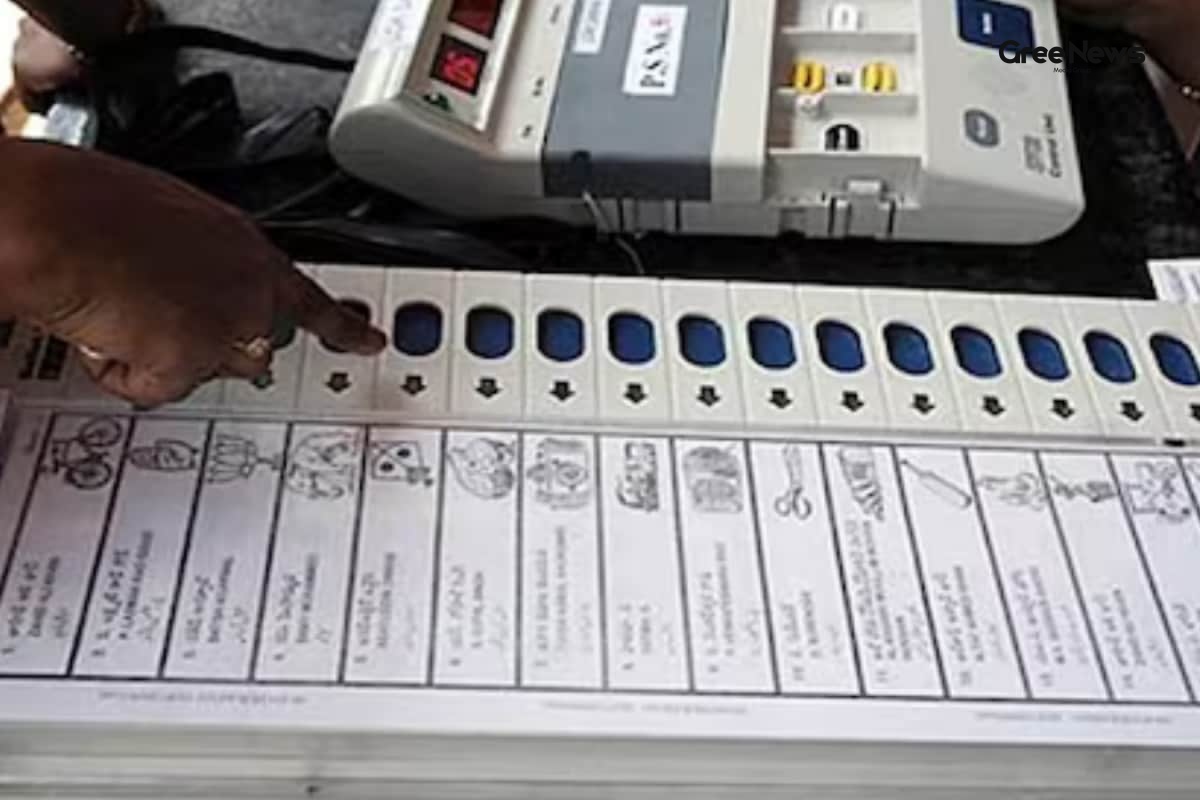
So, the other day I was scrolling through my phone, catching up on the latest news India has to offer, when I stumbled upon a piece about three new bills that the Centre has just put on the table. Honestly, I hadn’t given much thought to how women’s reservation could tie into the whole delimitation thing, but the more I read, the more I realised it’s a tangled web of politics, demographics and a dash of hope for gender equality. Let me walk you through what I learned and why it matters for any of us who care about the next general election.
What’s the three‑bill package all about?
First off, the government has bundled three pieces of legislation together. The idea is to operationalise a 33% reservation for women something that’s been floated for years and is officially known as the Nari Shakti Vandan Adhiniyam. The bills are:
- Delimitation Bill, 2026 a massive exercise to redraw constituency boundaries based on population changes.
- Constitution (131st Amendment) Bill, 2026 proposes to boost the maximum Lok Sabha strength from 550 to 850 seats, essentially creating room for the women’s quota without taking seats away from anyone.
- Union Territories Laws (Amendment) Bill, 2026 aligns the laws of the Union Territories with the changes proposed in the other two bills, and also lifts UT representation in the Lok Sabha to 35 seats.
What caught my eye was that the Delimitation Bill aims to break a freeze that’s been in place since 1971. That freeze has kept the number of seats each state gets in the Lok Sabha unchanged for more than five decades, even though populations have shifted dramatically.
Reading this felt like a breaking news moment one that could reshape the political map of India. I kept thinking, “What will happen next?” and that curiosity kept me digging deeper.
Why was delimitation frozen back in 1971?
To understand the present, we need a quick trip down memory lane. During the Emergency, the 42nd Amendment (1976) introduced a freeze on the inter‑state distribution of seats. The rationale was simple yet controversial: states that had successfully implemented family‑planning programmes mainly the southern states would not be “punished” by losing seats to faster‑growing northern states. In essence, the freeze was meant to protect the early adopters of population control and maintain a stable federal balance.
Later, the 84th Amendment (2001) extended the freeze until after the first Census post‑2026, and the 87th Amendment (2003) allowed internal redrawing of boundaries based on the 2001 Census, but still prohibited changing the total number of seats each state holds.
So, for more than 50 years, while internal constituency lines have been shuffled a couple of times, the overall power each state wields in Parliament has been locked to the 1971 Census figures. That’s why the Delimitation Bill, 2026 feels like a watershed it could finally lift that long‑standing restriction.
How the new women’s reservation bill interacts with delimitation
Now, here’s the twist that most people seem to miss: the women’s reservation can only be implemented after delimitation is completed. The reason is practical you need to know the exact number of seats you’re reserving for women before you can allocate them to constituencies. The government’s plan is to use the 2011 Census as the baseline, effectively decoupling the reservation from any future Census that might be delayed.
In other words, the Constitution (131st Amendment) Bill wants to increase the total Lok Sabha seats to 850 815 for states and 35 for Union Territories. By doing so, the 33% women’s quota can be accommodated without taking away any existing seats from the states. It’s a clever move, but it also raises eyebrows because it changes the whole composition of the House.
What happened next is interesting: the amendment also modifies Article 82, removing the mandatory link between delimitation and the decadal Census. From now on, Parliament can decide when to delimit, as long as it’s done by law. That means the government can fast‑track the process and have the women’s reservation ready for the 2029 General Elections.
What the increase in Lok Sabha seats really means
Increasing the strength of Lok Sabha from 543 to 850 is not just a number game. It will bring a massive structural shift. For example, if a state like Kerala currently has 20 seats, a 50% pro‑rata increase would take it to 30 seats. Meanwhile, a populous state like Uttar Pradesh could jump from 80 to 120 seats. The relative share of power stays roughly the same, but the absolute numbers get bigger, which could tilt the balance of power in favour of the larger states.
Many of my friends from the south expressed concern that even a proportional increase might still dilute their influence because the northern states would gain more seats in absolute terms. It’s a classic case of “yes, we’re getting more seats, but are we really getting a fair share?” This debate has become a hot topic in the trending news India circles, especially on social media platforms where people are sharing memes and analyses.
Potential impact on Union Territories
The Union Territories Laws (Amendment) Bill is a mouthful, but its crux is simple: it will bring the laws of UTs like Puducherry, Delhi and the newly formed Jammu & Kashmir UT in line with the changes proposed in the other two bills. It also raises the number of UT seats in Lok Sabha to 35, up from the current 20.
Think of it this way: if you live in a UT, you’ve probably felt left out of national dialogues because of limited representation. This amendment could give those regions a louder voice which is a win for many who follow viral news about regional empowerment.
Key concerns raised by opposition and experts
While the government says the package is all about women’s empowerment, critics argue that it’s also a veiled attempt to push through a massive electoral restructuring without a fresh Census. Some of the main points of contention include:
- Federal balance: Even with a pro‑rata increase, the absolute number of seats for high‑population states will rise, potentially marginalising states with slower growth.
- Timing of delimitation: Using the 2011 Census data could create disparities because the population landscape has changed dramatically since then.
- Lack of consensus: Opponents claim there was little all‑party consultation, making the process appear rushed.
In many tea‑stalls across Delhi and Hyderabad, you can hear the same question being asked: “Will this really help women, or is it just a political maneuver?” That’s the kind of India updates I see popping up on discussion forums every day.
Personal take why I think it matters
Speaking from my own experience, I’ve seen how women’s representation has been a sore point in local bodies. In my hometown, the panchayat has barely a single woman member, and that’s despite the fact that women make up more than half the population. If the 33% quota actually comes into effect, we could finally see a more balanced viewpoint in policy‑making, from the grassroots level all the way to the Centre.
Moreover, the delimitation exercise could address the glaring mismatch where some urban constituencies have a million voters while rural ones have only a few hundred thousand. A fairer distribution could make each vote count equally something that’s been a recurring theme in the breaking news cycles.
That said, I’m also wary. The whole idea of expanding the Lok Sabha to 850 seats seems ambitious. Will our parliamentary proceedings become more unwieldy? Will it dilute accountability? These are the questions that keep me up at night, and they’re also the kind of queries cropping up in the trending news India feeds every evening.
FAQs quick answers for the curious
What is the link between the women’s reservation law and delimitation?
The reservation can only be applied after the constituencies are redrawn, because the number of seats earmarked for women has to be known before they are allocated.
Why does delimitation need to happen before reservation starts?
Delimitation defines the exact size and number of constituencies. Without it, we cannot correctly apply a 33% quota across the board.
How could the new bills affect the delimitation process?
By decoupling the reservation from the next Census and allowing Parliament to decide the timing, the bills aim to fast‑track delimitation using older data, thus enabling the reservation to be ready for the 2029 polls.
Will the increase in Lok Sabha seats change the power dynamics between states?
Yes, although the pro‑rata approach keeps the relative share constant, the absolute numbers will rise, giving larger states more influence in Parliament.
What to watch out for next?
All eyes are now on the Lok Sabha vote scheduled for this week. If the three bills sail through, we could see a landmark shift in the way women’s representation is handled and how constituency boundaries are drawn. The next few months will likely be filled with heated debates in Parliament, discussions in the media, and a surge of viral news as people across the country react to the changes.
For anyone following latest news India or keeping tabs on political reforms, this is definitely a story to follow closely. The outcome could set the tone for the next decade of Indian politics, affecting everything from local panchayat elections to the composition of the national legislature.
Stay tuned, because what happens next could change the game for women, for states, and for every voter in our democracy.