Stolen Bike Returns via Traffic Violation Notice, Revealing a Hidden Clue for Police
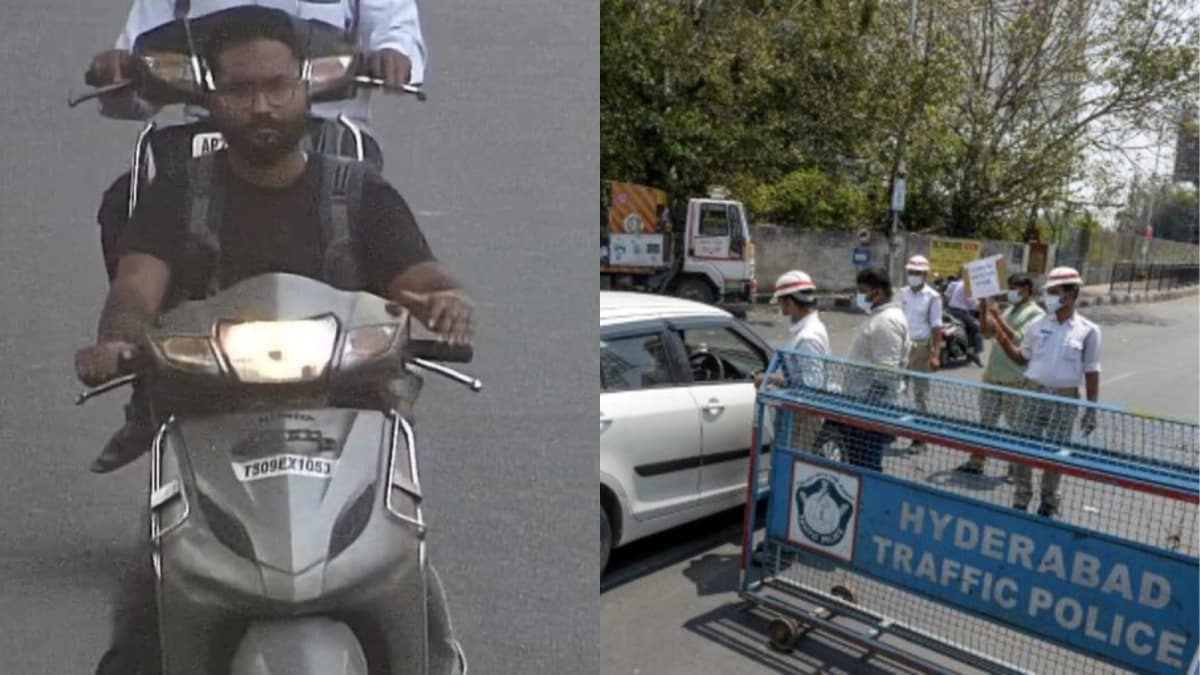
How a Simple E‑Challan Uncovered a Crime
Faisal Rahman, a resident of Hyderabad, filed a formal complaint after a two‑wheeler vanished from a secured location. The complaint was registered at Habeeb Nagar Police Station, and the case entered the investigative queue. Three months elapsed without any breakthrough, and the investigation remained at a standstill.
Unexpectedly, Faisal Rahman received an electronic traffic violation notice—commonly known as an e‑challan—issued for the very vehicle that had been reported stolen. The notice arrived as a digital document, complete with a photograph that clearly identified an individual actively riding the two‑wheeler. This visual evidence represented the first unmistakable image of the perpetrator captured by any law‑enforcement agency during the ninety‑day window.
Recognizing the significance of the photograph, Faisal Rahman shared the e‑challan on a micro‑blogging platform, tagging Hyderabad Traffic Police and the Hyderabad City Police. The post urged the authorities to employ the image as a means to locate and apprehend the individual responsible for the theft.
Public Reaction on Social Media
The online community responded swiftly, generating a mixture of frustration, skepticism, and optimism. Some commenters demanded immediate police action, arguing that the photograph constituted irrefutable proof. Others recalled personal experiences that painted a grim picture of systemic inertia.
One contributor recounted an incident from several years prior, describing how a friend’s stolen bike resulted in a demand for a monetary bribe merely to file a complaint. The same contributor noted that even after providing traffic violation photographs, no investigative steps were taken.
In contrast, another user expressed confidence that the integration of technology and law‑enforcement could finally produce a successful resolution. The hope articulated by that user centered on the expectation that Hyderabad Traffic Police would leverage the photograph to trace the stolen vehicle’s whereabouts and secure an arrest.
Wider Pattern: Traffic Cameras Capturing Stolen Vehicles
Faisal Rahman’s experience is far from an isolated phenomenon. Across multiple Indian jurisdictions, traffic surveillance systems—originally installed to enforce road‑safety regulations—have inadvertently recorded individuals piloting vehicles known to be stolen. Those recordings are then transformed into e‑challans, which are automatically dispatched to the registered owners of the vehicles.
This unintentional feedback loop creates a paradoxical situation: victims of theft receive official notices implicating them in violations they never committed, while the same notices contain the only pictorial evidence that could potentially identify the actual offenders.
The irony of this situation lies in the fact that the very mechanism designed to discourage traffic offences is now supplying investigative leads for a separate and equally serious crime: motor‑vehicle theft. The convergence of these two domains highlights an overlooked capability of existing infrastructure that could be systematically harnessed.
The Saharanpur Incident: A Misplaced Number Plate and an Out‑of‑State Fine
In Uttar Pradesh, a separate case unfolded that mirrors the dilemmas faced by Faisal Rahman. Rajiv Thakur, a vehicle owner from the Gill Colony area, discovered an e‑challan issued by the Uttarakhand traffic department. The notice demanded payment of a fine amounting to several thousand rupees for a vehicle that had been stationary outside Rajiv Thakur’s residence since a major cultural celebration.
Rajiv Thakur’s analysis suggests that an unidentified party may have affixed a counterfeit number plate bearing his vehicle’s registration on another automobile traversing Uttarakhand. The wrongful issuance of the fine places Rajiv Thakur at risk of unintended legal repercussions, prompting the filing of complaints with the local police station, the regional transport office, and the Superintendent of Traffic.
This scenario underscores the broader vulnerability of vehicle owners to administrative errors or fraudulent misuse of registration details, resulting in unwarranted financial penalties and potential legal entanglements.
Systemic Challenges in Addressing Motor‑Vehicle Theft
India’s motor‑vehicle theft landscape is characterized by several entrenched obstacles. Victims often encounter procedural delays when filing complaints, varying deGrees of responsiveness from police units, and occasional demands for unofficial payments to initiate investigations. The lack of a unified digital repository linking traffic‑violation imagery with theft reports further compounds the difficulty of cross‑referencing data.Moreover, the fragmented jurisdictional authority governing traffic enforcement and criminal investigations creates silos. While traffic police possess extensive visual records captured by surveillance cameras, criminal investigation divisions may not automatically receive or scrutinize those records when a theft complaint is lodged.
These systemic gaps result in missed opportunities where existing visual evidence could directly contribute to solving theft cases, as demonstrated by the photograph attached to Faisal Rahman’s e‑challan.
Potential Technological Interventions
Recognizing the untapped potential of traffic‑camera archives, several strategic interventions could be adopted without altering the factual landscape described above. First, establishing a protocol for automatic cross‑checking of newly generated e‑challans against an active database of stolen‑vehicle reports would flag matches instantly. When a match is detected, the corresponding photograph could be forwarded to the criminal investigation department for immediate action.
Second, integrating artificial‑intelligence‑driven image analysis could expedite the identification of repeated offenders, especially in urban centers where the same individual may appear in multiple violation records while operating different stolen vehicles.
Third, developing a centralized digital portal where vehicle owners can upload e‑challans received for allegedly stolen vehicles would create a crowdsourced repository of investigative leads, enabling law‑enforcement agencies to prioritize cases that already contain photographic evidence.
Community Involvement and Awareness
Public awareness campaigns that educate citizens about the dual function of traffic‑violation notices can empower victims to act swiftly. By informing vehicle owners that a received e‑challan might contain valuable visual clues, authorities can encourage prompt sharing of such documents with the appropriate investigative units.
Social‑media platforms have already proven effective as informal information‑exchange channels, as illustrated by Faisal Rahman’s post that attracted widespread attention. Formalizing such exchanges through official channels—such as a dedicated email address or a mobile application—could streamline the flow of information from the public to law‑enforcement.
Conclusion: Turning an Unintended Consequence into a Solution
The intersection of traffic‑enforcement technology and motor‑vehicle theft investigations reveals an unexpected avenue for progress. Faisal Rahman’s experience demonstrates that e‑challans, traditionally viewed as punitive instruments, can inadvertently serve as investigative assets when they capture thieves in the act.
By acknowledging this irony and implementing systematic cross‑referencing, law‑enforcement agencies such as Hyderabad Traffic Police and the Uttarakhand traffic department can transform a bureaucratic inconvenience into a tangible investigative advantage. When vehicle owners, community members, and authorities collaborate around the shared goal of leveraging existing visual data, the probability of locating stolen assets and apprehending offenders rises markedly.
In the broader context, the parallel cases of Faisal Rahman and Rajiv Thakur highlight the necessity of a coordinated response that bridges traffic‑management systems and criminal‑investigation frameworks. The adoption of integrated protocols, advanced image‑analysis tools, and transparent communication channels promises to convert accidental photographic evidence into a cornerstone of effective theft‑prevention strategy throughout the nation.