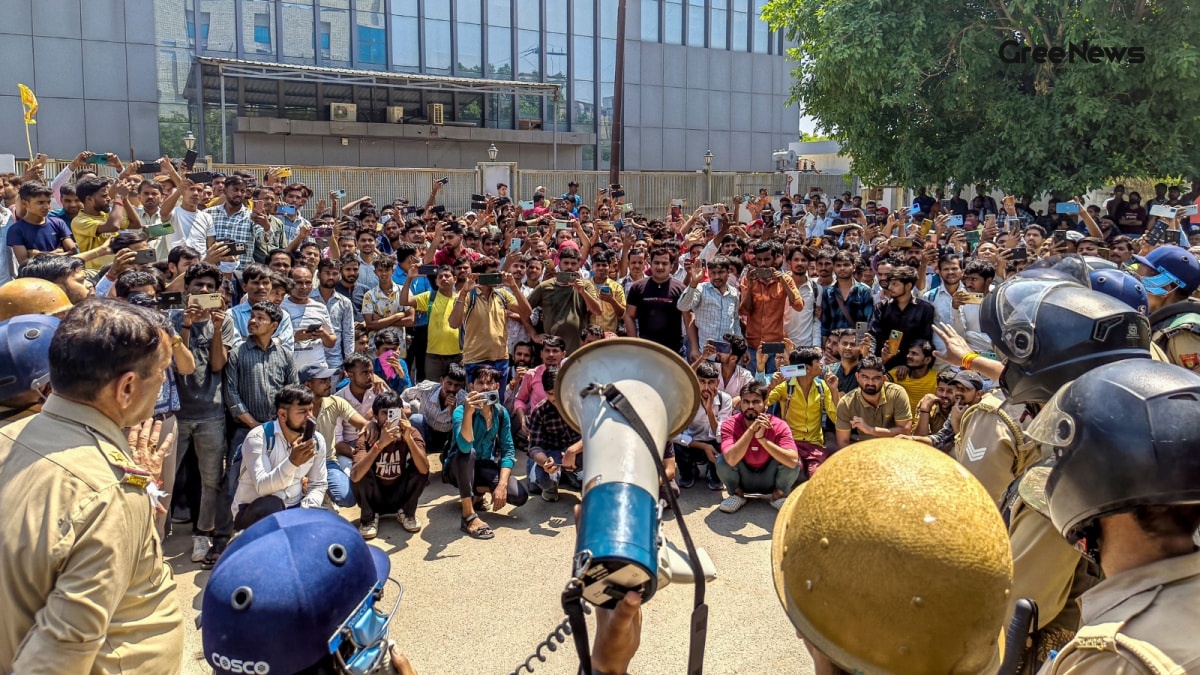
What sparked the Noida workers’ protest?
It all started when thousands of labourers took to the streets of Noida demanding a decent monthly wage. They were fed up with monthly salaries that hovered around Rs 11,000‑13,000, while everyday essentials like rations and LPG were getting pricier every week. In my own neighbourhood, you could hear the discussion over chai about how the cost of a kilogram of rice had shot up to Rs 400 on the black market. This unrest quickly turned into a large‑scale demonstration that, unfortunately, spiralled into violence.
As a regular follower of breaking news, I saw the headlines flash about the clashes, but the real story was the human cost behind those numbers. The protest turned chaotic around 5 pm, and by the time the police stepped in, many workers who had merely been present at the scene were being hauled away.
My personal encounter with the families
When I first heard about the arrests, my friend from Noida called me in a panic. She told me about a woman named Devi, who travelled all the way from Bihar on a night train, desperate to find out what happened to her husband, Anand Kumar Ram. Devi’s story hit me hard because she, like many of us, was trying to make ends meet for her children while dealing with a sick toddler who had already undergone two surgeries.
Listening to her, I could feel the weight of a Rs 20,000 bail hanging over a family that survives on a Rs 11,000 salary. It reminded me of the viral news clips that were circulating, showing families trying to collect money in any way possible.
‘Rs 20,000 bail on Rs 11,000 salary’ the numbers that don’t add up
Devi’s voice was steady when she told the media that the family had moved to Noida about two years ago with their other two children, aged 12 and 8. “My husband cannot afford to lose a single day of work,” she told me later, “when I heard from his friend that he’d been arrested, I rushed here with my mother and two kids.”
A lawyer, who spoke on condition of anonymity, listed the multiple charges against Anand Kumar Ram: attempt to murder, rioting, voluntarily causing hurt or grievous hurt to deter a public servant, assaulting a public servant, act endangering life or personal safety of others, and criminal conspiracy. Each of these charges carries a hefty bail amount, which in this case was set at Rs 20,000.
Devi’s mother, Lalita, was also on the phone, pleading for help. "The sum looms in front of our eyes, where will we get it? I have asked our relatives to help," she sighed. The desperation in her tone was palpable, and it reflected a larger pattern in the community families pulling together, borrowing money from neighbours, and even selling personal belongings to raise the bail.
Other families caught in the same net
It’s not just Devi’s family caught in this legal bind. Sunil Kumar and Kunjbihari, two other workers arrested during the protest, are also grappling with the same Rs 20,000 bail demand. Sunil’s younger brother told me that his sibling had left for work at 5 pm, returned at 6.10 pm, and got entangled in the protest despite not taking part in any violent act. "The ones who did not do anything are facing trouble now," he lamented, adding that he had to scramble to find Rs 20,000 for Sunil’s bail.
These accounts are part of the trending news India narrative that highlights how a protest for better wages ended up costing families more than they could afford. The workers were initially demanding a minimum monthly salary of Rs 18,000‑20,000, rejecting annual increments they claimed were only Rs 250‑350. Their struggle to survive on Rs 11,000‑13,000 a month against rising inflation was the core of the protest, and now the legal aftermath adds another layer of hardship.
Police response and the larger picture
Gautam Buddh Nagar’s Police Commissioner, Laxmi Singh, confirmed that over three hundred individuals have been detained and seven FIRs have been filed regarding the protests. This fact has been echoed across various breaking news portals, making it clear that the law enforcement agencies are treating the incident with utmost seriousness.
From my perspective, watching the latest news India coverage, it’s evident that the authorities are sending a strong message: any disruption, however justified by wage demands, will not be tolerated. Yet, the human cost families scrambling for bail, children left without a father’s income, and the mental stress on mothers like Devi is something that the police statements seldom highlight.
How families are coping real‑life strategies
In conversations with a few families, I learned about the creative ways they are trying to raise the bail amount. Some are borrowing from local moneylenders at high interest rates, others are selling gold jewellery that was originally intended for their children’s marriage. A few have even started small home‑based businesses like making and selling snacks in their colonies to pull in extra cash.
Devi mentioned that her mother, Lalita, is trying to collect contributions from relatives, but most of the extended family are also living paycheck‑to‑paycheck. "We have tried asking the local community, but most people are also struggling. The pandemic left many without jobs," she said. This part of the story has been widely shared as viral news across social media, resonating with many Indians who face similar economic challenges.
Meanwhile, the younger children in these families have to adapt quickly. The 12‑year‑old, who used to help his father with small chores at the workplace, now finds himself taking care of his younger siblings while his mother looks for any odd job she can find.
What does this mean for the wage protest movement?
Even though the immediate focus is on securing bail for the arrested workers, the underlying issue of wage disparity remains unresolved. The workers’ demand for a monthly salary of at least Rs 18,000‑20,000 is still very much alive, and the protest has sparked a broader conversation in the labour community across India.
From the perspective of a regular citizen following India updates, the incident is a wake‑up call that the government and industrialists need to address the real‑world cost of living, especially for low‑paid labourers who are the backbone of the city’s construction and manufacturing sectors.
Until then, families like Devi’s will continue to fight an uphill battle, trying to balance between paying bail and keeping food on the table. The whole saga has become a part of the trending news India, reminding us how quickly a demand for fair wages can turn into a personal crisis for ordinary people.