Trump says Xi is "very happy" the Strait of Hormuz is open and touts a potentially historic China visit
So, I was scrolling through my phone on a lazy Saturday morning when I saw Donald Trump’s latest post on Truth Social. It struck me as one of those moments where you think, "What’s happening now?" and then you realize you’re looking at a piece of breaking news India that could shift the tone of international relations.
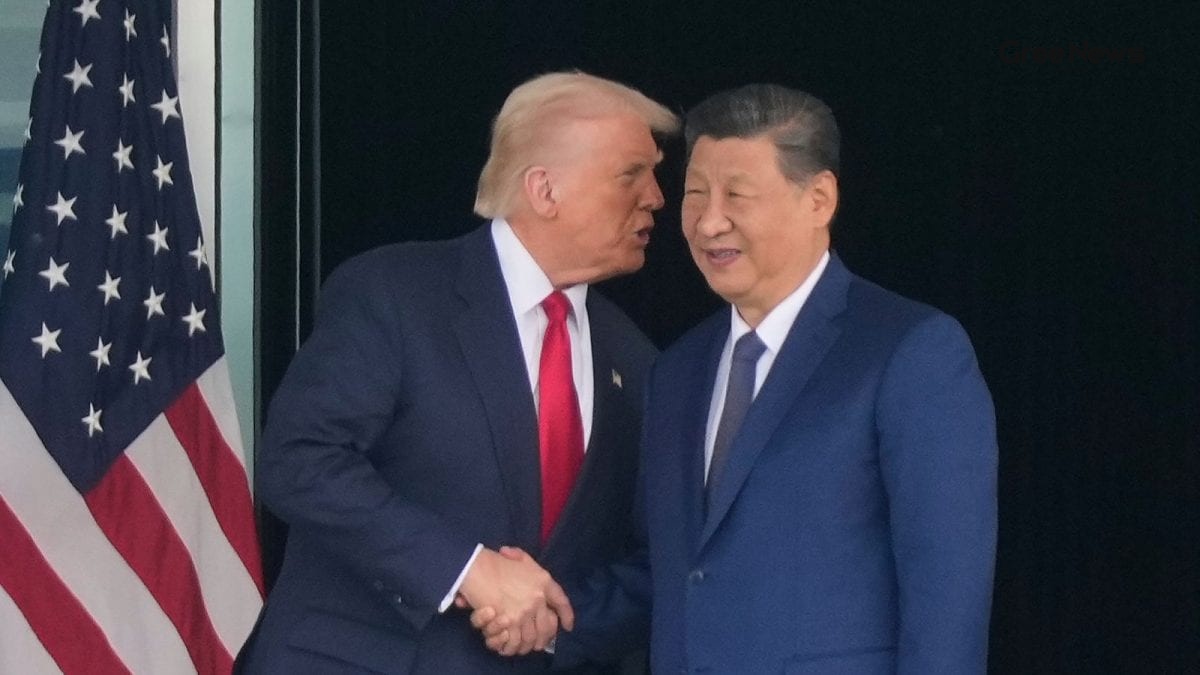
Donald Trump wrote that Chinese President Xi Jinping is “very happy” that the Strait of Hormuz is opening up again. He went on to call his upcoming meeting with Xi Jinping in China "special" and "potentially historic". The post was short but packed with optimism something you rarely see in the usual political banter.
What surprised me the most was the casual confidence in his words. Donald Trump used the phrase, "Much will be accomplished!" a line that felt like a promise straight out of a campaign rally, but this time it was aimed at a diplomatic summit. If you follow trending news India, you’ll notice that many people were sharing the post, turning it into a bit of viral news. The conversation really took off when friends started debating whether the meeting could actually bring tangible results.
Now, before we dive deeper, let’s set the context. The Strait of Hormuz is a narrow waterway between Iran and the Arabian Peninsula. It’s the gateway for about 20% of the world’s oil and a sizeable chunk of LPG shipments. For almost seven weeks, commercial vessels were either blocked or heavily restricted there. The disruption caused freight costs to spike and pushed several oil‑importing nations including India to look for longer, costlier routes.
When the waterway finally reopened, Iran’s Foreign Minister Seyed Abbas Araghchi announced that the route was fully accessible for the remainder of the cease‑fire linked to Lebanon. He made the statement on X, confirming that the passage was "completely open" for commercial vessels. Donald Trump quickly responded with a thank‑you note, saying, "Iran has just announced that the strait of Hormuz is fully open and ready for full passage. Thank you." He even linked the development to his earlier 10‑day cease‑fire aGreement between Israel and Lebanon, suggesting that peace talks in one region helped ease tensions in another.
Honestly, hearing this in a casual tone made me think of those family gatherings where we discuss how a single decision can ripple across continents. It’s like when the government announces a subsidy for diesel suddenly every truck driver in town is talking about it. In this case, the reopening of the Strait of Hormuz is the global equivalent of that subsidy, and the reactions from world leaders are the chatter you hear on every news channel.
Back to Donald Trump’s claim about Xi Jinping being "very happy" what does that actually mean? Well, if you consider that China imports a massive amount of oil through the Hormuz route, a functional waterway translates directly into cheaper energy costs for Chinese factories. Cheaper energy means lower production costs, which can boost China’s export competitiveness. This could also be a win for India, because lower global oil prices often filter down to our domestic market, easing the pressure on fuel prices that affect our daily commute.
Imagine you’re driving through Delhi during peak hour, and suddenly the price at the pump drops a few rupees. That small change can make a huge difference to a commuter’s budget. Similarly, the reopening of the Strait of Hormuz could make a noticeable impact on fuel prices across the subcontinent, especially as India imports a large share of its crude oil via this route.
The next part of the story that caught people’s attention was Donald Trump’s hint at a historic meeting with Xi Jinping in China. He wrote, "Our meeting in China will be a special one and, potentially, historic." The wording reminded me of the kind of language you hear when a Bollywood film is about to release it builds anticipation and sets expectations high. If you are following the latest news India on diplomatic tours, you’ll notice that such statements often lead to speculation about trade deals, technology transfers, or even strategic alignments.
In most cases, these meetings can pave the way for aGreements on everything from tariffs to joint ventures in renewable energy. The fact that Donald Trump is emphasizing the "historic" nature of the meeting suggests he hopes to seal something big perhaps a landmark trade pact or a new framework for dealing with North‑Korea’s missile program, which has been a lingering concern for both the United States and China.
Now, let’s talk about the practical side of things. The Strait of Hormuz is not just a busy lane for oil tankers it’s also a strategic choke point that has seen naval confrontations and political standoffs for decades. The recent reopening under a cease‑fire arrangement shows how diplomatic moves in the Middle East can quickly influence global supply chains. It’s a reminder that the world is interconnected, and a single ripple can become a wave.
What happened next is interesting: after the announcement from Iran’s foreign ministry, several shipping companies posted updates about resuming their routes through Hormuz. This caused a noticeable dip in freight rates on the Asian market. Watching the charts, you could see the prices claw back a few percent, which, in the world of commodities, is significant.
Many people were surprised by this swift market response. Not only did the shipping industry react, but also analysts in Delhi’s financial circles started talking about a possible easing of inflationary pressure on fuel. For everyday Indians, that could mean a modest drop in petrol and diesel prices at the filling stations a piece of good news that often makes headlines under the banner of trending news India.
From a personal angle, I remembered the last time the Strait of Hormuz faced a similar shutdown back in 2019. Back then, the headline news was full of panic about oil scarcity, and you could feel the anxiety in the air even if you lived far from the Gulf. This time, the tone feels different there’s a sense of relief mixed with cautious optimism.
It also raised questions about future stability. If a cease‑fire can open the passage, could other diplomatic initiatives replicate that success? Donald Trump’s tweet thanked Iran, showing a rare moment of appreciation for a country that often finds itself at odds with the United States. The post went viral, sparking debates on social media about whether this could be a step toward broader regional peace.
Another angle that caught my eye was the mention of the Israel‑Lebanon cease‑fire. While the aGreement was primarily aimed at halting hostilities on the Levant, indirectly it helped lower military tensions near Hormuz. This correlation underscored how interconnected security arrangements are a calm in one hot spot can ease the pressure in another.
Now, let’s bring in a bit of Indian flavour. Friends of mine in Mumbai work in the shipping industry, and they told me that the reopening means they can finally schedule their vessels without rerouting around the Arabian Sea a detour that adds days and fuel costs. They also mentioned that the Indian ports could see a smoother flow of crude, possibly improving refining margins.
For those following the latest news India, this development may not be the biggest headline, but it definitely adds depth to the broader picture of global energy security. In fact, many Indian business newspapers have already run pieces linking the Hormuz reopening to potential relief in fuel prices for Indian consumers.
To sum up, Donald Trump’s claim that Xi Jinping is "very happy" with the Hormuz situation seems to hinge on a pragmatic view of energy flow. Whether the upcoming meeting in China truly becomes historic remains to be seen, but the anticipation itself is a kind of news that fuels public discourse a mix of optimism, skepticism, and curiosity.
In most cases, the real impact will be measured in the months ahead: if trade deals materialise, if oil markets stabilise, and if the regional peace holds, then the conversation will shift from "what happened" to "what we can achieve next".
So, keep an eye on the upcoming China visit it’s shaping up to be more than just a diplomatic stroll. And if you’re scrolling through your news feed for viral news or Indian updates, you’ll likely see more pieces breaking down what this could mean for India’s own energy landscape.