West Bengal Assembly Elections 2026: Live Coverage Highlights Voter Roll Overhaul and Tight Contest
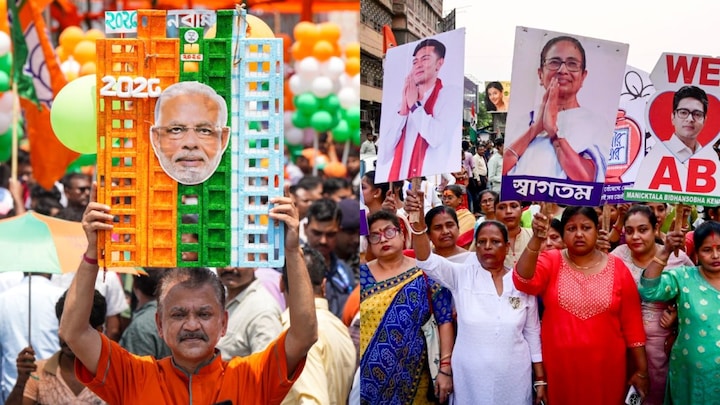
West Bengal Assembly Elections 2026 Live Updates: The upcoming West Bengal Assembly election represents a pivotal moment in the state's political trajectory. The electoral process will unfold over two distinct phases, followed by a counting exercise that will determine the composition of the 294‑seat legislative assembly. A party must secure at least 148 seats to command a majority and form the government.
Key Players and the Core Contest
The central rivalry pits the incumbent All India Trinamool Congress, steered by Mamata Banerjee, against the Bharatiya Janata Party, now led in the state by Suvendu Adhikari. Both parties have mobilised extensive campaign machinery, marshalled high‑profile rallies, and projected ambitious development narratives to capture the electorate’s imagination.
All India Trinamool Congress has historically leveraged its welfare‑oriented programmes and strong regional identity, while Bharatiya Janata Party emphasizes national integration, infrastructural upgrades, and a promise of cleaner governance. The contest is being framed as a direct test of each party’s ability to sustain or overturn the existing power balance in eastern India.
Campaign Dynamics and Principal Issues
The campaign atmosphere is characterised by heightened political rivalry, a barrage of welfare pledges, and intense scrutiny of governance records. Economic revitalisation, job creation, and infrastructural development emerge as dominant themes, with each side presenting contrasting plans to boost employment opportunities for the state's burgeoning youth population.
Identity politics and law‑and‑order concerns continue to dominate public discourse. The All India Trinamool Congress highlights its track record on social welfare and protection of minority rights, whereas the Bharatiya Janata Party underscores its stance on national security and cultural cohesion. Both narratives are interwoven with promises of improved public services, ranging from healthcare access to education quality.
Security measures have been markedly stringent, reflecting the scale of the electorate and the sensitivity of the political climate. Deployment of law‑enforcement personnel, surveillance technology, and community awareness programmes aim to ensure a peaceful voting environment.
Voter Mood and Projections
Political analysts anticipate that the outcome of the West Bengal Assembly Elections 2026 could reshape the regional power map. Public sentiment appears divided, with many voters weighing the performance of the incumbent administration against the appeal of a promised change.
Independent polling agency CVOTER projects a close competition: the All India Trinamool Congress registers approximately 44 % support, while the Bharatiya Janata Party trails closely with around 40 % backing. These figures suggest a narrow margin that could be decisive in several swing constituencies.
Such projections underscore the importance of micro‑targeted campaigning, coalition‑building, and voter mobilisation strategies in the final days leading up to the polls.
Voter Roll Controversy: Scale of the Revision
A major development in the lead‑up to the elections involves a comprehensive review of the electoral roll. Authorities have identified over 27 lakh voters as ineligible after a detailed adjudication process. Out of the total 60.06 lakh names subjected to scrutiny, precisely 27,16,393 individuals were ruled ineligible.
This extensive clean‑up has trimmed the final electorate size to 7.04 crore, a figure that reflects the rigor of the verification exercise. Mamata Banerjee has publicly asserted that her party will advocate for the reinstatement of those disenfranchised by the roll correction, emphasizing the need for inclusive participation.
The distribution of deletions varies markedly across districts. The Muslim‑majority district of Murshidabad recorded the highest number of removals: of the 11,01,145 voters placed under adjudication, a total of 4,55,137 were declared ineligible. In stark contrast, Jhargram saw the lowest level of deletions, with only 1,240 names removed after verification.
These numbers have sparked vigorous debate about the transparency and fairness of the roll‑cleaning process, with opposition parties demanding greater oversight while the election commission maintains that the exercise adheres to legal standards.
District‑Level Insights
Beyond Murshidabad and Jhargram, several other districts experienced notable adjustments. While exact figures for each region are not enumerated here, the pattern of higher deletions in areas with dense minority populations and lower deletions in districts with more homogeneous voter bases has been observed.
Local party units have responded differently: in districts with substantial deletions, All India Trinamool Congress cadres have intensified door‑to‑door outreach, assuring affected families that legal remedies remain available. Conversely, Bharatiya Janata Party activists have framed the roll revision as an administrative necessity, urging voters to trust the integrity of the electoral system.
The divergent narratives have added another layer of complexity to the electoral contest, compelling both sides to allocate resources toward legal advocacy as well as conventional campaigning.
Implications for the Political Landscape
The outcome of the West Bengal Assembly Elections 2026 will have ramifications that extend beyond state borders. A victory for All India Trinamool Congress would reaffirm the party’s dominance in the region, potentially influencing centre‑state relations and the allocation of federal resources.
On the other hand, a win for the Bharatiya Janata Party could mark a watershed moment, signalling the party’s ability to penetrate a stronghold that has historically resisted its expansion. Such a shift would likely embolden the party’s strategic plans for neighboring states, reshaping the broader political calculus in the country.
The voter roll controversy may also set precedents for how future elections handle roll verification, influencing the balance between electoral integrity and inclusive participation.
Conclusion
As the West Bengal Assembly Elections 2026 approach, the confluence of a tightly contested battle between All India Trinamool Congress and Bharatiya Janata Party, a sweeping voter roll clean‑up affecting millions, and a set of pivotal policy issues creates a highly charged electoral environment.
Stakeholders across the political spectrum are closely monitoring the developments, recognising that the final results will not only decide the composition of the state legislature but also ripple through the nation’s political discourse for months to come.
Voters, parties, and observers alike await the counting process with anticipation, aware that every seat holds the potential to tip the balance of power.