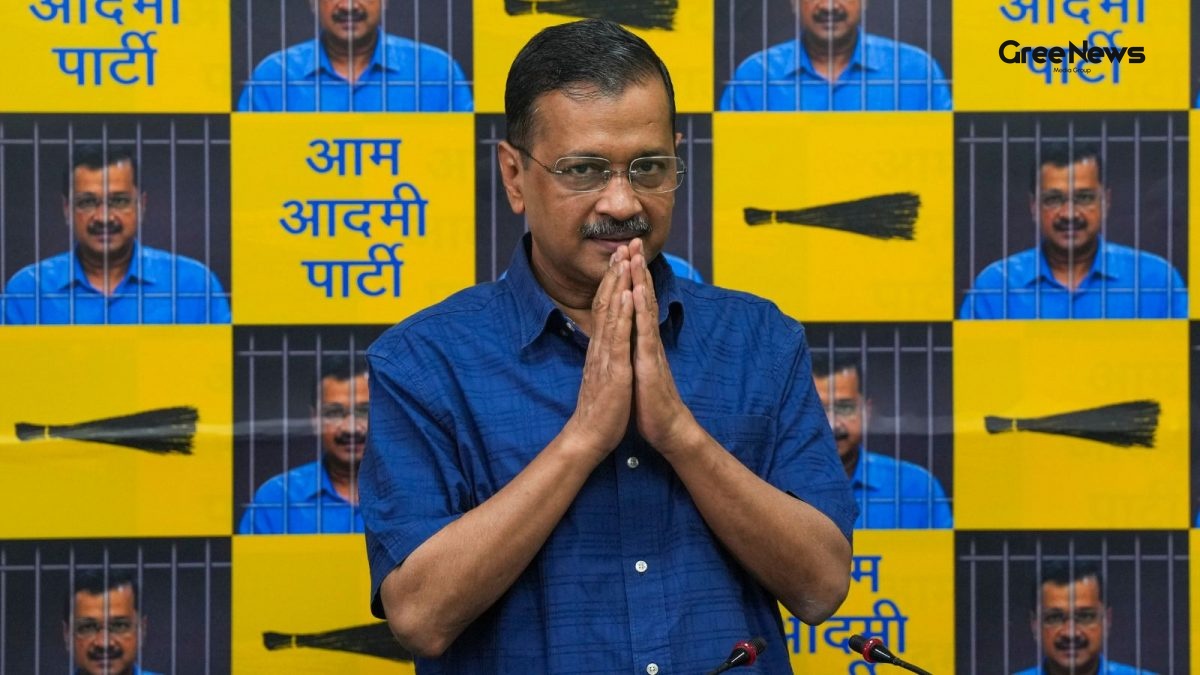
AAP chief Arvind Kejriwal questioned the impartiality of Justice Swarana Kanta Sharma
Pointing out that Delhi High Court Justice Swarana Kanta Sharma attended Adhivakta Parishad events linked to the BJP and RSS, Aam Aadmi Party chief Arvind Kejriwal on Monday explained through a Supreme Court observation that “in a functional democracy, perception matters”.
Arvind Kejriwal said if the Delhi excise policy case is political, questioning if he will get justice if the judge presiding over the matter has attended a certain event belonging to a certain ideology that is opposed to his own.
Why the perception of bias matters – my own take
Honestly, when I first heard about Justice Swarana Kanta Sharma’s participation in an Adhivakta Parishad programme, I felt a little uneasy. You know, we live in a time where the slightest hint of partisanship can turn a routine case into breaking news. The idea that a judge who has openly associated with gatherings promoted by the BJP and RSS might be presiding over a case involving the AAP, an opposition party that openly opposes that very ideology, struck me as something that could easily become trending news India wants to talk about.
What happened next is interesting – Arvind Kejriwal didn’t just stay silent. He went straight to the Supreme Court’s earlier observation that “in a functional democracy, perception matters” and used it as a platform to demand the recusal of Justice Swarana Kanta Sharma from hearing a CBI petition concerning the liquor policy case. I could sense the tension when I watched the clip on my phone; the atmosphere felt like a courtroom drama you might see in a Bollywood thriller, but it was real, and it was happening right now.
Arvind Kejriwal’s argument about the CBI and ED
Arvind Kejriwal highlighted that the Supreme Court itself had, at one point, described the CBI as a “caged parrot”, suggesting that the agency often repeats the narrative fed to it. He argued that if Justice Swarana Kanta Sharma had attended events that align with a particular ideology, there is a real danger that the judge could be sympathetic to the same side, consciously or subconsciously. This, according to Arvind Kejriwal, could affect the way the CBI’s petition is interpreted.
He went on to say that the impression created in his mind is that if a judge has attended an event of a particular ideology, and the party that the judge is now asked to adjudicate against follows an opposite ideology, the fairness of the proceeding can be called into question. This line of reasoning felt very logical to me; after all, the very essence of justice is to be blind, but perception can sometimes be louder than the fact itself. That’s why this story quickly turned into viral news across social media feeds.
Historical context – previous orders set aside
Arvind Kejriwal didn’t stop at just pointing out the current scenario. He reminded everyone that the Delhi High Court had previously stayed a trial‑court order against the Enforcement Directorate (ED) even when the ED was not a party to the matter. According to Arvind Kejriwal, the high court “very generously” granted relief to the ED without any prayer being filed by the agency. This, he said, is a clear sign that the court tends to side with agencies like the CBI and ED, often without proper cause.
He also cited that three orders by the same court were later set aside by the Supreme Court. One notable example involved trial‑court findings that cleared AAP leader Manish Sisodia of money‑laundering charges, only for the Delhi High Court to reverse that decision, labeling Sisodia as corrupt. The Supreme Court later overruled that verdict. Such incidents, Arvind Kejriwal argued, illustrate a pattern where the high court appears to bend under external pressures, creating a perception that the judiciary may not be as independent as it should be.
What does this mean for the public?
From where I sit, the whole episode raises important questions for any Indian citizen who follows latest news India. If the very people who are supposed to deliver impartial justice are seen attending partisan events, does it erode public trust? Many people were surprised by Arvind Kejriwal’s bold demand for recusal, especially because it brings the judiciary’s neutrality into the spotlight. In a country where political affiliation often colours public discourse, such a move could become a turning point – a moment when the public starts demanding more transparency from the bench.
Even though the case itself deals with technical issues of Delhi’s excise policy, the underlying narrative has turned into a story about how perception shapes reality. It’s a reminder that the courtroom is not an isolated bubble; it reflects the larger societal currents, and any hint of bias can quickly become trending news India readers cannot ignore.
How the media is covering the story
The coverage has been intense. Various news portals have framed Arvind Kejriwal’s statements as a direct challenge to the independence of the judiciary. Headlines have screamed “Justice Swarana Kanta Sharma’s Past Affiliations Questioned”, turning the issue into a headline that appears on the front page of most Indian newspapers. The story has also become part of the daily conversations on WhatsApp groups, with many users sharing clips of Arvind Kejriwal’s speech, adding their own commentary about whether a judge can truly separate personal belief from professional duty.
What I find fascinating is how quickly the narrative spreads. Within a few hours, the same piece of news was being discussed on television debates, in coffee shops in Delhi, and even in small villages where people listen to FM radio. The term “viral news” seems apt because the story’s reach extends beyond the usual political circles and into the everyday life of ordinary citizens who may not follow court cases closely but are deeply concerned about fairness.
Potential next steps – what could happen?
Looking ahead, there are a few possible routes the case could take. One is that the Supreme Court may consider Arvind Kejriwal’s request and ask Justice Swarana Kanta Sharma to step aside. If that happens, it would reinforce the idea that perception does matter, and the judiciary is willing to act on it. On the other hand, the Supreme Court could reject the recusal request, stating that a judge’s past attendance at public events does not automatically imply bias. That decision could be interpreted as a signal that the courts are more concerned with legal merits than with public perception.
Either way, the story will continue to dominate the news cycle, and many will be watching closely to see how the Supreme Court frames its judgment. For me, it feels like we are witnessing a pivotal moment where the democratic process is being tested, and the outcome could shape how future cases are perceived, especially those involving political parties with opposite ideologies.
Personal reflection – why I care
Personally, I’ve always believed that the law should stay above politics. But living in a country like India, where politics seeps into almost every corner, it becomes hard to ignore the influence of ideological leanings. When Arvind Kejriwal raised this issue, it resonated with my own doubts about whether the judiciary can truly stay neutral. The fact that Justice Swarana Kanta Sharma’s name is now part of a national conversation about fairness shows how interconnected these institutions are.
It also reminded me of a time when I filed a grievance at a local municipal office, and the officer handling it was known to be a close associate of the local MLA. Even though the law was on my side, the perception that the officer might be biased made me anxious throughout the process. That memory made the whole debate about Justice Swarana Kanta Sharma’s past attendance feel very real and personal.
Conclusion – why the story matters for India updates
In the end, the crux of the matter is simple: perception matters, especially in a functional democracy. Whether or not Justice Swarana Kanta Sharma’s past participation in Adhivakta Parishad events directly influences his judgments, the very fact that it is being discussed so widely reflects the growing demand among citizens for greater transparency. As the case moves forward, it will continue to be part of the latest news India, breaking news, and trending news India platforms, pushing the conversation about judicial independence to the forefront of public discourse.
For anyone who follows India updates, this episode serves as a reminder that the fight for impartial justice is ongoing, and each new development offers an opportunity to reflect on how our institutions can evolve to meet the expectations of a vibrant, diverse democracy.