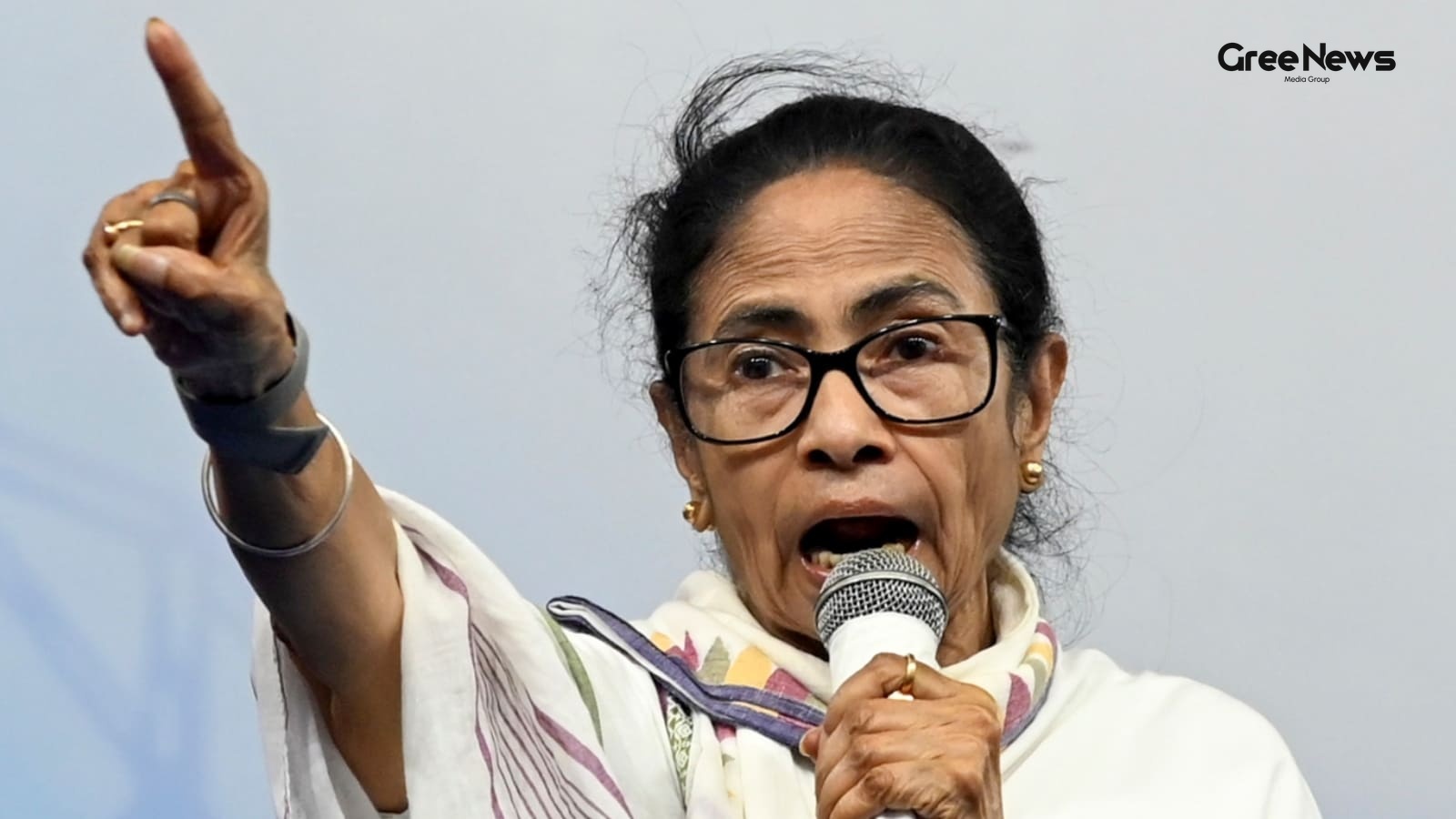
When Mamata Banerjee stormed the I‑PAC office during an ED raid
Honestly, I was watching the news over my morning chai when the headlines started flashing: “Supreme Court slams Mamata Banerjee for meddling in I‑PAC probe.” It felt like one of those moments where you think, “Is this really happening?” The Supreme Court, on a Wednesday, didn’t just give a mild rebuke they said her actions were putting democracy in peril.
Now, you know the Supreme Court isn’t usually into drama; they speak in measured tones, refer to legal precedents, and rarely throw in words like “peril.” But this time, the bench of Justices PK Mishra and NV Anjaria actually called out the chief minister by name, saying, “It’s not a State‑Centre dispute. It’s a case where an individual who happens to be a Chief Minister walked in the midst of a probe and put democracy in peril.” That line stuck with me you could hear the echo of that statement in cafés across Kolkata.
What made it even more striking was the court’s reference to the writings of legal luminaries like Seervai and Ambedkar. The justices noted, “You have taken us through writings of Seervai, Ambedkar, but none of them would have conceived this situation in this country that one day a sitting Chief Minister will walk into the office during an ongoing investigation.” It’s as if the judges were thinking aloud, “We’ve read the books, but reality has out‑written them.”
For anyone following the latest news India, this was a headline that turned from breaking news to something that lingered on social media feeds for days. The term “viral news” suddenly seemed apt, because people were sharing snippets, memes, and commentary, all trying to make sense of why a political leader would act in such a bold, almost theatrical way.
What’s The Case About?
Let me break it down in simple terms, because the legalese can get heavy. Earlier this year, the Enforcement Directorate (ED) launched a series of coordinated searches across ten spots in West Bengal and Delhi. The backdrop was a money‑laundering probe into a coal‑smuggling syndicate allegedly headed by a businessman named Anup Majee. Among the places they raided were the office of I‑PAC a political consultancy firm hired by the Trinamool Congress (TMC) and the home of its chief strategist, Pratik Jain.
While the ED agents were at Pratik Jain’s residence, Mamata Banerjee, accompanied by a bunch of security personnel, walked straight into the site. Imagine a scene from a movie: central officials with their clipboards, a police officer trying to maintain order, and then the chief minister entering the frame, her entourage in tow. It turned into a tense standoff. According to the probe agency, she removed physical documents and even took away electronic evidence. In short, she disrupted the legal process.
Banerjee, for her part, maintained that the documents pertained to her political party and that the raid was nothing more than a “nasty” political vendetta. She described the whole operation as an attempt to harass the TMC and even led a massive political march in Kolkata to protest what she called an unjust persecution.
The Enforcement Directorate, on the other hand, insisted that the searches were purely evidence‑based and not a targeted attack on any political party. They had already tried to get urgent relief from the Calcutta High Court, but that didn’t work out. So they approached the Supreme Court, hoping to get a directive that would allow a CBI investigation into the alleged obstruction caused by Banerjee, senior police officials, and others.
This whole saga has become part of the trending news India cycle, with people debating whether it’s a case of legitimate law‑enforcement versus political overreach, or a genuine attempt to shield a party’s secrets. The fact that the Supreme Court’s comments were so pointed added fuel to the fire, making this scenario one of the most talked‑about pieces of "India updates" in recent weeks.
How I Felt Watching the Whole Thing Unfold
Honestly, watching it all on the TV screen felt like being part of a live courtroom drama. I was sitting on my balcony, the city’s usual hum in the background, when a news anchor shouted, “Breaking news! Supreme Court slams Mamata Banerjee!” I could hear my neighbours discussing it over their morning dosas. Some were cheering the court’s stance, while others defended Banerjee, saying she was just protecting her party.
What struck me most was the sheer novelty of a sitting chief minister walking into a raid. In my experience, politicians usually issue statements, not step into evidence rooms. That’s why the court’s observation that “none of them would have conceived this situation” resonated with many of us it felt like a chapter out of a novel, not a regular day in Indian politics.
Even after the main news segment ended, I kept seeing short clips on social media platforms. Some users added their own captions, like “When the chief minister becomes the main character in a crime thriller.” Others posted legal analyses, trying to decipher the implications of the Supreme Court’s remarks. That’s the power of “viral news” it spreads quickly, but also invites deep conversations.
The Legal Angles Why The Supreme Court Took This So Seriously
The bench didn’t just scold Mamata Banerjee; they delivered a warning about the sanctity of democratic institutions. In India's constitutional framework, the separation of powers is a core principle. When a chief minister, who is part of the executive, interferes in an ongoing investigation led by a law‑enforcement agency, it blurs those lines.
Justice Mishra and Justice Anjaria highlighted that the incident was not a “state‑centre dispute.” That phrase is crucial. It means that this wasn’t a typical argument about which government body had authority over the other. Instead, it was an individual acting in a role that could undermine the rule of law.
They also invoked the wisdom of legal scholars, noting that even the great thinkers Seervai, Ambedkar never imagined a sitting chief minister walking into a raid. This reference adds a layer of gravitas, making it clear that the court sees this act as an unprecedented breach.
For everyday readers, this boils down to a simple idea: no one, not even a chief minister, is above the law. That message, especially when articulated by the Supreme Court, resonates across the country, reinforcing faith in democratic safeguards. It also serves as a strong reminder for politicians that their actions are being watched, not just by the media but by the highest judicial authority.
Political Repercussions What Could This Mean For TMC?
From a political standpoint, the episode could have several outcomes. On one side, the Trinamool Congress might rally its base, portraying Banerjee as a leader who stood up against what they see as “federal overreach.” This narrative can be powerful, especially in West Bengal, where regional pride runs deep.
On the flip side, opposition parties are likely to seize this moment, using the Supreme Court’s criticism to question the TMC’s respect for democratic norms. In the run‑up to upcoming elections, such narratives can sway undecided voters.
The ED’s claim that the raids were “evidence‑based” and not politically motivated will also be a point of contention. If the agency can produce solid evidence that Banerjee indeed removed documents, it could lead to further legal action, potentially damaging the party’s image.
For the average citizen, these political chess moves often feel distant, but they trickle down to everyday concerns like development projects, public services, and even the price of a cup of chai. That’s why this story landed not just in the “politics” section but also in the general “latest news India” feeds that people check daily.
Public Reaction From Streets To Social Media
Walking through the lanes of North Kolkata the next day, I could hear shopkeepers debating the Supreme Court’s verdict. Some said it was a “necessary slap” to keep politicians in check, while others argued that the court was being overly harsh on a leader who’s been a champion for the poor.
On Twitter, hashtags like #BanerjeeStandoff and #DemocracyInPeril trended for hours. The mix of sarcasm, serious commentary, and memes created a swirling vortex of “viral news.” Even celebrities chimed in, with a few Bollywood stars posting short videos asking people to “think about what this means for our democracy.”
It’s fascinating how quickly a single incident can become part of the nation’s collective conversation. The phrase “put democracy in peril” was quoted over and over, showing how a well‑phrased judicial observation can shape public discourse.
Why This Story Matters In The Bigger Picture
At the end of the day, the incident is more than just a clash between a chief minister and the ED. It reflects the ongoing tug‑of‑war between center and state, between political power and legal oversight. In a country as diverse as India, the balance of these forces is essential for stability.
When the Supreme Court steps in and makes a comment that sticks, it sends a signal to all branches of government: the judiciary will act as a guardian of democratic norms. For a citizen like me, that’s reassuring it means there’s still a check on any attempts to bend the system for personal or partisan advantage.
Moreover, the story underscores the importance of transparent investigations. If the ED’s searches are indeed evidence‑based, then the focus should remain on the alleged coal‑smuggling and money‑laundering nexus, not on politicising the process. On the other hand, if the raids were misused, then accountability is the only way forward.
All these nuances make the issue a staple of “India updates” that keep us informed about the health of our democracy. Whether you follow it on TV, read it in the newspaper, or see it on a WhatsApp forward, the core question remains: how do we ensure that power, in any form, respects the rule of law?
Looking Ahead What To Expect Next?
What’s likely to happen next? The Supreme Court’s observation may lead to a fresh set of directions for the ED, possibly ordering the agency to re‑conduct parts of the raid or ensuring that any seized documents are securely stored. There might also be a fresh petition filed by the ED seeking more stringent action against those allegedly involved in obstructing the probe.
For Mamata Banerjee, the political calculus will involve balancing a strong defence of her actions with the need to avoid appearing defiant of the judiciary. She may double‑down on her narrative of standing up against a “politically motivated” raid, while also trying to keep her party’s image intact ahead of future elections.
From a citizen’s perspective, we’ll likely see more debates on talk‑shows, more opinion pieces in the newspapers, and a continued stream of “breaking news” alerts whenever there’s a new development. The story is still very much alive, and it’s a reminder of how interconnected law, politics, and everyday life are in India.
So, keep an eye on the updates, because how this unfolds could set a precedent for future interactions between state leaders and investigative agencies. And remember, every time we discuss these events over a cup of tea, we’re part of the democratic conversation that the Supreme Court so passionately defended.