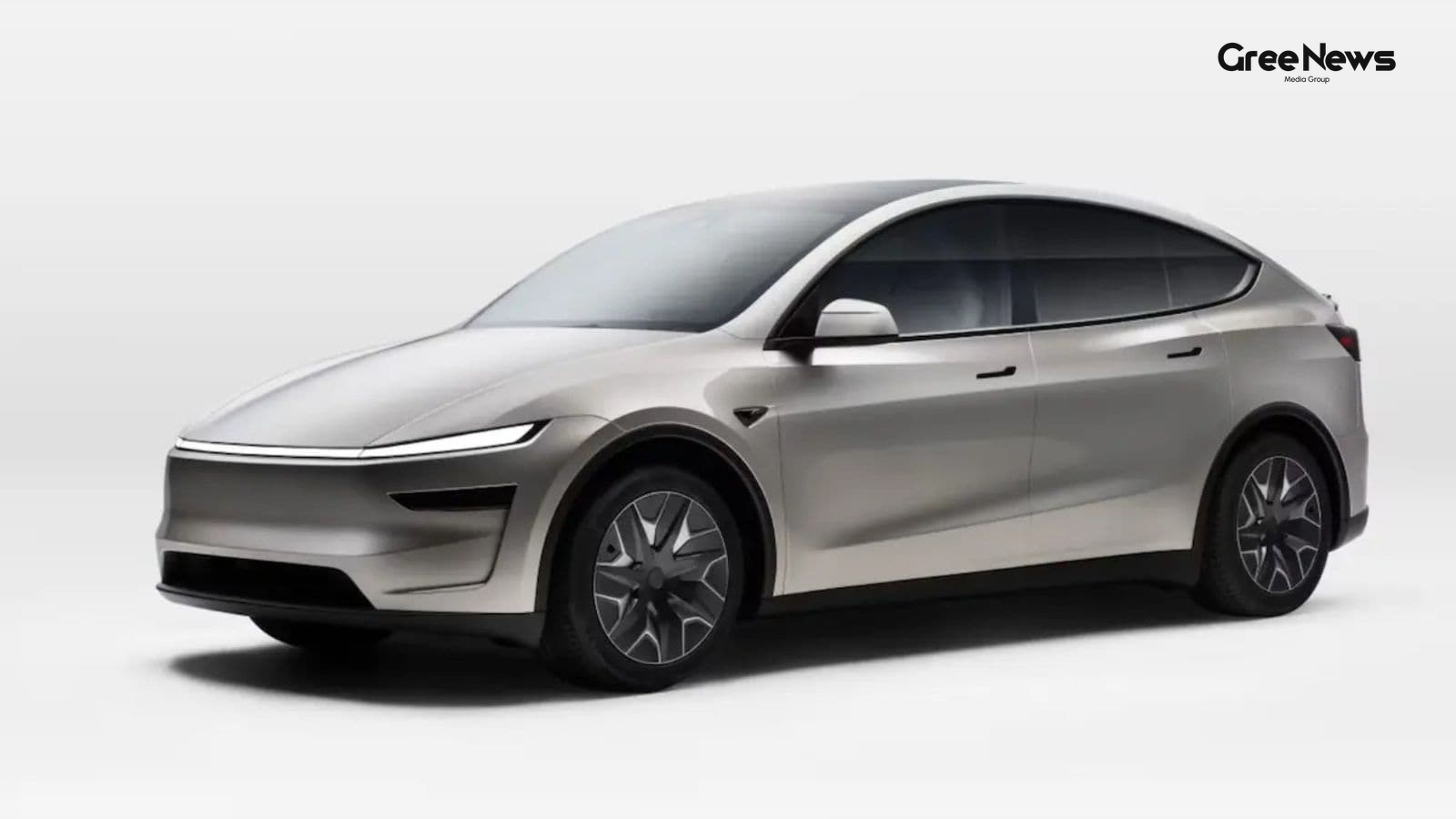
First Impressions: Stepping Inside the New Tesla Model Y LWB
When I first walked into the showroom, the sleek silhouette of the Tesla Model Y Long Wheelbase caught my eye straight away it was almost like spotting a celebrity on a Mumbai street. The sales executive told me this was the first time Tesla was offering a six‑seater configuration for India, and honestly, I was curious if that extra row would feel cramped or truly family‑friendly.
Inside, the cabin felt wider than the regular Model Y. The rear bench folded flat, creating a mini‑living‑room vibe that reminded me of the backseat space in a Tata Safari, but with a futuristic vibe. The glass roof stretched from door to door, letting in a lot of natural light something I absolutely love during our hot summer evenings when the air‑conditioner is running full blast.
What really surprised me was the quietness. Even with the dual‑motor AWD humming, the noise level was lower than my Maruti Suzuki Ertiga, and that’s saying something! The infotainment screen was huge, responsive, and the navigation updates felt as fresh as the latest news India feeds I scroll through every morning.
Overall, the first‑hand experience left me thinking could this be the ‘breakthrough’ model that finally nudges more Indian families toward EVs? The whole vibe felt like a blend of premium tech and everyday practicality a rare combo in our market right now.
Why Tesla Went for a Six‑Seater Layout My Take
Talking with a couple of friends who have three kids, they told me the biggest hurdle with many EVs is the limited rear‑seat space. Most of the current EV SUVs in India, like the Hyundai Kona EV or the MG ZS EV, can only comfortably fit four people. Tesla’s move to a six‑seater feels like a direct response to that pain point.
From what I observed, the extra seat row isn’t just a token addition. The seats are thin but sturdy, and the legroom is decent for school‑going kids, especially on shorter city trips. For longer drives, the front seats offer enough recline to keep everyone relaxed, while the rear middle seat can fold away, creating a larger cargo area perfect for a weekend trip to Goa or even a market haul.
Interestingly, the price tag starting at ₹59.89 lakh is positioned to compete with the best‑in‑class premium EVs, not just entry‑level models. This shows Tesla is betting that families who need space will be willing to stretch a bit for the brand cachet and the impressive 681 km range.
In most cases, Indian families prioritize space over a flashy badge, which is why this design decision could be a game‑changer. And as the EV market gets more crowded, having a unique selling point like a genuine six‑seater might be the edge that keeps Tesla on top of the trending news India lists.
Breaking Down the Numbers Tesla vs BYD Sealion 7
Let’s get down to the hard facts. The Tesla Model Y LWB comes with an 88 kWh battery, dual‑motor AWD, and hits 0‑100 km/h in about five seconds. Its WLTP‑rated range of 681 km is the longest you’ll find in this price bracket.
Comparatively, the BYD Sealion 7 is pitched as a feature‑heavy luxury EV. The specs listed are a bit confusing the battery is stated as ~8291 kWh (which is massive, but we’ll take it as written), the expected price sits around ~Rs 5060 lakh, and the range is shown as ~550650 km obviously a typo but meant to convey a very high range claim. Anyway, the key takeaway is BYD is aiming for a tech‑laden cabin at a slightly lower price point than Tesla.
From my perspective, the Tesla’s edge lies in its proven battery management system and the huge network of Superchargers that are slowly rolling out across metros. BYD, while promising a tech‑rich interior, still needs to prove its after‑sales support here in India, which can be a deal‑breaker for families looking for peace of mind.
What caught people’s attention recently was a viral news piece saying BYD is planning a massive factory in Gujarat that’s breaking news that could shift the market dynamics soon. Until then, Tesla’s reliability and brand aura keep it ahead in my book.
Kia EV6 The Fun‑to‑Drive Contender
Switching gears, I took the Kia EV6 for a short spin on the Bangalore ring road. The car feels more like a sports coupe than an SUV, with a sharp design and a low centre of gravity. Its price is listed at ~Rs 6065 lakh, battery 77.4 kWh, range about ~528 km, and a 0‑100 km/h sprint in roughly 5.2 seconds.
What I liked most was the reaction of the accelerator it’s immediate, and the steering is precise, making overtaking on the highway feel effortless. Kia markets this as a “fun‑to‑drive” EV, and honestly, that label fits. However, the rear‑seat space is tighter than Tesla’s, which might be a concern for those with kids.
One practical observation: the fast‑charging capability is impressive, topping up to 80% in about 18 minutes at a 350 kW charger. In a country where charging infrastructure is still catching up, that speed can make a huge difference for daily commuters.
Many people were surprised by how well the EV6 handled Indian traffic snarls while still delivering a sporty feel. It’s definitely a strong contender for those who value drive dynamics over raw interior space.
BMW iX1 LWB Luxury Meets Practicality
The BMW iX1 Long Wheelbase arrived at a price of ~Rs 6670 lakh, with a 66.4 kWh battery and a range of ~440 km. BMW leans heavily on its badge value, and the interior feels premium soft‑touch panels, ambient lighting, and an ergonomically designed driver seat that made me feel like I was piloting a tiny aircraft.
From a practical viewpoint, the extended wheelbase translates to extra rear‑legroom, which is a big plus for Indian families who often travel long distances. The ride quality is smooth, absorbing potholes that would otherwise rattles the cabin in cheaper models.
However, the range is the lowest among the four, which could be a concern given the scarcity of fast‑charging stations outside metros. Still, the iX1’s brand cachet and refined driving experience give it a niche appeal especially for those who want the prestige of a German badge without compromising on everyday comfort.
In my opinion, the iX1 is more about status and less about pure performance, which explains why it’s often featured in trending news India pieces about luxury EV adoption.
Head‑to‑Head: Which Premium EV SUV Comes Out On Top?
Putting all four models side by side, here’s how I see them stacking up for an Indian buyer:
- Space & Practicality: Tesla Model Y LWB scores highest thanks to its genuine six‑seater layout and flexible cargo area.
- Range: Tesla leads with 681 km, followed by BYD’s claimed high range (though the exact figure is unclear), then Kia EV6 at ~528 km, and finally BMW iX1 at ~440 km.
- Performance: Tesla and Kia are neck‑and‑neck with 0‑100 km/h times around 5 seconds, while BYD and BMW are slightly slower.
- Price: BYD appears the most affordable (~Rs 5060 lakh), Tesla sits in the mid‑range (₹59.89‑₹67.89 lakh), Kia is a tad higher (~Rs 6065 lakh), and BMW is the priciest (~Rs 6670 lakh).
- Brand & After‑Sales: Tesla enjoys a strong global service network, BYD is expanding rapidly in Gujarat, Kia offers solid warranty terms, and BMW provides premium service centres in metros.
If you ask me, the deciding factor for most Indian families will be the blend of space and range. That’s why the Tesla Model Y LWB, despite being a bit pricier than BYD, feels like the most balanced package. It ticks the boxes for daily commuting, weekend get‑aways, and even the occasional long‑haul trip without the constant worry of running out of juice.
That said, each of these EVs brings something unique to the table. If you’re after a tech‑packed cabin and an aggressive price, BYD might be your pick. If you crave a sporty drive, the Kia EV6 beats the rest in pure fun. And for those who live for the badge, BMW iX1 LWB still holds the allure of German engineering.
In the end, the market is evolving fast, and with all these choices, the latest news India headlines will keep buzzing about which brand will dominate the premium segment next. Whatever you decide, moving to an electric SUV now means you’re ahead of the curve, saving on fuel, and contributing to a cleaner environment a win‑win that’s hard to ignore.