The Return of the New World Screwworm: Livestock and Border Threats
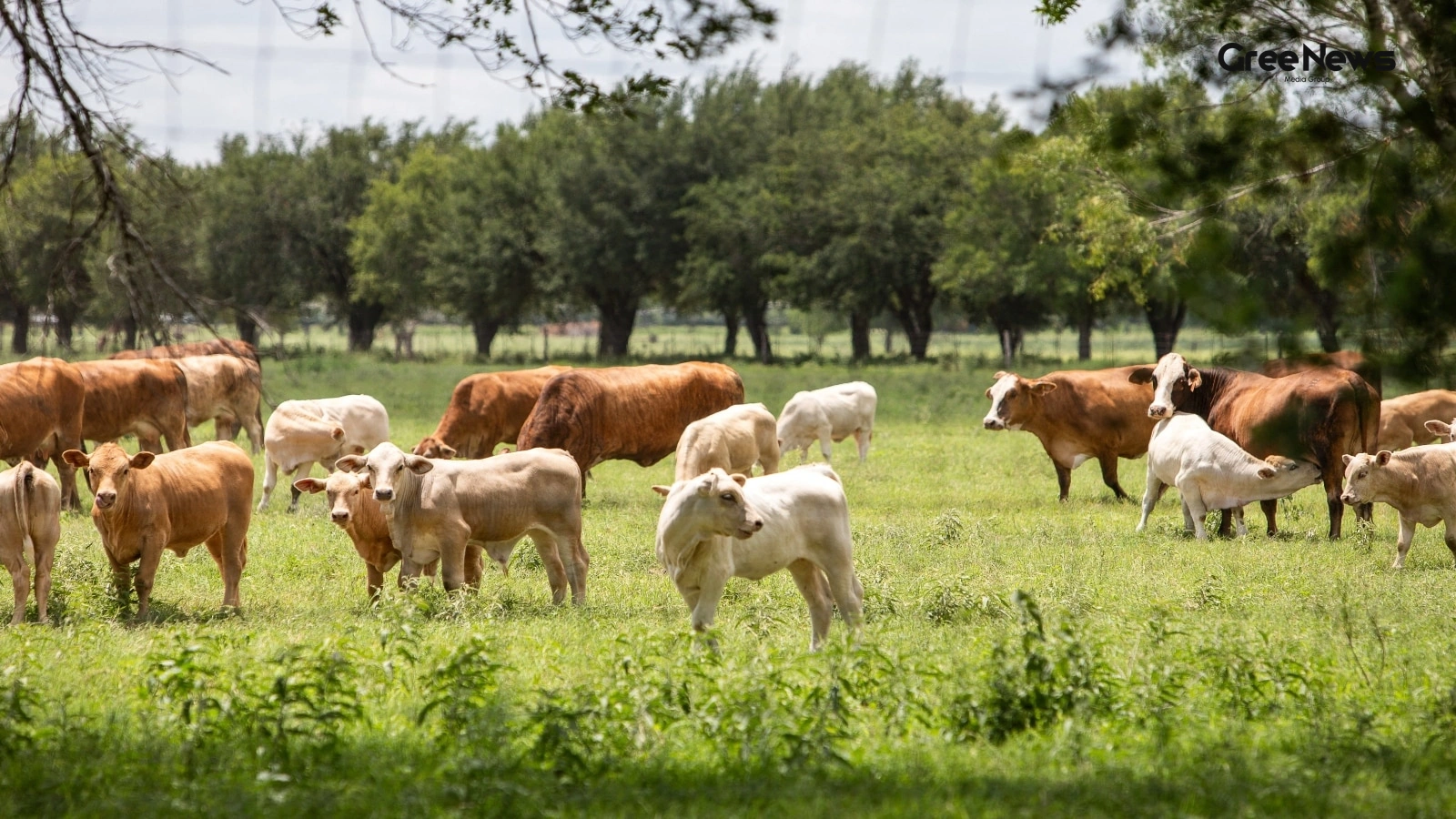
A flesh-eating parasite that was supposedly wiped out from the United States decades ago is back. It’s found in American livestock now, kicking off serious alarms in one of the country’s biggest cattle regions.
The USDA confirmed a case. A three-week-old calf in La Pryor, Texas, got hit with New World screwworm. That’s about a hundred miles southwest of San Antonio, right near the US-Mexico border. This is the first time they've seen it in Texas since 1966.
It matters because Texas is huge for cattle. We’re talking about $17 billion worth just in cattle there. The whole US industry? That’s closer to $113 billion. Officials keep stressing that this fly doesn’t infect food, not a food safety issue. But if it spreads among livestock? That changes things fast.
So they started quarantines. Surveillance ramped up. They moved animals around and started releasing sterile flies in South Texas. Secretary Brooke Rollins basically said the immediate threat to human health is super low. But she warned something else. A very serious threat to our livestock.
What exactly is this thing?
The New World screwworm. It’s a parasitic fly hanging out in the Western Hemisphere. Its relatives are in Africa and Asia, but these flies are weird. Their larvae—the maggots—don't eat dead tissue. They feed on live flesh and fluids.
They lay eggs in open wounds or mucous membranes of warm-blooded animals. Once hatched? The larvae devour living tissue. It messes up vital organs. Triggers nasty bacterial infections. If you don’t treat it right, the animal just dies.
It isn't contagious like a disease spreading from one animal to another. The real danger is where the adult females lay their eggs in wounds. Even a small scrape can attract them. Stephen Diebel, a big Texas rancher and head of the cattle association, pointed this out. He said wounds "as small as a tick bite" are enough to put cattle at risk.
Why are the cattle so vulnerable?
Simple. Routine handling causes scrapes or breaks in the skin. Shearing, de-horning, moving them in and out of pens—all that stuff leaves openings. And birth itself makes both mother and calf targets. That’s key. The Texas case involved a very young calf.
The parasite can infest any warm-blooded animal. Period.
Human Health and International Spread
Can humans get it? Cases are rare, but they can be deadly if you catch it. CNN reported the last US human infection happened in Maryland, linked to travel through El Salvador. That person made it through.
But people need to watch out. The CDC notes that folks who work with livestock, spend a lot of time outside—especially sleeping outdoors—or have medical conditions causing open sores are at higher risk.
Outside the borders, things are way bigger. AP reported that by June 2nd, this parasite had sickened over 171,700 animals and about 2,000 people across Central America and Mexico. The CDC mentioned ten human deaths there too.
Why is this so alarming to US officials? Because they thought it was gone. They had a major program decades ago. Sterile flies, public awareness campaigns, international controls. For years, the pest was supposedly locked down near southern Panama.
That barrier? It’s getting shaky. AP said an outbreak in Panama triggered a state of emergency back in early 2023. Cases jumped to Costa Rica and Nicaragua. Then, a case popped up in southern Mexico in November 2024. That just pushed US officials and the whole cattle industry into panic as this thing started creeping closer to our border.
These flies reproduce fast. They can travel far by hitching rides on hosts, like deer. Edward Burgess, an entomologist studying them, admitted it’s hard to keep up with their speed and regeneration. “It’s hard to stay ahead of it,” he said.
Control Strategy and Response
How are they trying to stop the spread now? The USDA labs in Ames confirmed the Texas case by testing that calf sample. Then things moved fast: response teams deployed in Texas, an infested zone marked out at 20 kilometers, quarantines started, and movement controls hit.
They’re also pushing sterile fly releases in South Texas. They’ve been dropping them since February. Now they're doing it twice a week—four million flies released total this cycle. Plus, they are putting four million more pupae into the ground every week.
The whole strategy hinges on those sterile flies. That’s the core of how the US fought this decades ago. Female screwworm flies only mate once. Scientists raise these flies in factories, sterilize the males, and release them en masse. If a fertile female mates with a sterile male? No eggs hatch.
If you release enough sterile males over time, the population just crashes. It can die out completely. That’s how they managed to eradicate it back then.
Right now? They are trying to stop this single confirmed case from blowing up into a full-blown outbreak. It means sticking to the treatment protocols, enforcing movement rules, watching animals, and keeping those sterile fly releases going. Rollins said if everyone follows the guidance on animal treatment and restrictions, there’s no reason to think this incursion will establish itself in our country. A fragile hope, maybe.
Written by Gree News Team — Senior Editorial Board
Gree News Team covers international news and global affairs at Gree News. Our collective of senior editors is dedicated to providing independent, accurate, and responsible journalism for a global audience.
More from World
View All
Federal Judge Bars Nitrogen Gas Execution in Alabama
A federal judge just slammed the door shut on Alabama’s plan to use nitrogen gas for executing Jeffery Lee. Permanently barred it, ruling the method violated basic constitutional rights about cruel and unusual punishment. This decision dropped like a stone. It came just one day after an appeals cour
Jun 10, 2026 by Gree News Team

The Long March Escalates: Defiance and Crackdown in PoK
The long march by the Joint Awami Action Committee in PoK really kicked into gear on Tuesday. Leaders were striking a much more defiant tone now amid this widening crackdown. There are reports of fresh clashes everywhere. And growing anger over the deaths that have rocked the region these past three
Jun 10, 2026 by Gree News Team

The Singapore Incident: Misinformation, Migration, and the Culture War
Indians make up roughly nine percent of Singapore’s residents. Chinese Singaporeans are still the dominant group, but Malays account for about fifteen percent of that multicultural mix. Yet recently, the city-state found itself in a real mess after authorities ordered social media platforms to block
Jun 9, 2026 by Gree News Team
Impact of Trade Restrictions on Fruit Supply and Market Anxiety in Janakpurdham
The air in Janakpurdham is thick lately. Not just the usual summer humidity; there’s this undercurrent of genuine worry hanging over the fruit stalls, a kind of nervous stillness that follows every announcement about what comes in or doesn't come in. It started with the mangoes. That’s where it all
Jun 9, 2026 by Gree News Team
Latest Headlines

Political Speculation and Internal Turmoil within the TMC
Fresh visuals surfaced of Sushmita Dev meeting Assam Chief Minister Himanta Biswa Sarma. That kind of thing just kicks the speculation into high gear about her next move. It’s all about her potential entry into the BJP, right? This happened right after she stepped down from Rajya Sabha and walked ou
Jun 10, 2026 by Gree News Team

FIFA World Cup 2026: Structure, Geography, and the Official Match Ball
The FIFA World Cup 2026 is really starting to feel imminent now. It’s heading toward North America the USA, Mexico, and Canada are slated to host this massive global spectacle. People are talking about it constantly. It’s not just a standard tournament anymore. This time around, they’re throwing way
Jun 10, 2026 by Gree News Team

Lionel Messi and Argentina's World Cup Journey in Group J
Argentina’s taking on Group J in this new setup USA, Mexico, and Canada it feels like more than just football now. It’s about that farewell, isn't it? Lionel Messi is chasing something special right now, playing out this final chapter with the Albiceleste against Algeria, Austria, and Jordan. There’
Jun 10, 2026 by Gree News Team
Federal Judge Bars Nitrogen Gas Execution in Alabama
A federal judge just slammed the door shut on Alabama’s plan to use nitrogen gas for executing Jeffery Lee. Permanently barred it, ruling the method violated basic constitutional rights about cruel and unusual punishment. This decision dropped like a stone. It came just one day after an appeals cour
Jun 10, 2026 by Gree News Team
Kerala Board Plus One Results 2026 Announcement and Checking Methods
The Kerala Board Plus One results for 2026 are finally coming today, June 10th. That’s when the Directorate of Higher Secondary Education will officially announce everything. Students who took the DHSE Kerala Class 11 exams in 2026 can start checking their scores now. You have a few places to look,
Jun 10, 2026 by Gree News Team

Threats and Intimidation Against Former Judge Justice Gautam Patel
Chief Justice Surya Kant stepped in on the matter involving threats and intimidation aimed at former Bombay High Court judge Justice Gautam Patel. This happened while he was visiting the UK, raising the issue with India’s High Commissioner there. It came out of a report by The Times of India. The wh
Jun 10, 2026 by Gree News Team

Intersection of Art, Politics, and Public Morality at Film Screening
The buzz around the screening for ‘Bharat Bhhagya Viddhaata’ was definitely something special that Tuesday evening in Delhi. It wasn't just about watching a movie; it felt like a convergence a mix of film fans, some political heavyweights, and a surprising amount of high-level government presence. P
Jun 10, 2026 by Gree News Team

The Political Feud: Shivakumar vs. Kumaraswamy and the Vokkaliga Rivalry
A meeting that hasn't even happened is already sparking political sparring. Karnataka Chief Minister DK Shivakumar and Union Minister HD Kumaraswamy. It just underlines how bitter one of the state’s longest-running rivalries still is. Shivakumar was doing some outreach, a carefully choreographed exe
Jun 10, 2026 by Gree News Team

Protest and Political Standoff in Mexico City Before the World Cup
A protest choked off an avenue leading right to Mexico City’s Azteca Stadium for hours on Tuesday. It was just days before that massive World Cup opening match. As football fans started flooding in, all those co-hosts the US, Canada, and Mexico you see the real mess happening back home. Thousands of
Jun 10, 2026 by Gree News Team

The Global Nuclear Arms Race: Spending, Capabilities, and Future Risks
Nearly eight decades since Hiroshima and Nagasaki. And the world’s nuclear powers aren't slowing down. They keep spending more, modernizing faster, and experts are watching them move weapons out of storage and into potential use. It’s a real arms race happening right now. The nine states that hold n
Jun 10, 2026 by Gree News Team

The Chaos of Cinema: Volume, Competition, and the Shifting Market
The Friday arrived packed. June 12th. It wasn't just another day; it was a collision of cinema. Nine films, all hitting the screens at once. *Main Vaapas Aaunga*, Imtiaz Ali’s directorial effort. Then you had Kangana Ranaut’s *Bharat Bhhagya Vidhaata*. And the horror mixed in Vikram Bhatt’s *Haunted
Jun 10, 2026 by Gree News Team

Stock Market Updates: June 10th Performance and Sector Analysis
Stock market updates today, June 10th. Everything turned sour in late trading Wednesday. Domestic equity markets basically gave up all those gains they managed to hold during the day. Heavy selling hit midcap, smallcap stocks, plus metals, realty, and financial names dragging the main indices into n
Jun 10, 2026 by Gree News Team

Iran Football Team Travel and World Cup Arrangements
Iran’s football team is heading to Los Angeles, apparently. They announced Tuesday that they'll be flying there the day before their first group-stage game against New Zealand. It feels like a lot happening all at once. But where exactly will they be staying? They won't actually be in L.A. for long.
Jun 10, 2026 by Gree News Team

The Impact of Gen AI on Job Applications and Hiring Strategies
When you start looking for a job, everyone builds this whole structure: the résumé, that killer cover letter, tailoring it perfectly. The whole point was always that application could make you jump out from the crowd of hundreds of applicants. But honestly? Recruiters are starting to think that play
Jun 10, 2026 by Gree News Team

Narendra Modi's Milestone: India's Longest-Serving Prime Minister
Narendra Modi just hit a huge milestone. India’s longest-serving elected Prime Minister. Forty-three hundred ninety-nine days in office now. That beats Nehru's record, which was the first one. Former Vice President Venkaiah Naidu spoke about it. He praised the leadership and everything Modi has done
Jun 10, 2026 by Gree News Team