The Hidden Cost of AI: Proprietary Knowledge and Corporate Power
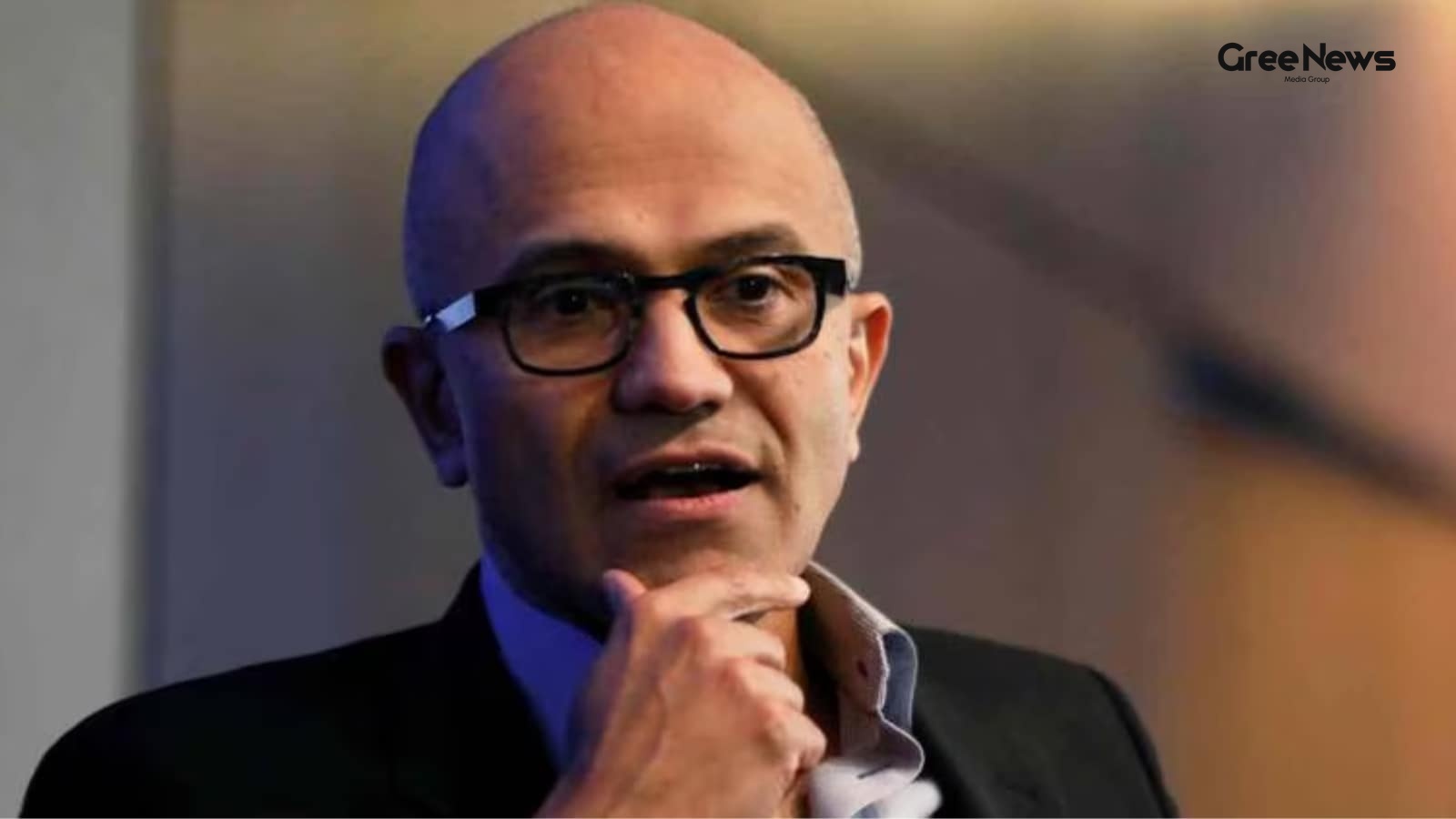
There’s this growing unease in Silicon Valley, something that’s been simmering for a while, and now Microsoft’s CEO just threw a public stamp of legitimacy on it. The concern, really, is pretty straightforward.
When companies start leaning on AI models from the big labs OpenAI, Anthropic, you know the drill those labs get deep access to sensitive business stuff during that process. Information that could eventually let those same labs become actual competitors to their customers. That’s the seed of the worry.
This warning isn't coming from just one place either. It’s been tossed around by a mix of voices before, venture capitalists like Jason Calacanis and Alex Karp, the CEO of Palantir, brought this up. And now, in a surprising move, Satya Nadella has joined them on a blog post published Sunday.
It’s where things get genuinely uncomfortable. Nadella's central point isn't complicated, but once you actually sit with it, it hits hard. He argues that companies using these AI models are paying for the intelligence twice.
Once, obviously, through actual money token usage costs. But then there’s the second payment. It happens without much realizing it: handing over valuable proprietary knowledge just to make the model useful.
He wrote something like this: “You essentially pay for intelligence twice, once with money, and again with something even more valuable: the proprietary knowledge you must reveal to make that intelligence useful. The better you want the model to perform, the more of that knowledge you have to feed it!"
It’s a strange thing to read. He goes further into the mechanics of how this happens. Enterprises are essentially teaching these AI models the inner workings of their businesses without ever realizing they're doing it. Nadella pointed out that the models learn from ‘exhaust.’ The prompts people write, the tools agents use, and especially those corrections made when the model messes up. Every single correction gets distilled into institutional know-how.
And he framed it perfectly: this is exactly “the kind of knowledge a competitor could never buy,” yet companies are just letting it slip away for free.
Then there’s the kicker, why Nadella finds the whole situation hypocritical. He points out that these AI labs got their initial power by scraping massive amounts of data from the internet to train those models in the first place. If that's fair use and maybe it is then he argues companies should have an equal right to study, or distill, those very models in return.
Distillation isn’t some abstract theory either. It’s just using a model’s outputs to figure out how it works and then training something new, often cheaper. This isn't just theoretical nonsense. Think about this: back in February, Anthropic actually accused certain Chinese open-source models of sending millions of prompts directly to Claude trying to improve their own competing systems. They pushed the US government to tighten export controls because of that.
Nadella’s framing here is that model makers can't have it both ways. He writes that while the massive innovation from providers having fair use rights for training on public data is necessary, it’s ironic how they then turn around and slap restrictive terms on distillation practices. It feels like a deliberate move.
He specifically flagged real concern over those AI companies that just “reserve the right to learn from customer usage and interaction data.” It sounds like locking in a one-way flow of knowledge. A permanent extraction, really.
So what do companies actually have to *do*? Given that Nadella runs one of the world’s largest cloud platforms, his solution naturally points toward something convenient for Microsoft. He’s urging businesses to keep full ownership of their data. Everything the prompts, the feedback, whatever gets generated during AI use must stay with them.
Practically speaking, he wants businesses to build their own “proprietary learning environments” right there on the cloud. Where their data already lives anyway. Which conveniently means Azure for a lot of people. It’s an easy pivot.
And alongside that, he pushes for something called “orchestration layers.” Think of these as tools. Things that let companies easily jump between different AI models from different providers instead of getting locked down to just one system. This isn't some brand new idea either. These kinds of AI “gateways” that offer flexibility are already gaining traction across the industry, doing exactly what people need.
You know, he never actually uses the word “open source.” But you can feel it running through everything he says. It’s the subtext beneath the whole argument. A demand for control over the knowledge they generate.
Written by Gree News Team — Senior Editorial Board
Gree News Team covers international news and global affairs at Gree News. Our collective of senior editors is dedicated to providing independent, accurate, and responsible journalism for a global audience.
More from Tech
View All
iOS 27 Public Beta: Real Changes and Features
If you’ve been wondering what iOS 27 actually brings you don't have to wait for September anymore. Apple just dropped the public beta today, and honestly, there are some real changes worth digging into. It’s packed, from a completely revamped Siri right down to just generally faster performance acro
Jul 14, 2026 by Gree News Team

Hand Blender Guide: Choosing the Right Tool for Your Kitchen
That hand blender thing. It just seems optional until you actually start using one regularly. It’s funny how that happens in the kitchen. Maybe you’re stuck trying to blend a whole pot of tomato soup without having to wrestle it into some mixer jar. Or maybe it’s that quick banana shake for breakfas
Jul 14, 2026 by Gree News Team

Apple's Pricing Strategy and Future iPhone Predictions
Apple is pushing prices again. It’s forcing people to grab the iPhone 17 now before things get even more expensive. That move messes with their supply plans for the older models too. They hiked prices on MacBooks, Mac Minis, and iPads in India recently. It’s a teaser, really. What you can expect onc
Jul 14, 2026 by Gree News Team
Google Chrome Security Risks and Urgent Updates
Google Chrome is running into some serious security trouble right now. The Indian government just threw out a major warning this month about these new risks. It’s not good news, and it's hitting millions of people in India who use Chrome on Windows or macOS setups. The official alert came from CERT-
Jul 13, 2026 by Gree News Team
Latest Headlines

The Reality of Freedom: A Gig Worker's Journey
It’s funny how these things hit you online. You know? All the talk about work-life balance, burnout… people are screaming for flexibility now. But something actually surfaced recently. A Gurgaon entrepreneur, Akash Gupta, he just recorded a chat with a cab driver. And it totally caught fire on socia
Jul 14, 2026 by Gree News Team
Govinda Gears Up for Big Screen Return with 'Roopa'
Govinda’s fans are getting something to look forward to. The Bollywood actor is finally gearing up for a big screen return with his upcoming film, ‘Roopa’. He admitted that people had written him off several times. But he always bounced back. That’s the attitude, I guess. And naturally, he introduce
Jul 14, 2026 by Gree News Team
Bhagwant Mann's Mandate on Private School Fees in Punjab
Bhagwant Mann, the Punjab Chief Minister, dropped a bombshell on Monday about private schools. He said that if these institutions hiked fees more than five percent every year over the last three years, they have to give the extra money back to parents. It felt like he was really pushing back against
Jul 14, 2026 by Gree News Team

Indian Markets React to Geopolitical Friction and Oil Price Surge
Markets opened lower today. The Indian benchmark indices took a hit after fresh geopolitical friction in West Asia pushed crude oil prices up to a one-month high. Investor sentiment across Asian markets definitely dampened. The BSE Sensex was sitting at 77,277.57 this morning. That's a drop of 338.8
Jul 14, 2026 by Gree News Team

Conviction in Delhi Riots: The Case of Ankit Sharma
Nearly six years have passed since Ankit Sharma, an Intelligence Bureau officer, was brutally killed in the 2020 Delhi riots. But some relief finally arrived on Monday. The Karkardooma court convicted former AAP councillor Tahir Hussain and four others for their role in that killing. It’s a heavy th
Jul 14, 2026 by Gree News Team

Rupee Hit by Geopolitical Events and Oil Price Surge
The rupee took a hit this morning. It slipped by forty-nine paise to settle at 96.17 against the dollar. That all because of those US strikes against Iran, happening for the third night in a row. It just poured gasoline on the fire, making everyone nervous about that ceasefire finally falling apart
Jul 14, 2026 by Gree News Team

The Cultural Shift: Football Idols and Naming Trends in Peru
The whole thing is just… strange, isn’t it? This whole wave of naming babies after football heroes. It started with something massive the World Cup. You have these giant tournaments, right? They warp reality for a bit. Everyone stops what they are doing and starts talking about the stars. And now th
Jul 14, 2026 by Gree News Team
iOS 27 Public Beta: Real Changes and Features
If you’ve been wondering what iOS 27 actually brings you don't have to wait for September anymore. Apple just dropped the public beta today, and honestly, there are some real changes worth digging into. It’s packed, from a completely revamped Siri right down to just generally faster performance acro
Jul 14, 2026 by Gree News Team

Paul Wesley and Natalie Kuckenburg's Intimate Wedding
Love seemed to be everywhere for Paul Wesley and Natalie Kuckenburg as they got married. It was an intimate ceremony. Just a minister there, and their dog Greg. They exchanged vows in what felt like a simple but beautiful celebration of four years together. Paul Wesley, you know him from *The Vampir
Jul 14, 2026 by Gree News Team
Biological Factors Influencing Insect Attraction
Have you ever just felt… singled out? Certain biological factors make some people way more attractive to these blood-sucking insects than others. It really comes down to a few things influencing the whole situation. The air you breathe, your body temperature, even that natural scent you carry all of
Jul 14, 2026 by Gree News Team

The Financial and Emotional Clash: A Software Engineer's Story
A software engineer from Gurgaon working with PayU posted something online that just blew up. It was about feeling totally crushed financially because he’s the only earner in his family. He praised his wife, Nisha, saying she was a great mother. But then came the real part. He admitted sometimes he
Jul 14, 2026 by Gree News Team
Hand Blender Guide: Choosing the Right Tool for Your Kitchen
That hand blender thing. It just seems optional until you actually start using one regularly. It’s funny how that happens in the kitchen. Maybe you’re stuck trying to blend a whole pot of tomato soup without having to wrestle it into some mixer jar. Or maybe it’s that quick banana shake for breakfas
Jul 14, 2026 by Gree News Team
Apple's Pricing Strategy and Future iPhone Predictions
Apple is pushing prices again. It’s forcing people to grab the iPhone 17 now before things get even more expensive. That move messes with their supply plans for the older models too. They hiked prices on MacBooks, Mac Minis, and iPads in India recently. It’s a teaser, really. What you can expect onc
Jul 14, 2026 by Gree News Team
SBI Funds Management IPO: Details, Valuation, and Market Analysis
SBI Funds Management launched its IPO today. It’s India’s biggest asset management company, after all, the largest one. They’re raising nearly nine thousand eight hundred crore rupees. The public window is short just three days, closing on July 16th. Listing day? That's scheduled for July 21st on bo
Jul 14, 2026 by Gree News Team

Accountability Failure: The Tragedy of Emergency Response on the Train
It all started with a whisper online, didn't it? A tragedy that sort of seeps into the air, you know? This woman, allegedly, just… stopped breathing on that train ride from Bandra to Delhi. Severe breathing problems. It’s the kind of thing that makes your stomach clench immediately. But the story is
Jul 14, 2026 by Gree News Team