The Political and Diplomatic Fallout of Renaming a Road in Hyderabad
The whole thing started so simply, really. A road name change in Hyderabad. But it quickly spiraled into this mess of posturing, doesn't it? It’s that kind of low-level political friction you see constantly simmering under the surface of any major state-level decision, especially when you start dragging big international figures into local infrastructure.
So here we are. The Telangana government pushing ahead with renaming a road after Donald Trump . A formal gesture, they say. An economic move. But don't just look at the plaque. Look at what happens in the corridors of power immediately afterward. Because that’s where the real story is hiding. It’s about who gets to define reality, and who gets to complain about it.
The reaction wasn't subtle. It was immediate, sharp, hitting straight into the established fault lines between the ruling party, the opposition parties, and the national narrative being played out on a very small, very visible stage in the state capital. The BJP , naturally, jumped right in. They saw something immediately a contradiction. Hypocrisy, they claimed. A betrayal of the supposed alignment with the broader geopolitical reality.
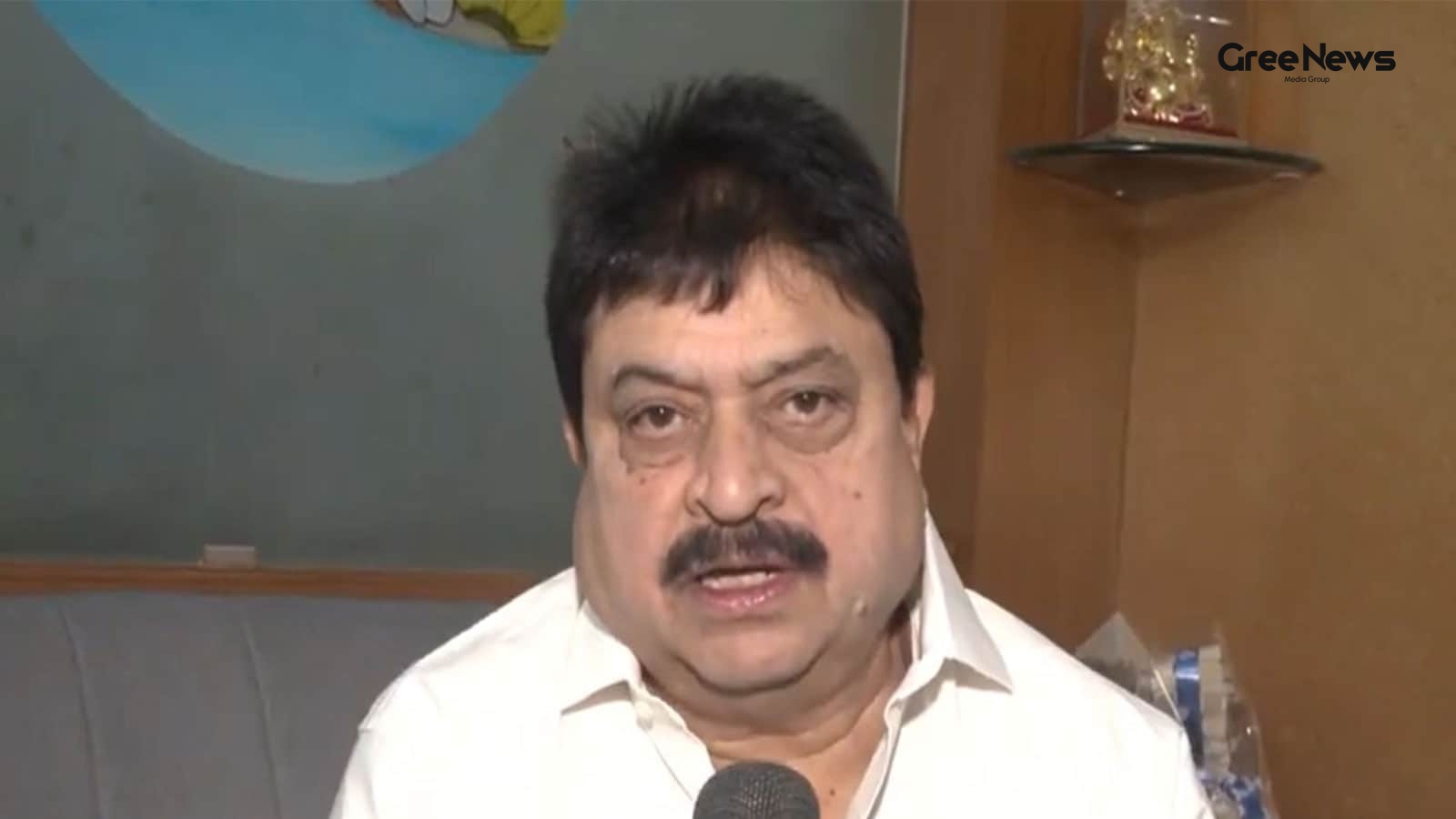
Ramchander Rao, the Telangana BJP president , he didn't mince words when he questioned Chief Minister Revanth Reddy about this move to inaugurate what they called the "Donald Trump Avenue." It wasn’t just a procedural query; it was an ideological challenge wrapped up in a political demand. He brought up Rahul Gandhi instantly. Because that’s the pivot point, isn't it? The national narrative of India and its relationship with the United States.
Rao asked Revanth Reddy directly: which surrender was the real one? Was it the state government making this symbolic gesture? Or was it the broader political establishment allowing these moves to happen? He implied a deeper sense of grievance, suggesting that whatever diplomacy was happening on the international stage the perceived shift in India’s stance towards global powers was being willfully ignored or misrepresented by those at the top. It felt less like a simple road naming and more like a proxy war over national identity and foreign policy direction.
“Mr Revanth Reddy is now inaugurating a road, an avenue called a Donald Trump Avenue in Hyderabad,” Rao put it out there. And then he immediately layered on the critique. He contrasted this with what Rahul Gandhi had been saying. The implication was that the Congress leadership, or at least those vocalizing against the current foreign policy direction, were completely missing the point of the gesture. They were speaking a different language about surrender, and Rao felt it was politically dangerous for them to ignore the physical act happening right there in Hyderabad.
It’s this kind of messy entanglement that makes reporting difficult. You have the official line the government framing the action as purely economic expansion, strengthening global ties, boosting investment profiles. That's what they put out publicly. A neat, clean narrative about trade and diplomacy. But underneath that polished surface, there are the whispers. The counter-narratives.
The Telangana government , naturally, had to defend its choice. They framed it as an opportunity. It’s not just asphalt and concrete; it’s about projecting an image. They argued that Hyderabad, with its growing economic importance and diplomatic connectivity, needed this kind of visibility. They were positioning the city, linking it to global financial flows, emphasizing its role in international engagement. This was their carefully constructed defense: the move wasn't about appeasement; it was about ambition.
And then you have the background the history of this proposal itself. It wasn't just a spontaneous idea born on the spot. Revanth Reddy had floated this concept back in December 2025. Think about that timeline. A year and a half before the actual inauguration date. There was a period, a pause, a holding back of the plan. Why? Because there were global uncertainties hanging over everything. The US tariff disputes, the simmering tensions across West Asia all those things create an atmosphere where grand gestures feel either desperately necessary or completely irrelevant, depending on who you ask.
That delay itself is telling. It suggests that even within the state administration, there was a moment of internal debate about how to handle such high-profile symbolism amidst global instability. The decision to finally push it forward seems to be an act of asserting control over the narrative, regardless of the external pressures.
Then you zoom out to the diplomatic layer. Reports suggested something more happened during the planned event. It wasn’t just a local inauguration. There was a projected attendance list that carried significant weight. The US Ambassador to India, Sergio Gor, was expected to be there. This immediately elevates the road renaming from a municipal decision to an international diplomatic engagement. It becomes a micro-event in the larger game of bilateral relations.
This meeting wasn't just for ribbon-cutting; it was about signaling. It was about projecting stability and openness right at the doorstep of Hyderabad’s financial district, right next to the US Consulate. Every flag planted, every handshake, is calculated. It’s an exercise in visual diplomacy. The timing, leading up to the US Independence Day celebrations on July 4th, wasn't accidental. It was slotted into a larger calendar of international events designed to maximize impact.
But this is where the tension truly breaks down. You have the government projecting economic strength and diplomatic openness. And you have the opposition framing it as evidence of national surrender. These two views don’t just exist side-by-side; they actively contradict each other, creating a fault line that politicians exploit relentlessly. One side sees strategic advancement; the other sees capitulation to external demands.
The political fallout isn't confined to party lines, though. It seeps into public discourse. People start looking at these symbolic acts and seeing not just infrastructure projects, but deep-seated national anxieties about sovereignty. How much of our path is truly ours? And how much is dictated by global economic or political winds?
The fragmentation in the reporting itself mirrors this complexity. You have the official statement from the state, the pointed questioning from the BJP leadership, and the lingering shadow of the Congress critique channeled through Rahul Gandhi. Each piece tells a half-truth, depending on which lens you use. It’s observational writing at its most frustrating you can see all the pieces floating around, but putting them into a perfectly logical sequence feels impossible because the reality is inherently messy and contradictory.
The road itself becomes more than just pavement. It becomes a stage for these larger, unspoken arguments about India's place in the world. It’s a physical marker that invites interpretation. Is it a sign of successful global integration? Or is it a monument to concessions made under duress? The answer isn't written on the road; it’s etched into the political history surrounding it, constantly being contested by those who watch the spectacle unfold. And that, perhaps, is the most human part of this whole messy situation the endless, unresolved tension between what the state wants to project and what the national dialogue seems to demand.
Written by Gree News Team — Senior Editorial Board
Gree News Team covers international news and global affairs at Gree News. Our collective of senior editors is dedicated to providing independent, accurate, and responsible journalism for a global audience.
More from India
View All
Tragic Suicide in Andhra Pradesh: Family's Despair and Unresolved Questions
A retired schoolteacher, his wife, and their adopted son were found dead at home in Duvvur village, Andhra Pradesh’s Nellore district. Monday. Just gone. Police are looking into it now. They're checking if the teacher killed them first, maybe before taking his own life. A note was found inside the h
Jun 17, 2026 by Gree News Team
The Subversive Network: Underworld Links, Terror Strikes, and ISI Connections
A friendship started a quarter of a century ago. It happened inside a Bangkok prison. But that connection wasn't just personal. It led to something much darker. A diabolical plan. Terror strikes across multiple Indian cities. Now, the Delhi Police is digging into some arrested individuals during int
Jun 17, 2026 by Gree News Team
Shiv Sena (UBT) Split Rumors and "Operation Tiger"
The Shiv Sena (UBT) seems to be heading for another major split. Sources are whispering that fourteen to sixteen MLAs and seven MPs are actually preparing to walk out of Uddhav Thackeray’s party. This whole thing could happen fast. They say it might materialize in just six or seven days. If that hap
Jun 17, 2026 by Gree News Team
Justice Served: BSF Jawans Sentenced for Gang-Rape and Acid Attack in Mizoram
Bringing that nine-year legal fight to a close in Mizoram’s district court was something huge. They finally sentenced two Border Security Force jawans to rigorous imprisonment. The charges? Gang-rape and brutal acid attack against a local tribal woman back in 2017. The judge, Additional District and
Jun 17, 2026 by Gree News Team
Latest Headlines
Noida International Airport Launch Sparks Debate Over Cab Fares and Regional Utility
The Noida International Airport in Jewar finally started flying operations Monday, June 15th. A big deal for air travel connecting to the whole National Capital Region. But right when everyone was celebrating the launch, something else popped up online. People were talking about cab fares from that
Jun 17, 2026 by Gree News Team
Tragic Suicide in Andhra Pradesh: Family's Despair and Unresolved Questions
A retired schoolteacher, his wife, and their adopted son were found dead at home in Duvvur village, Andhra Pradesh’s Nellore district. Monday. Just gone. Police are looking into it now. They're checking if the teacher killed them first, maybe before taking his own life. A note was found inside the h
Jun 17, 2026 by Gree News Team
The Evolution of Protests in PoK: From Economic Grievances to Political Sovereignty
The protests started over simple things soaring electricity bills and wheat prices in PoK. That was the beginning. Now it’s gone way further into politics. Leaders are not just complaining anymore; they’re openly challenging Pakistan’s role entirely, demanding real control over their economy and gov
Jun 17, 2026 by Gree News Team
The Subversive Network: Underworld Links, Terror Strikes, and ISI Connections
A friendship started a quarter of a century ago. It happened inside a Bangkok prison. But that connection wasn't just personal. It led to something much darker. A diabolical plan. Terror strikes across multiple Indian cities. Now, the Delhi Police is digging into some arrested individuals during int
Jun 17, 2026 by Gree News Team

The Real Choice: Understanding Cooling and Kitchen Appliance Decisions
The thing about cooling things whether it’s your living room or just a single desk is that people always end up looking for something simple, but they run right into this impossible choice between what works and what costs you the most. You're sweating. The room is thick. You look around and think,
Jun 17, 2026 by Gree News Team
Geopolitical Tensions: The Lebanon-Israel Conflict and the Iran Deal
Tehran keeps pushing that Lebanon has to be in any ceasefire deal with Washington. But Israel isn't buying it. They’re still fighting Hezbollah. That’s the sticking point, isn’t it? Trump, talking to Qatari Emir Tamim bin Hamad Al Thani during the G7 summit in Evian, made some heavy statements about
Jun 17, 2026 by Gree News Team
Shiv Sena (UBT) Split Rumors and "Operation Tiger"
The Shiv Sena (UBT) seems to be heading for another major split. Sources are whispering that fourteen to sixteen MLAs and seven MPs are actually preparing to walk out of Uddhav Thackeray’s party. This whole thing could happen fast. They say it might materialize in just six or seven days. If that hap
Jun 17, 2026 by Gree News Team
Donald Trump's Idea: Syria's Role in the Israel-Hezbollah Conflict
Donald Trump floated an idea recently: Syria should step in for Hezbollah instead of Israel when dealing with Lebanon’s situation. It signals something shifting in Washington's regional thinking. He was pretty frustrated about the casualties from Israel’s campaign against Hezbollah. That’s where the
Jun 17, 2026 by Gree News Team
Donald Trump on the Lebanon Conflict and Iran Deal
Tuesday, Donald Trump talked about the whole situation in Lebanon. He basically dismissed the Israeli-Hezbollah fighting as just a minor conflict. Not much impact, he said. Nothing big deal for the bigger picture. This came up while he was hanging out with Qatar Emir Sheikh Tamim bin Hamad Al Thani
Jun 17, 2026 by Gree News Team
The Friction of Power: Personal Animosities in Global Geopolitics
the air around the g7 summits isn't always clean anymore. it’s thick with something else now, isn’t it? a low hum of old grudges and sharp, almost performative dismissals. we’re talking about the behind-the-scenes friction, the way these supposed pillars of the western world are actually fraying und
Jun 17, 2026 by Gree News Team
Orry's Income: Social Media, Brand Deals, and Private Bookings
The whole thing just came out of that podcast, you know? Orry was talking about how he actually makes money now. It’s not just sitting around posting stuff anymore. He explained this whole social media and brand deal thing really clearly. How it became a big source of income for him. He mentioned so
Jun 17, 2026 by Gree News Team
Patriarchy, Climate Change, and Systemic Failure in Activism
The noise started immediately after Dia Mirza made her comments about climate change and men. It was a reaction, fast and ugly. People went straight to social media. Trolling started up instantly. She had said something pretty pointed, linking patriarchy directly to the climate crisis. The original
Jun 17, 2026 by Gree News Team

Sanchita Ugale's Death: Conflicting Stories and Controversy
Sanchita Ugale’s death really shook everyone. Twenty-two years old. Television actress. The shockwave just keeps going through the country. She was found dead at her place in Nalasopara, Maharashtra, back on June 14th. Officially, it’s being reported as suicide. But that’s where things get messy fas
Jun 17, 2026 by Gree News Team

Jyotsna Chandola Singh on Mental Health and Grief
Jyotsna Chandola Singh. Actress. She broke down. Cried about Sanchita Ugale. It happened recently. Tuesday, she posted something on Instagram. A video dropped there. Talking about mental health. Calling Sanchita’s death “very sad.” Simple words, but they carried weight. She was friends with Sanchita
Jun 17, 2026 by Gree News Team

Comparing Cinema Experiences: India versus Europe
Sandra On, this Ukrainian content creator, she put out some thoughts recently comparing cinema experiences across borders India versus Europe. It wasn't just a simple review. She posted it on Instagram, setting up this comparison about how different these movie settings feel in India compared to wha
Jun 17, 2026 by Gree News Team