OTG vs Air Fryer vs Microwave: Which Kitchen Gadget is Right for You?

Walk into any appliance store, right? You’ll probably run into that same question: should I grab an OTG , or an air fryer, or maybe a microwave? They all promise convenience, sure, but they actually solve totally different kitchen headaches. Some are way better for baking, others lean into healthy cooking, and some just exist to save you time when reheating leftovers.
The good thing is, you don't have to guess anymore. Once you figure out what each gadget does best, the choice gets a lot simpler. Here’s a rough look at how they stack up and who should actually buy which thing.
If you want healthier everyday cooking crispy snacks, roasting veggies, or just less oil the air fryer is probably your easiest bet. It has the quickest learning curve. Most models heat up fast. Faster than an OTG, too. You spend way less time guessing what setting to use.
Air fryers really nail convenience. You toss in fries, nuggets, some paneer tikka, or vegetables. Hit a preset button and walk away. The results are usually crispy, satisfying, and you’re using way less oil than traditional frying. That's the main draw.
But it’s not perfect. Sometimes those baskets feel kinda restrictive when you try to cook for a crowd. And if you’re serious about baking cakes, bread you might find them limiting compared to an OTG.
Price is somewhere between four thousand and fifteen thousand rupees for these things. It’s great for busy families or people who are just starting out in the kitchen.
If baking is your real obsession if you're into making pizzas, breads, cakes, grilled stuff then an OTG remains hard to beat. They generally handle baking, grilling, and roasting a lot better than air fryers do. The huge upside here is space. Most OTGs can fit bigger trays, more items at once. Useful for families or anyone who loves messing around in the kitchen.
The trade-off? Time and effort. OTGs take longer to heat up. You have to manage temperatures a bit more carefully. It demands a little more attention while it cooks.
If you just need speed if reheating leftovers, warming drinks, defrosting things fast, or grabbing quick meals is the main goal the microwave is still super useful. Nothing beats its speed for that. A bowl of leftovers that takes several minutes in an air fryer or OTG? You can usually heat it up in under a minute with a microwave.
The real snag with microwaves is texture. They are fantastic at heating food, no question. But they don't create that crispy roast finish that people really crave. Convection models try to fix that gap, but yeah, those cost more.
So, where do you land?
For the air fryer , look at these options:
- Philips Digital Air Fryer NA120/00. It’s currently sitting around Rs 4,849.
- Instant Vortex Plus 6L. Was twenty thousand nine hundred ninety-nine, now it’s eleven thousand nine hundred ninety-nine.
- Havells Prolife Digi Air Fryer. That one is down to seven thousand nine hundred ninety.
These are good for getting fast, crispy results without the fuss.
If you're leaning into baking or grilling stuff, an OTG is probably better. You need space for those larger items. Check out these examples:
- Borosil Prima 42L OTG. It’s now around eight thousand nine hundred ninety.
- AGARO Marvel 48L OTG. Was nearly ten thousand, now it's seven thousand nine hundred ninety-nine.
- Morphy Richards 54 RCSS OTG. That one dropped from thirty thousand six hundred and down to eleven thousand four hundred eighty-nine.
If convenience is king if you constantly reheat food or need quick defrosting the microwave still wins out for pure speed. You've got options there too:
- Samsung 28L Convection Microwave, currently around fourteen thousand.
- LG 28L Charcoal Convection Microwave. That was twenty-two thousand nine hundred and now it’s seventeen thousand seven hundred forty.
- IFB 30L Convection Microwave. It’s sitting at sixteen thousand four hundred eighty.
Honestly? Many households end up using both. The air fryer for cooking things, the microwave for reheating. They just work well together. OTGs focus on baking and roasting space. Air fryers focus on fast crisping. Microwaves are your go-to for speed when you need it most. Entry-level models are similarly priced, but often an OTG gives you more actual cooking capacity for the money.
Meanwhile, something else is happening in a completely different arena. Three software engineers recently made some accusations against Amazon, claiming illegal retaliation after they spoke publicly at a Seattle City Council hearing about data center regulation. It’s gotten pretty heated over corporate accountability and what protections really exist for people who speak out politically.
The employees claim that shortly after testifying about the environmental impact of the company’s cloud infrastructure, they were summoned into mandatory meetings with human resources. This whole thing has sparked a real debate in Seattle about how much power big tech companies have versus local employment laws. Amazon just brushed it off. Said the internal inquiry wasn't some disciplinary move against civic participation. Just routine verification of their communications policy.
But that doesn’t sit right with activists and labor advocates in the city. They argue that the company’s administrative response completely ignores local employment protections. If you participate in public democratic processes like testifying before a council you should have solid safeguards. Any negative action taken against workers for speaking out about environmental concerns or zoning rules could expose Amazon to some serious legal trouble under municipal code.
Amazon has always pushed hard on its own rules, right? They stress sustainability targets, pointing to renewable energy investments to cover that massive carbon footprint from their infrastructure. But the activists in the Pacific Northwest push back. They point out that the data center expansion just keeps outpacing what local power grids can handle. That’s why independent worker testimony matters so much now.
It really highlights this growing friction between the people working on these systems and the executives running them, especially when it comes to climate policy. As cities deal with how much power and water cloud computing demands, those internal employee groups are starting to use local government to push for actual oversight. It’s a standoff, testing where Seattle's rules meet Amazon’s need for control.
Written by Gree News Team — Senior Editorial Board
Gree News Team covers international news and global affairs at Gree News. Our collective of senior editors is dedicated to providing independent, accurate, and responsible journalism for a global audience.
More from Tech
View All
7 Essential Gadgets for Family Travel: Solving Packing Frustrations
Family travel. It has this rhythm you just fall into, right? The first hour, everything’s fine. Excitement is high, snacks are packed, every device charged up and ready to go. But then things shift. A few hours later, the mood changes. Someone's phone battery starts dipping fast. A kid finishes thei
Jun 18, 2026 by Gree News Team

The Real Choice: Understanding Cooling and Kitchen Appliance Decisions
The thing about cooling things whether it’s your living room or just a single desk is that people always end up looking for something simple, but they run right into this impossible choice between what works and what costs you the most. You're sweating. The room is thick. You look around and think,
Jun 17, 2026 by Gree News Team

Pavel Durov Criticizes India's Telegram Ban and Platform Restrictions
Pavel Durov, the founder of Telegram, stepped in to criticize what the Indian government did. He argued that banning the messaging platform for a week really punishes over 150 million users in the country. The ban itself didn't stop anything, he said. The leaks just moved over to other apps. That wa
Jun 17, 2026 by Gree News Team

Robot Vacuum Reviews and Telegram Messaging Incident in India
Keeping floors clean isn’t usually hard. Keeping them clean every day is the real challenge. Dust settles surprisingly quickly, crumbs just appear out of nowhere. Pet hair finds every corner of the house somehow. That's why robot vacuum cleaners have become so popular. They don’t replace deep cleani
Jun 17, 2026 by Gree News Team
Latest Headlines

Amazon Engineers Accuse Retaliation Over Data Center Regulation
Three Amazon software engineers made it public recently. They accused the tech giant of illegal retaliation after speaking at a Seattle City Council hearing about data centre regulation. It’s messy, this whole thing. They claim they got summoned into mandatory meetings with human resources right aft
Jun 19, 2026 by Gree News Team

Vikram Bhatt, AI, and the Future of Filmmaking
Vikram Bhatt’s latest flick, *Haunted 3D: Echoes Of The Past*, it’s definitely been a box office black sleep. Day one numbers were Rs 2.5 crore nett. That beat out films like *Main Vaapas Aaunga* and *Bharat Bhhagya Viddhaata*. But there's the fallout, right? It got panned because of how he used AI
Jun 19, 2026 by Gree News Team
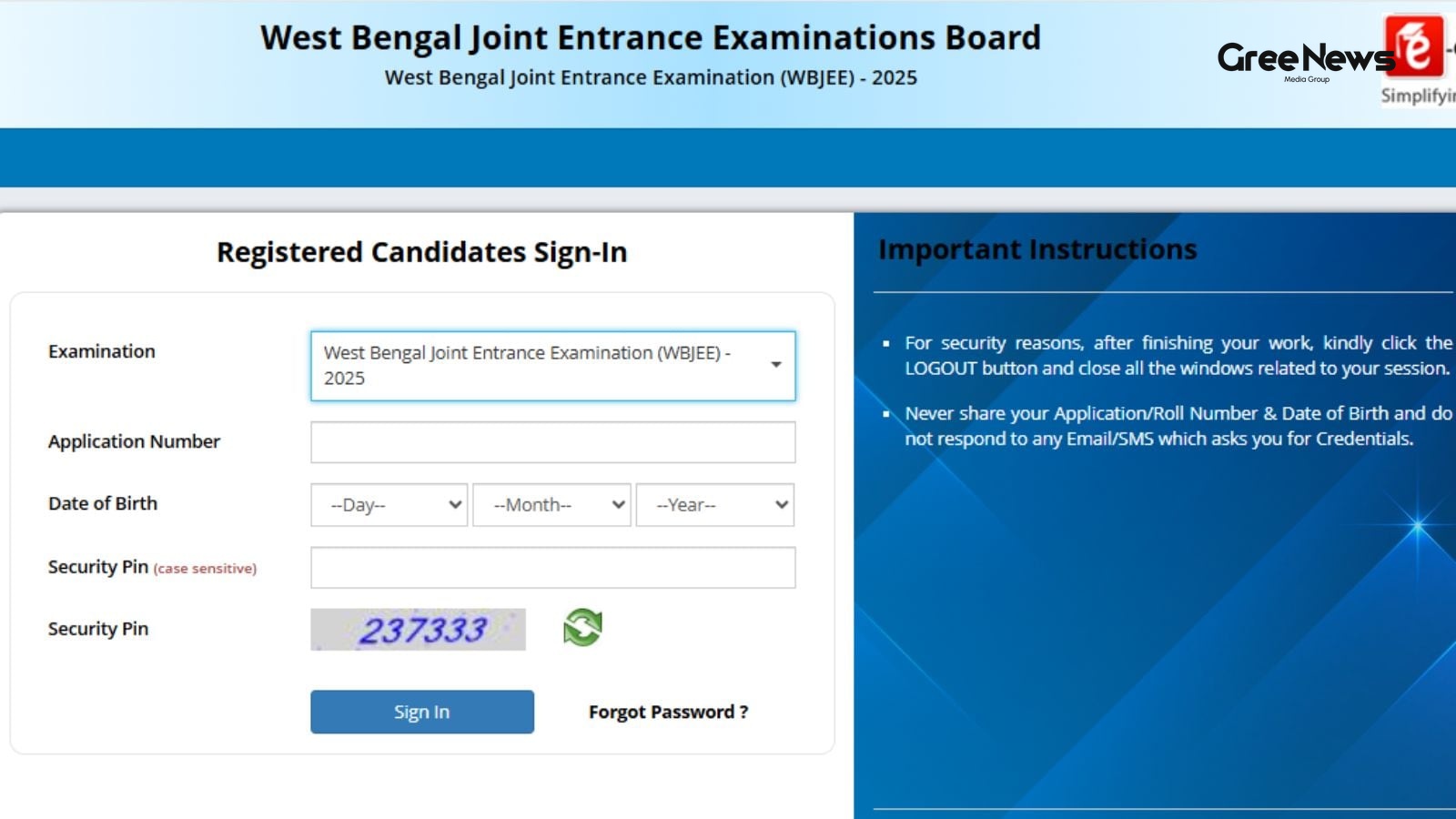
WBJEE 2026 Results and Counseling Updates
The WBJEE 2026 results finally dropped, only twenty-six days after the actual test. It was kind of a surprise too, setting up exam centers in Bengal and actually some other states this time around. The merit list? It pulled names from all over Kolkata and different districts scattered around. The bo
Jun 19, 2026 by Gree News Team

The Quiet Reality Behind the Spotlight: Sunil Grover's Journey
Sunil Grover. Actor. Comedian. You see that name pop up online, and you think of big laughs, maybe some high-energy sketches. But then there’s this other side, isn't there? A quietness. Something much slower. He posted it on Thursday. Just a video. Not some polished interview or a carefully staged m
Jun 19, 2026 by Gree News Team

DK Shivakumar and the Political Cross-Voting Strategy in Karnataka
DK Shivakumar, Karnataka’s Chief Minister he really is the troubleshooter and crisis manager for Congress, people call him the “Chanakya of the Congress” for his political smarts. It wasn't just luck, you know? He managed to outmaneuver rivals, grab key wins. In those recent MLC elections, he pulled
Jun 19, 2026 by Gree News Team

Threats Faced by 'Kala Hiran' Producer Amit Jani from Pakistan
‘Kala Hiran’ producer Amit Jani is talking about threats he’s been facing from Pakistan before the movie even comes out. He said he got a second death threat within just twenty-four hours. That’s right, hours after reporting the first one to the police. He put this complaint up on X. A picture of th
Jun 19, 2026 by Gree News Team

The Unseen Dynamics of Political Tension and Shifting Alliances
The air just felt thick today. You could almost taste the tension hanging over everything. It wasn't some grand, predictable political shift; it was just... happening. Slow, heavy stuff moving along. There are whispers now, mostly in the back rooms, not the big headlines you see on TV. People are ta
Jun 19, 2026 by Gree News Team

WHO Guidelines for Filovirus Diseases: Managing Ebola and Marburg Outbreaks
The World Health Organization finally rolled out its first full set of clinical management guidelines for filovirus diseases. It covers everything known about Ebola virus variants and Marburg disease. This whole thing launched back on June 17, 2026. And it hits right in the middle of a crisis. Right
Jun 19, 2026 by Gree News Team

Doctors’ Money and Career Paths in India
Doctors’ money and career paths in India are getting dragged online right now after some social media post questioned whether MBBS really sets you up for early financial independence. It just sparked this whole debate. People are reacting in totally mixed ways. Some folks seem to agree with the skep
Jun 19, 2026 by Gree News Team

The Shifting Reality: Navigating Uncertainty and Unspoken Narratives
the air in the room felt thick today you could almost taste the static electricity building up between the ideas, that kind of pressure you get when things are shifting underneath the surface but nobody really talks about it. it’s not a neat thing. it just… happens. we were watching the projections
Jun 19, 2026 by Gree News Team

Kerala Lottery Results and Claiming Information
Kerala Lottery results. Today’s the day for the Karunya Plus KN-628 draw. They’re holding it on Thursday, June 18th. Everything is set to happen at three in the afternoon. Location? Gorky Bhavan, right near Bakery Junction in Thiruvananthapuram. That's where they'll announce what won. The stakes are
Jun 19, 2026 by Gree News Team

Karnataka Legislative Council Election Results and Cross-Voting Allegations
Thursday brought some messy results from the Karnataka Legislative Council election. Congress managed to snag five seats, and the BJP got two. But that wasn't even the main story. What really started stirring up talk was the whole cross-voting allegation the way votes seemed to shift across party li
Jun 19, 2026 by Gree News Team

The Impact of Artificial Intelligence on Job Security and Global Economies
Tech workers are facing a serious problem. If you don’t use artificial intelligence at least once a month, you face three times the risk of getting laid off compared to your colleagues who do. That's what Gallup found in their research from a February survey of over 23,000 US workers. Sixty-six of t
Jun 19, 2026 by Gree News Team

Workplace Blackmail and Retaliation: A Discussion
An employee posted something online that started a real discussion about their workplace. It was a troubling claim. They said managers repeatedly warned them over the years that if they quit, a specific coworker would lose their job too. The employee felt like leaving because of what they described
Jun 19, 2026 by Gree News Team

The Water Dispute: Geopolitics, Internal Failures, and Escalation between India and Pakistan
Bilawal Bhutto-Zardari, that’s who was making the noise lately about water between India and Pakistan. He really escalated things, didn't he? It wasn't just some polite disagreement anymore; it became this heavy warning from the heart of Pakistan itself. He spoke in Parliament, you know? Right there
Jun 19, 2026 by Gree News Team