The Ultimate Guide to Buying a Soundbar: What You Need to Know
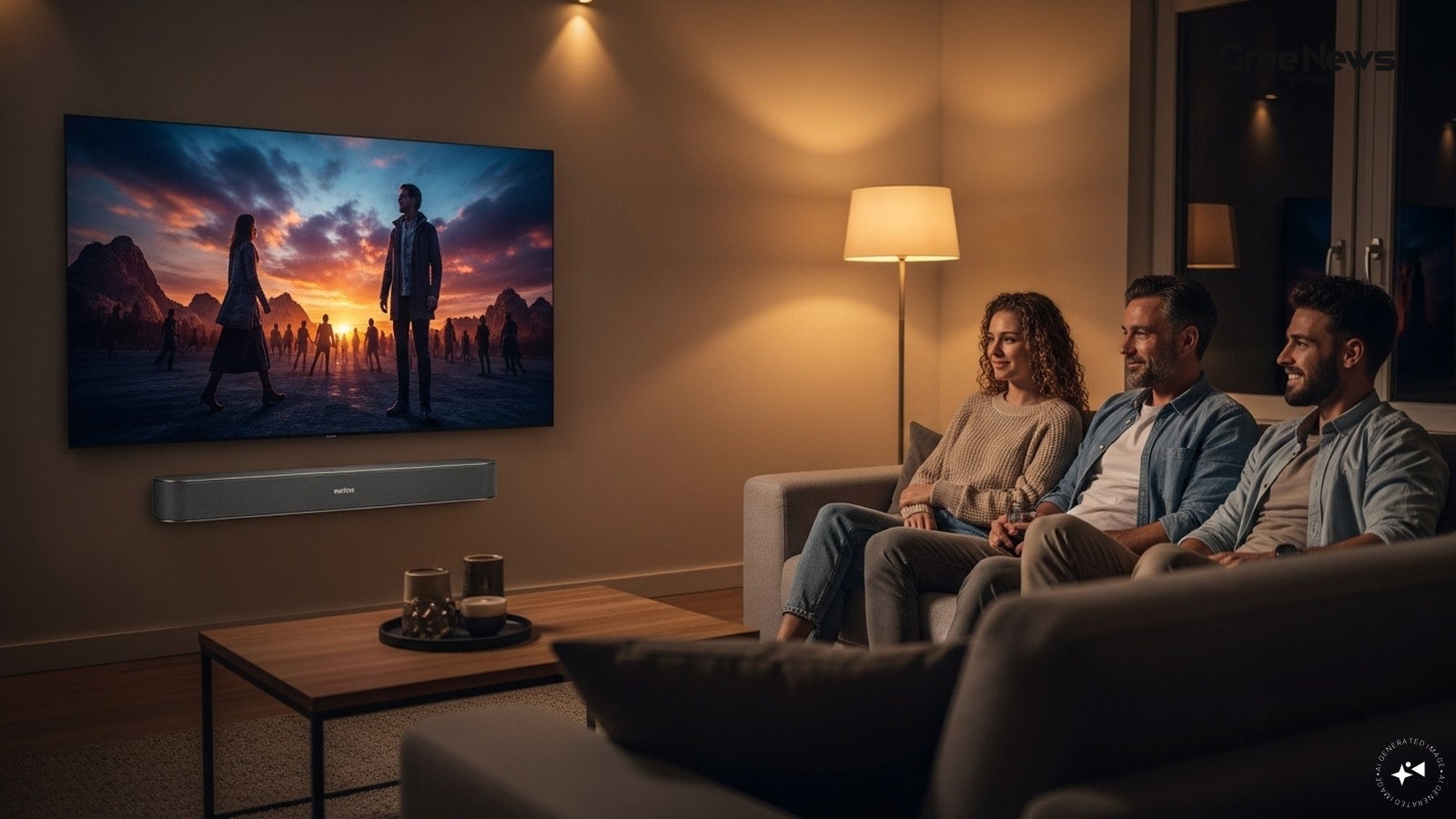
Not everyone needs a soundbar. That’s probably the most useful thing you need to know before you waste any money on one. If you’re perfectly happy with how your TV sounds right now, there is absolutely no reason to add another device underneath it. A soundbar isn't some mandatory upgrade; it’s just a way to fix a specific problem.
Most people start looking at soundbars when something starts bothering them about their television setup. Maybe conversations are just too hard to hear. Or maybe you find yourself constantly fiddling with the volume because voices get lost and everything else is suddenly too loud. Perhaps you recently got a new TV, and while the picture looks huge and great, the audio just didn’t keep up. That happens all the time.
TVs have gotten slimmer over the years. The result? It’s frustrating.
The good news is you don't need a deGree in audio engineering to sort this out. This guide focuses on what actually changes how you listen every day, skipping the massive technical jargon that soundbar marketing loves throwing around.
Before you start comparing brands and features, stop.
And don't forget connectivity. So before you blow cash on a premium unit, check what your TV actually supports. It’s worth confirming that stuff early.
People usually shop by looking at products. That’s not the best way. If movies sound dull and underwhelming, you probably need more bass and something that fills the whole room. If your TV is mostly for news or streaming shows YouTube stuff your needs are totally different than someone trying to recreate a cinema feel at home.
That sounds obvious, but honestly, so many buyers skip this initial step. It’s simply the one that fixes your current annoyance.
Think about scale. You could buy a huge home theatre system for a small bedroom. Or maybe you need a compact, entry-level soundbar for a giant family room where six people watch movies together every night. Neither of those feels right for most setups. The size of the space really dictates how much sound you actually require. A small bar works fine in a bedroom or study if you’re sitting close to the screen.
If you sit far away, those sound limitations become way more noticeable. Room acoustics are another massive factor people ignore.
But adding a dedicated subwoofer changes the whole character of the sound entirely. Movie soundtracks feel fuller. Sports broadcasts get more energy. Music gains depth. Action scenes hit harder.
That doesn’t mean everyone needs one. Music listening habits matter too.
Now let’s talk about Dolby Atmos. It's everywhere in the soundbar market right now. It’s heavily advertised. The whole idea is to make sound seem like it comes from different directions, even above you. When done well, it’s impressive. But a lot of those affordable Atmos bars rely on virtual processing instead of actual upward-firing speakers. So how immersive it actually is depends entirely on your room layout and ceiling height and the content you’re watching. You have to ask if that extra cost is worth noticing the difference for you . If you watch blockbuster films constantly, Atmos adds immersion. If you just watch TV channels and YouTube videos, a solid conventional soundbar might solve most problems already.
People focus on sound quality so much they forget about connectivity until installation day. That’s when they realize not every connection delivers the same experience. HDMI ARC and eARC really make life easier because the TV and soundbar can actually talk to each other properly. Volume control is simpler. Synchronization tends to be better. The whole setup feels less messy. Optical connections still work, sure, but they offer fewer conveniences. Bluetooth is fine for casual music, but for actual TV audio, HDMI or Wi-Fi usually give a much more stable connection.
HDMI ARC needs to be considered essential. eARC gets even more valuable if you’re into high-end formats like Dolby Atmos, gaming consoles, Blu-ray playback, or premium sound setups. Marketing loves channel counts. Don’t let channel numbers be your only guide.
Sometimes a lower-powered system sounds significantly better than one with massive numbers. Reviews and what people actually hear are often more useful than the specs alone.
Gaming users need to watch audio delay and lip-sync performance closely.
The reality is usually pretty different. The soundbar will probably spend more time playing cricket matches, streaming series, YouTube videos, news channels all that background noise than it spends on giant blockbusters. Versatility wins here. The best system isn't the one that only shines during action scenes; it’s the one that makes everyday viewing genuinely enjoyable too.
Seriously, some common mistakes people make are buying a soundbar before figuring out what’s wrong with their current setup. Or picking a system that’s either way too big or way too small for the room. People get hung up on Atmos, wattage numbers, and channel counts while ignoring the basics: clear dialogue and overall sound quality. And connectivity? It often gets ignored until after they buy it.
Key Factors for Choosing a Soundbar
- Strong dialogue clarity.
- Sound quality that matches your room size.
- Good connectivity HDMI ARC or eARC is key.
- A good overall balance.
- Reliable support and warranty.
- If you have a dedicated center channel, make sure it’s there.
- Easy setup.
Budget Segmentation Guide
All that stuff.
If you’re looking under five thousand rupees? You'll find entry-level bars. If your biggest complaint is weak dialogue, there are some decent options that will noticeably improve things over built-in speakers. Don't expect deep bass or movie immersion at this price point; just aim for more enjoyable everyday viewing.
Then you hit the middle ground five thousand to fifteen thousand rupees. This range gives you better dialogue, a stronger sound balance, and often wireless subwoofers. It’s where you get the best bang for your buck in terms of performance versus price.
Above fifteen thousand up to thirty-five thousand? That’s when you start seeing premium features like Dolby Atmos support, bigger drivers, and smarter processing. This is ideal if you watch a lot of movies seriously. If you want that dedicated home theatre feel, look here.
And then you get above thirty-five thousand rupees. You can expect advanced Atmos systems, rear speakers, room calibration, and truly immersive audio experiences designed for serious enthusiasts. These are for people who genuinely care about sound quality, not just fixing weak TV noise.
Specific Product Recommendations
For the best budget option? Or check out the Boat Aavante Bar 1550 , sitting near six thousand something thousand. That one brings in a dedicated subwoofer and seriously boosts dialogue performance for its price.
If you want movie night impact? The JBL Cinema SB190 with its wireless subwoofer is worth checking out, hitting around fifteen thousand nine hundred ninety rupees. That sub adds real weight to films.
For the big premium players, like the Samsung HW-Q800D Dolby Atmos Soundbar running around fifty-one thousand something thousand. It delivers strong dialogue and impressive Atmos performance. It’s a compelling choice for serious movie fans. Or you could look at the Sonos Beam (Gen 2) for nearly fifty thousand.
Casual viewers just want clarity. A standalone bar is fine for everyday life. Focus on what actually makes the sound better for your space.
Written by Gree News Team — Senior Editorial Board
Gree News Team covers international news and global affairs at Gree News. Our collective of senior editors is dedicated to providing independent, accurate, and responsible journalism for a global audience.
More from Tech
View All
Smart Home Tech: Choosing Between Plugs, Switches, and Soundbars
Choosing between a smart plug and a smart switch isn't really about technology itself. It’s more about how much control you actually want over your home, end of story. If you’re renting an apartment and just need a simple way to automate things a lamp or maybe a coffee machine a smart plug is usuall
Jun 12, 2026 by Gree News Team
Buying Guides: AC Specifications and Immersive Sound Systems
Buying an air conditioner has gotten so much more complicated lately. You have to think about tonnage, inverter tech, efficiency ratings, ambient temps a whole list of things that might or might not matter for just living in a room. The good news is, only a handful of specs actually change how you c
Jun 11, 2026 by Gree News Team
The Complete Guide to Smart Home Automation: Plugs, Lights, Sensors, and Fans
A few years back, smart home stuff felt way too expensive, complicated. But now? You can just automate lights, control appliances from your phone. Get alerts when the door opens. Cut down electricity without emptying your wallet. It’s all there now. The real snag is how people start. They buy gadget
Jun 11, 2026 by Gree News Team
BLDC Ceiling Fans and Water Purifier Buying Guide
That ceiling fan thing. It’s one of those appliances that just runs almost every single day, you know? That immediately makes energy efficiency just as critical as how much air actually moves around. The good news is, you don't need to drop ten thousand rupees anymore just to get a decent BLDC fan w
Jun 9, 2026 by Gree News Team
Latest Headlines

NEET-UG Controversy: Accountability, Reforms, and Multiple Exams
The whole thing about NEET-UG is really hitting a snag. It’s not just some one-off problem anymore. Government officials actually showed up before parliamentary panels recently to talk about it. The focus was on how the exams were conducted under the NMC Act, 2019. Specifically looking at the 'Organ
Jun 13, 2026 by Gree News Team

Tourist Responsibility and Civic Sense in Darjeeling
Heat and humidity pushing people up into the hills, seeking some relief from the plains. That’s what happens, right? People flock to places like Darjeeling when it gets too hot. But with that kind of travel comes something else a responsibility. To be decent. To respect a place. Recently, though, so
Jun 12, 2026 by Gree News Team

MHT CET 2026 Results Out: Scores, Dates, and Next Steps
The MHT CET 2026 results are out now. Seriously. The Maharashtra State Common Entrance Test Cell just dropped the scores for students who took the exams for BHMCT, BCA, BBA, BMS, BBM, and even those in MH-DPN/PHN and BSc nursing programs. You can grab your scorecards right off their site. cetcell.ma
Jun 12, 2026 by Gree News Team

The Dark Side of Domestic Life: In-laws, Conflict, and Online Toxicity
The dark side of domestic life keeps popping up online, again. This time it’s a deeply unsettling video that just exploded on X. It shows a confrontation inside a family home a young woman wrestling with her in-laws. The whole thing allegedly boiled down to food. She was saying her mother and father
Jun 12, 2026 by Gree News Team

Nora Fatehi and FIFA: The Global Shift in Indian Entertainment
Nora Fatehi’s latest move with FIFA isn’t just some random international collaboration. It signals something bigger, a real shift in how Indian-origin performers are slotting into global sports entertainment now. Music, dance, fashion it’s all suddenly weighing as much as the actual match itself. Ah
Jun 12, 2026 by Gree News Team

The Impact of AI on Creativity and Intellectual Diversity
A recent look into how ideas are actually generated in writing brought up some serious questions about creativity and what these large language models are doing to our intellectual pool. The findings were pretty clear. Students who just write essays without tapping into tools like ChatGPT seem to ge
Jun 12, 2026 by Gree News Team

The Story Behind Jab We Met and Imtiaz Ali's Journey
Shahid Kapoor and Kareena Kapoor’s *Jab We Met*. It’s one of those films everyone loves, right? Still has a massive following. But you know what else is interesting? Bobby Deol was the first choice. Not just some casual mention. Imtiaz Ali actually opened up about this recently. He revealed that Bob
Jun 12, 2026 by Gree News Team

Maritime Security Incidents and US Navy Targeting Near Oman
Moments after the MT Jalveer that vessel carrying twenty Indian seafarers was reportedly targeted by the US Navy near Oman’s Shinas port, things started getting complicated. A video surfaced showing one of the crew members sending out an SOS signal. That call was supposed to inform port authorities
Jun 12, 2026 by Gree News Team

India's Protest Over Maritime Attacks in West Asia
The Ministry of External Affairs, they finally spoke out on Thursday about the recent trouble in West Asia. There have been multiple attacks hitting ships these past few days. One of those incidents cost three Indian sailors their lives. It’s deeply worrying, isn't it? MEA spokesperson Randhir Jaisw
Jun 12, 2026 by Gree News Team

Simple Morning Habits for Better Liver Health
You’re trying to figure out how to actually support your liver every single day? It sounds simple, but those tiny shifts you make right when you wake up can seriously change how well that organ functions over time. People just don't realize it. This silent thing your liver it works non-stop. Filteri
Jun 12, 2026 by Gree News Team

The Fragile Balance: Escalation and Uncertainty in US-Iran Tensions
The talks between Washington and Tehran about ending the ongoing war? They’re still moving, right? On track, they say. But that feels like a cruel joke sometimes, doesn't it? Because just as negotiations keep shuffling along, renewed hostilities keep popping up hostilities that threaten to completel
Jun 12, 2026 by Gree News Team

The Physics of Belief: Observing Shifting Realities
It was just one of those days where everything felt… loose. You know? Like the threads are fraying a little bit at the edges. That shift is always there. Like a temperature change. We were watching the feeds again, mostly just absorbing the noise, not trying to find some neat little narrative arc fo
Jun 12, 2026 by Gree News Team

Calcutta High Court on Rebel MLA Recognition and Anti-defection Rules
The Calcutta High Court got involved here on Thursday. It was all about how a rebel MLA was recognized as the Leader of Opposition in the West Bengal Assembly. The court started raising serious questions about the whole process. Could that decision really be made without some sort of approval from t
Jun 12, 2026 by Gree News Team
Akshay Kumar on Retirement: The Pursuit of Relentless Motion
Akshay Kumar. Retirement. It’s a word that floats around Bollywood sometimes, isn't it? Not just in the headlines, but in the whispers backstage, the way people talk about these massive careers winding down. And now, all this chatter it boils down to him. He was speaking at the trailer launch for *W
Jun 12, 2026 by Gree News Team

Air India AI-171 Crash: The Aftermath, Trauma, and Compensation
A year has passed since that awful Air India AI-171 crash. Twenty-six hundred lives lost. And Vishwash Kumar Ramesh, he was the only one left standing. He keeps asking for honesty. For transparency. Answers. It’s not just a demand; it feels like a constant ache. The trauma, it doesn't just stay on t
Jun 12, 2026 by Gree News Team